Guest Insight — Assoc. Prof. Yüksel İskol, Archaeologist and academic specialist in Anatolian cultural heritage.
Beyond the Pillars
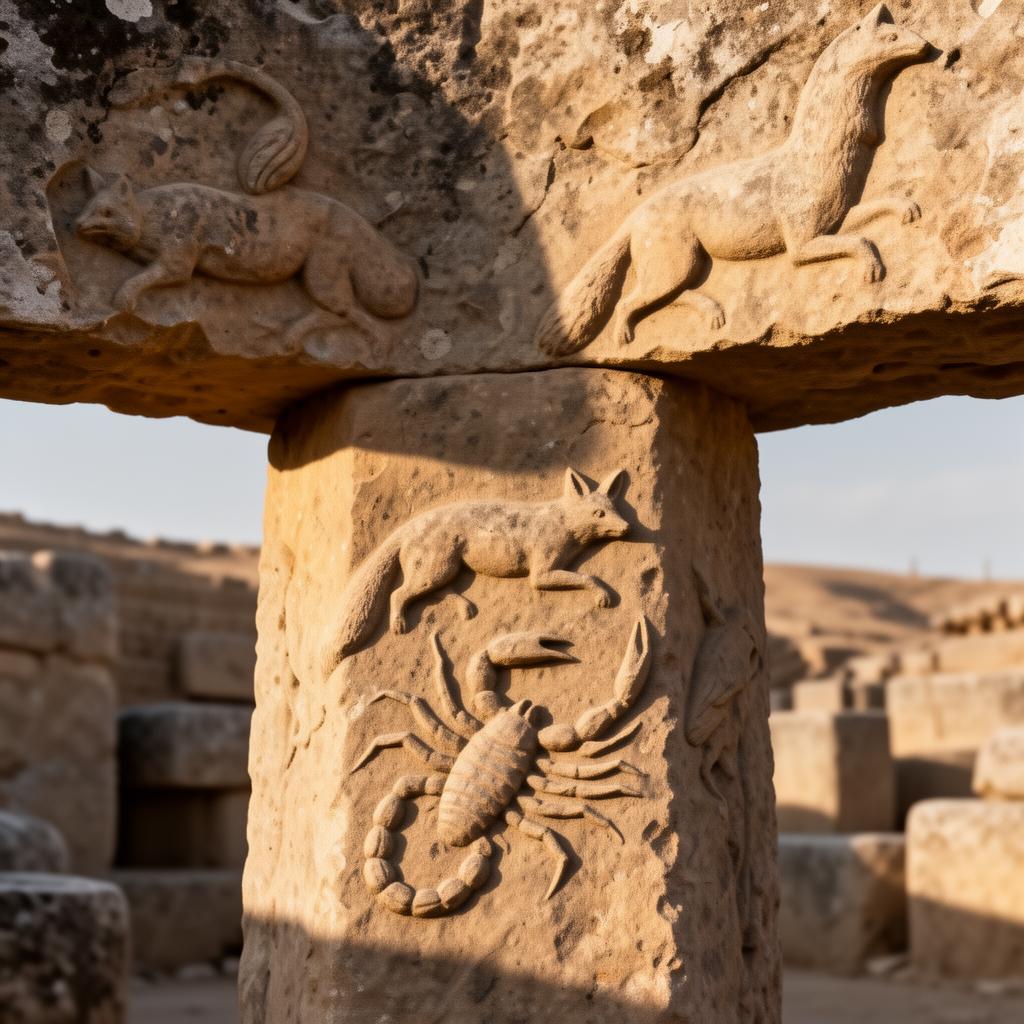
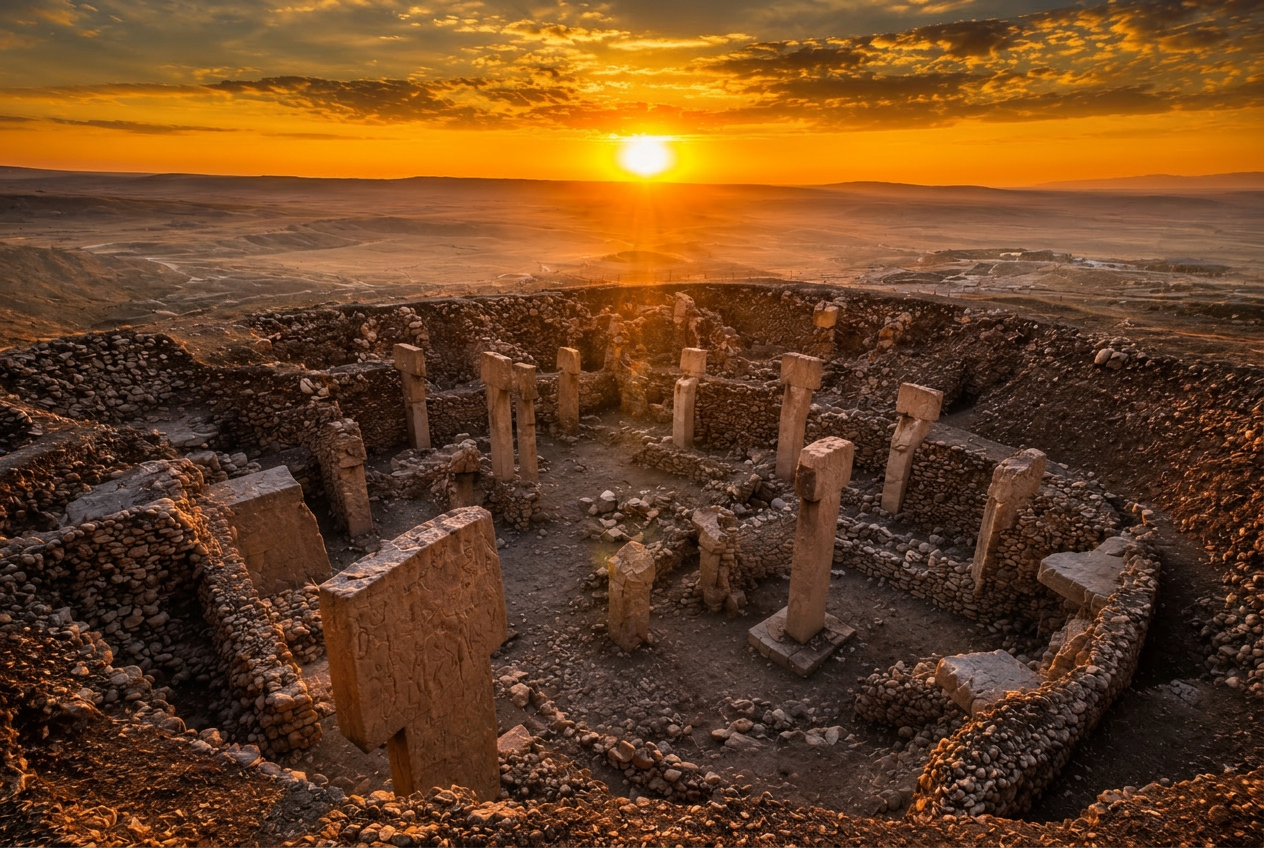
The T-shaped pillars of Göbeklitepe and the carved chambers of Karahantepe are, rightly, what most visitors come to see. They are monumental, enigmatic and photogenic. Yet the people who raised them also had to eat, prepare food, make and repair tools, shelter from winter rain and summer heat, and spend most of their days doing things that leave far less dramatic traces than a carved fox or a human head emerging from bedrock.
Over the past decade, a growing body of research has begun to bring that everyday world into focus. It does not replace the monuments. It places them in a fuller human setting, and it asks a quieter but no less important question: what did ordinary life look like in Neolithic Upper Mesopotamia, around eleven thousand years ago?
Evidence and Hypothesis
Before turning to the evidence, it is worth being clear about how archaeologists reason. Excavation produces material: stone tools, animal bones, plant remains, floors, walls, hearths. Laboratory analysis turns that material into data, such as wear patterns on a stone surface or microscopic plant residues. Interpretation then proposes what those data may mean for human behaviour.
Each step involves judgement, and each adds a layer of uncertainty. A careful reader of Neolithic research learns to distinguish between what has been observed, what has been measured, and what has been suggested as the most plausible explanation. The distinction matters especially at sites as celebrated as these, where a hypothesis can easily be repeated until it sounds like fact.
Food and gatherings are a good example. Shared meals leave traces: concentrations of animal bone, processing tools, large-scale preparation areas. But a meal does not label itself. The same evidence might reflect regular household cooking repeated over generations, seasonal aggregation of several groups, or occasional events of special significance. Archaeologists weigh such alternatives against context, quantity and chronology, and they often conclude that more than one may have been true at different times.
The Work of Grinding
Among the most common finds at Göbeklitepe are grinding stones: querns, handstones, mortars and pestles. In a study published in PLOS ONE in 2019, Laura Dietrich, Julia Meister, Oliver Dietrich and colleagues examined this ground stone assemblage, which numbers more than seven thousand objects, combining typological study with use-wear analysis and phytolith analysis of selected tools.
Their results indicated that many of these tools were used to process cereals, and that this processing appears to have taken place on a considerable scale. The authors connected this evidence with a broader interpretation: that food, and possibly beer-like fermented cereal products, may have been prepared for large communal gatherings associated with building work. This is often described as the work-feast hypothesis.
It is an important and well-argued proposal. It remains a hypothesis. The grinding stones demonstrate intensive cereal processing; they do not by themselves demonstrate who gathered, how often, or for what purpose. Holding those two levels apart is not scepticism for its own sake. It is what allows the evidence to keep speaking as new data arrive.
Phytoliths: Small Silica, Careful Conclusions
Phytoliths are microscopic particles of silica that form inside plant tissues and can survive long after the plant itself has decayed. Recovered from the working surfaces of grinding stones, they can help indicate which kinds of plants were processed. They are not a complete record, and their identification has limits, but they offer a direct link between a tool and the food it helped prepare.
A 2026 study by G. Günyol and B. Öğüt in Arkeoloji ve Sanat applies phytolith analysis to grinding stones found in residential buildings at Karahantepe. As its title and abstract make clear, the work is concerned with ground stone tools from domestic contexts and with what plant residues can contribute to understanding the relationship between food processing and the spaces in which people lived. Studies of this kind shift attention from the enclosures to the house floor.
Houses at Çakmaktepe
Domestic architecture is also emerging elsewhere in the Taş Tepeler landscape. At Çakmaktepe, research published by F. Şahin and Y. Miyake in 2025 presents new data on round buildings interpreted as dwellings, alongside structures that appear to have served special purposes. The authors frame these communities as hunter-gatherers who had become increasingly settled.
What emerges is not a single model of early settlement but variability: different sites, different architectural choices, different balances between everyday and special buildings. That variability is itself significant. It warns against treating the region as a uniform stage on which one story of change was played out.
Everyday work also included craft. Flint and obsidian were knapped into blades, points and scrapers; limestone was shaped into vessels, querns and the pillars themselves. These were skilled activities, learned and transmitted, and the debris they left behind is often abundant. The same hands, or at least the same communities, that ground cereals also carried the technical knowledge that monumental construction required. Separating ‘daily’ from ‘monumental’ labour may therefore be more a modern habit than an ancient reality.
Domestic and Monumental, Together
The UNESCO World Heritage listing for Göbekli Tepe notes that the site includes domestic as well as monumental structures. That recognition reflects how interpretation has developed since excavations began. The monumental buildings remain extraordinary, but they stood within a world of hearths, tool working and food preparation, not apart from it.
This need not reduce the significance of the enclosures. It may increase it. Monumental construction undertaken by communities who also had to secure their daily food speaks of planning, cooperation and shared commitment. Whether those efforts were organised through gatherings, kinship, ritual obligation or something else entirely remains a matter of open and careful debate.
A Connected Landscape
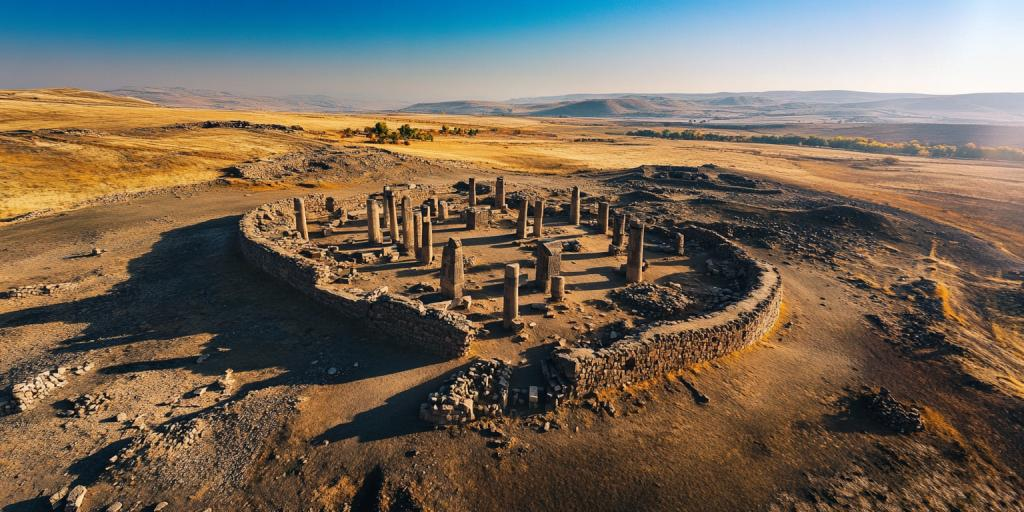
Göbeklitepe, Karahantepe and Çakmaktepe are best understood not as isolated wonders but as parts of an interrelated landscape. Shared building traditions, comparable imagery and similar tool kits suggest communities in contact with one another, exchanging ideas, materials and perhaps people. Reading the ground stone of one site alongside the houses of another is how that landscape slowly becomes legible.
That process is far from complete. Many sites in the region have been surveyed but only partially excavated, and much of the evidence from recent work is still being analysed and published. Any overview written today, including this one, is necessarily provisional. That is not a reason for hesitation, but a reason to read each new study for what it actually shows.
The Quiet Dignity of Ordinary Lives
There is something moving in a worn quern. Its smoothed surface records thousands of repeated gestures: kneeling, pressing, grinding grain into flour. The person who used it is anonymous, as almost everyone in prehistory is. Yet that labour sustained the communities who carved the pillars, and without it the monuments could not have existed.
To pay attention to such objects is not to diminish the monumental. It is to recognise that the past was lived by whole communities, and that ordinary routines deserve a place in the story alongside its most spectacular achievements.
Seeing It with Interpretation
On site, much of this evidence is invisible. Phytoliths cannot be seen; use-wear is a matter for the microscope; domestic floors may lie beyond the visitor path. This is why informed interpretation matters. A knowledgeable guide can connect what stands in front of you with what research has found, and can be honest about where the evidence ends and the hypotheses begin.
The stones of Upper Mesopotamia invite wonder. They reward it most when wonder is joined to understanding, and when the monuments are seen as the work of people whose everyday lives, quietly, made them possible.
Guest Insight — Assoc. Prof. Yüksel İskol
Archaeologist and academic specialist in Anatolian cultural heritage. His work and academic interests focus on the archaeology and cultural heritage of Anatolia and Upper Mesopotamia, with particular attention to the interpretation and preservation of archaeological landscapes.
Sources & Further Reading
Editorial note: this article was prepared by the Sumera Expeditions editorial team for the Guest Insight series, drawing on the published research listed below. It contains no direct quotations, and summaries reflect the stated scope of each source.
- Dietrich, L., Meister, J., Dietrich, O. et al. (2019). Cereal processing at Early Neolithic Göbekli Tepe, southeastern Turkey. PLOS ONE. https://doi.org/10.1371/journal.pone.0215214
- Günyol, G. & Öğüt, B. (2026). Karahantepe Yerleşimi Konut Yapılarında Bulunan Öğütme Taşlarının Fitolit Analizleri. Arkeoloji ve Sanat, 182, 1–16. https://avesis.istanbul.edu.tr/yayin/2585df13-3174-4b04-ade6-6ddb844a7bd8/karahantepe-yerlesimi-konut-yapilarinda-bulunan-ogutme-taslarinin-fitolit-analizleri
- Şahin, F. & Miyake, Y. (2025). Çakmaktepe’den Avcı-Toplayıcı Yerleşiklere Dair Yeni Veriler. https://dergipark.org.tr/en/pub/egearkeoloji/article/1665758
- UNESCO World Heritage Centre — Göbekli Tepe. https://whc.unesco.org/en/list/1572