Şanlıurfa — where prophets walked and temples were first carved.
The City of Prophets. The cradle of the Neolithic revolution. A bazaar perfumed with isot, cardamom and twelve thousand years of memory.
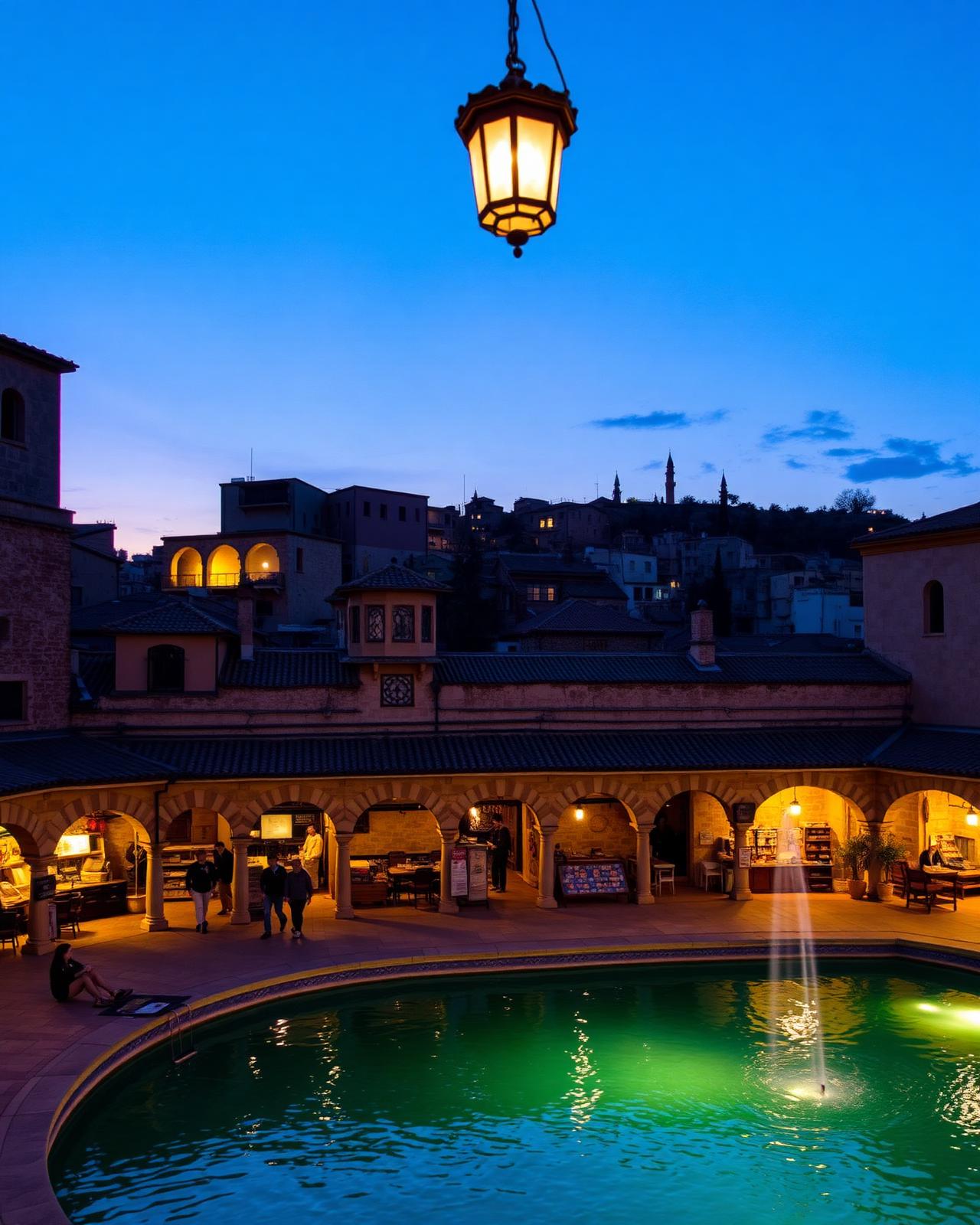
The hilltop where humanity first knelt before stone. The pool where Abraham is said to have walked from the fire.
Şanlıurfa is the great threshold city of human civilization — birthplace of Abraham in three faiths, home to one of the world's earliest known monumental ritual sites, and keeper of the Urfa Man: one of the earliest life-sized statues of a human being yet discovered. Its bazaars, courtyards and stone hans remain a working archive of Anatolian and Mesopotamian life.
Seven thousand years older than the pyramids.
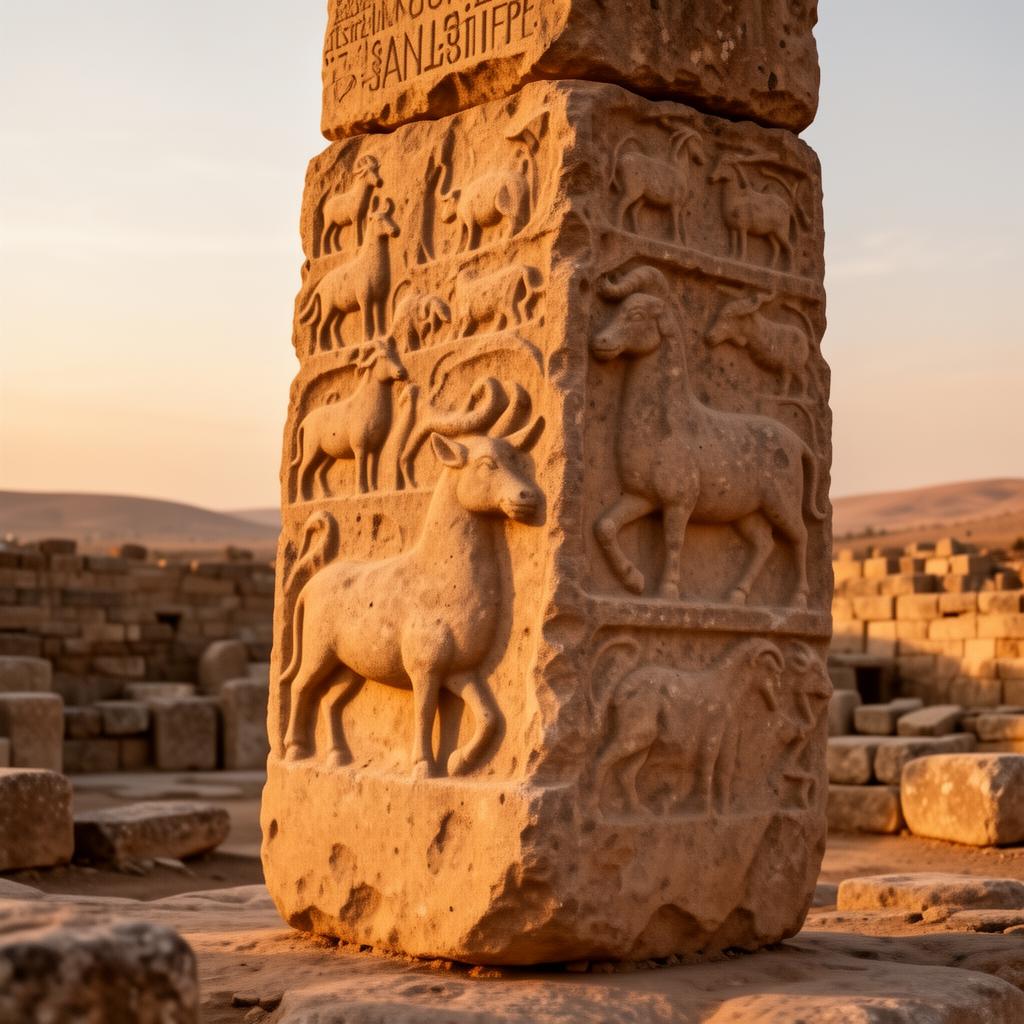
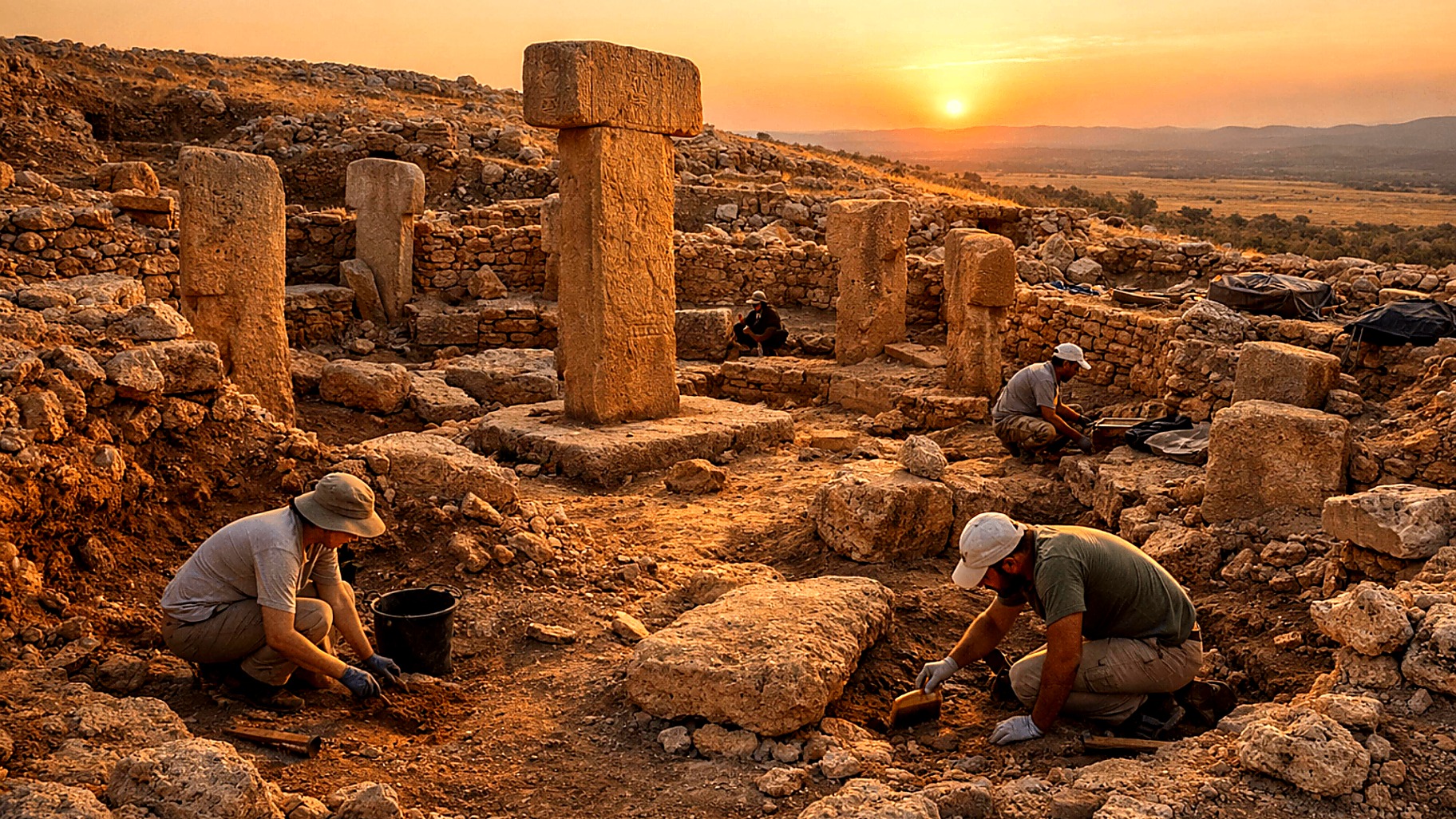
Göbeklitepe rewrote the human story. Carved twelve millennia ago by people we once believed incapable of monumental architecture, its T-shaped pillars and animal reliefs predate agriculture, writing and the wheel. At nearby Karahantepe, excavations are revealing a sister sanctuary whose chambers and human figures are reshaping what we know about the Neolithic mind.
We arrange privately guided visits with licensed professional guides and expert-led interpretation — a quiet hour at one of the world's earliest known monumental ritual sites. Special access arrangements are subject to official permissions, availability and site regulations.
Arrange a private visitThe hill that rewrote prehistory.
Rising 750 metres above the Harran plain, Göbeklitepe — "Potbelly Hill" — is the oldest known monumental sanctuary on Earth. Carved between 9600 and 8200 BCE by hunter-gatherers who possessed neither pottery, metal, nor writing, its T-shaped megaliths force a single, unsettling question: what compelled a pre-agricultural people to raise stone temples on a hilltop in southeastern Anatolia, seven thousand years before Stonehenge?
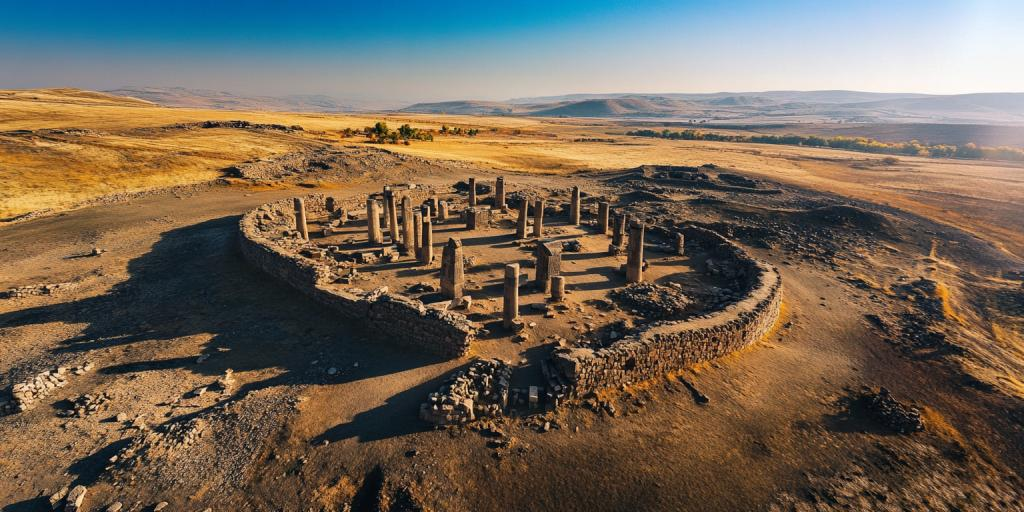
Seen from above, four overlapping stone enclosures unfold like petals on the limestone bedrock — each one a separate ritual chamber, deliberately buried by its builders and sealed beneath the hill for ten millennia.
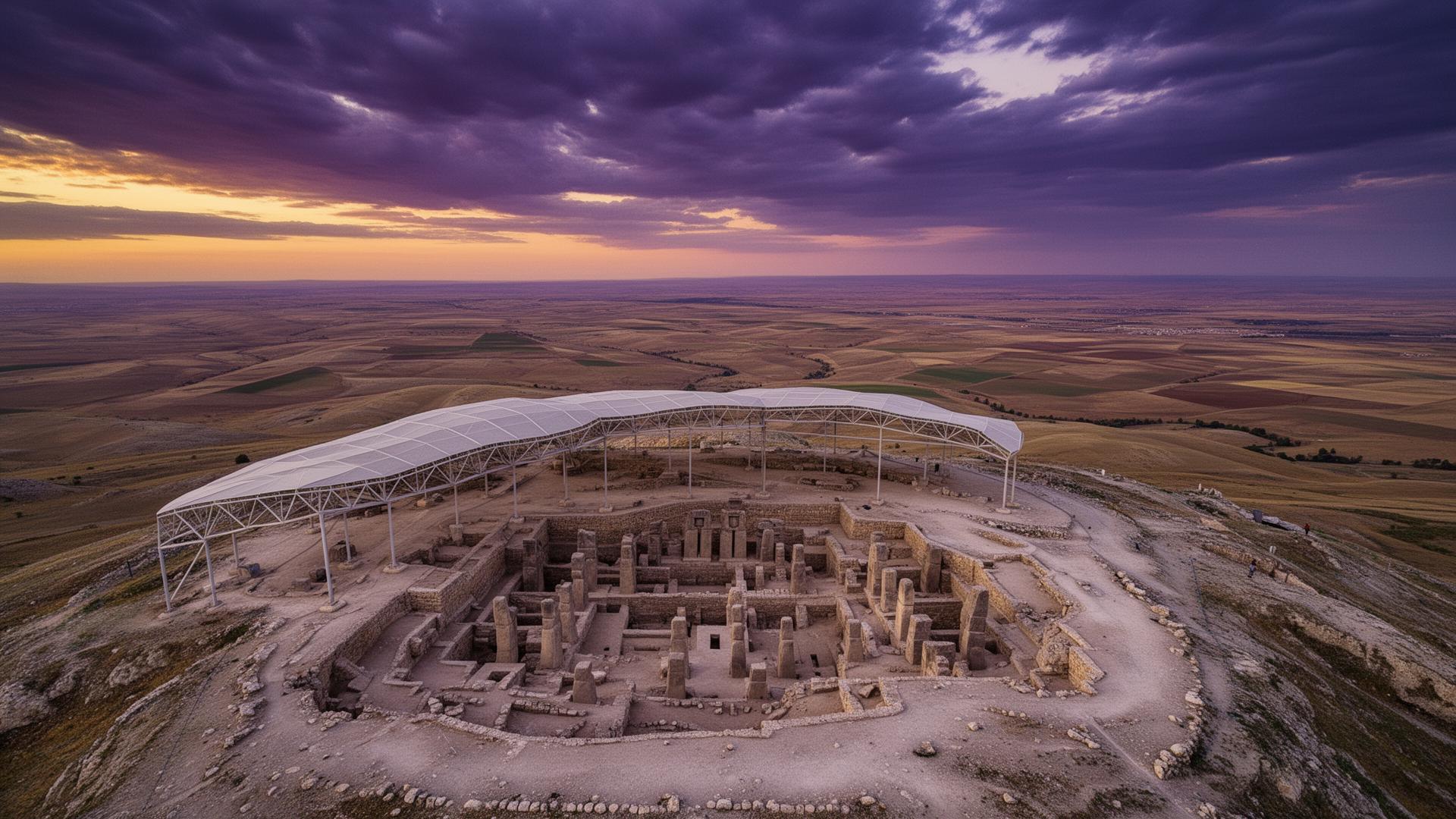
A view across twelve millennia.
The white architectural canopy — designed to shield the site without touching a single stone — reads almost like a sail above the plain. From this ridge the builders could survey the migration routes of gazelle and aurochs that fed their feasts.
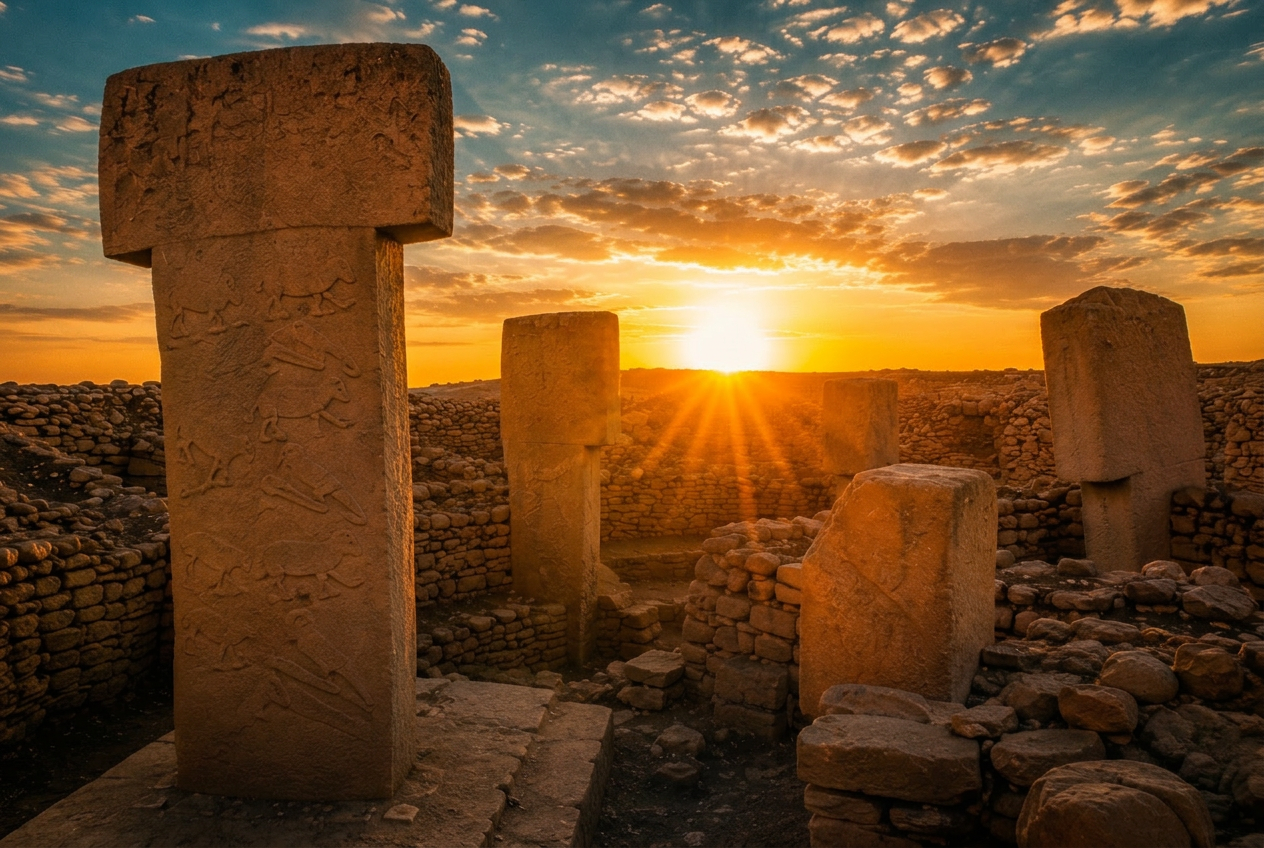
Twin pillars, oriented to the sky.
Each enclosure pivots around two central T-shaped pillars — stylised human figures up to five metres tall and weighing more than ten tonnes. They face one another across a polished floor, ringed by a chorus of smaller pillars set into a stone bench.
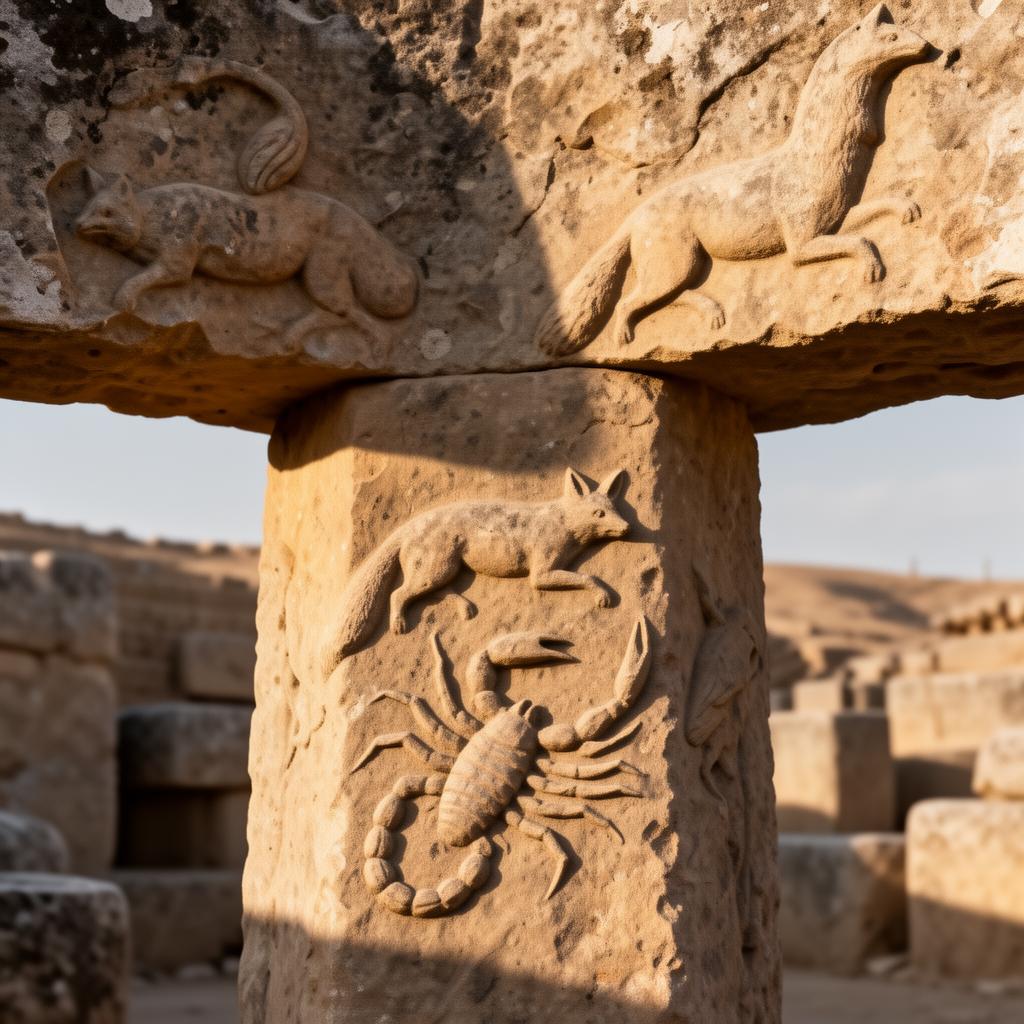
A menagerie carved before the first harvest.
Foxes leap. Scorpions arch. Vultures, snakes, boar and aurochs prowl the limestone in low relief — a Neolithic bestiary executed with a confidence that rivals any later civilisation. There is no writing, yet every pillar reads like a sentence. Some scholars see a cosmology; others, the world's oldest mythological narrative; others still, an astronomical record of a comet strike that ended the Younger Dryas.
What is certain: people gathered here in numbers, drank fermented grain from stone vessels, feasted on wild game, and then — generation after generation — deliberately buried each enclosure under tonnes of earth before raising a new one beside it. Worship, here, was something you constructed, used, and laid to rest.
9600 BCE
Earliest layer
200+
T-pillars surveyed
10 t
Heaviest megalith
Karahantepe — the sister sanctuary of Göbeklitepe, carved from the bedrock itself
Forty kilometres south-east of Göbeklitepe, a second hill is rewriting the first chapter of human history. Excavations only began in 2019.
Karahantepe belongs to the Taş Tepeler — the "Stone Hills" — twelve Neolithic sanctuaries raised by hunter-gatherers around 9,400 BCE. Where Göbeklitepe's builders quarried, dragged and erected, Karahantepe's carved the entire sanctuary downward — pillars, benches, animal reliefs and a single human head — out of the living bedrock as one continuous sculpted void.
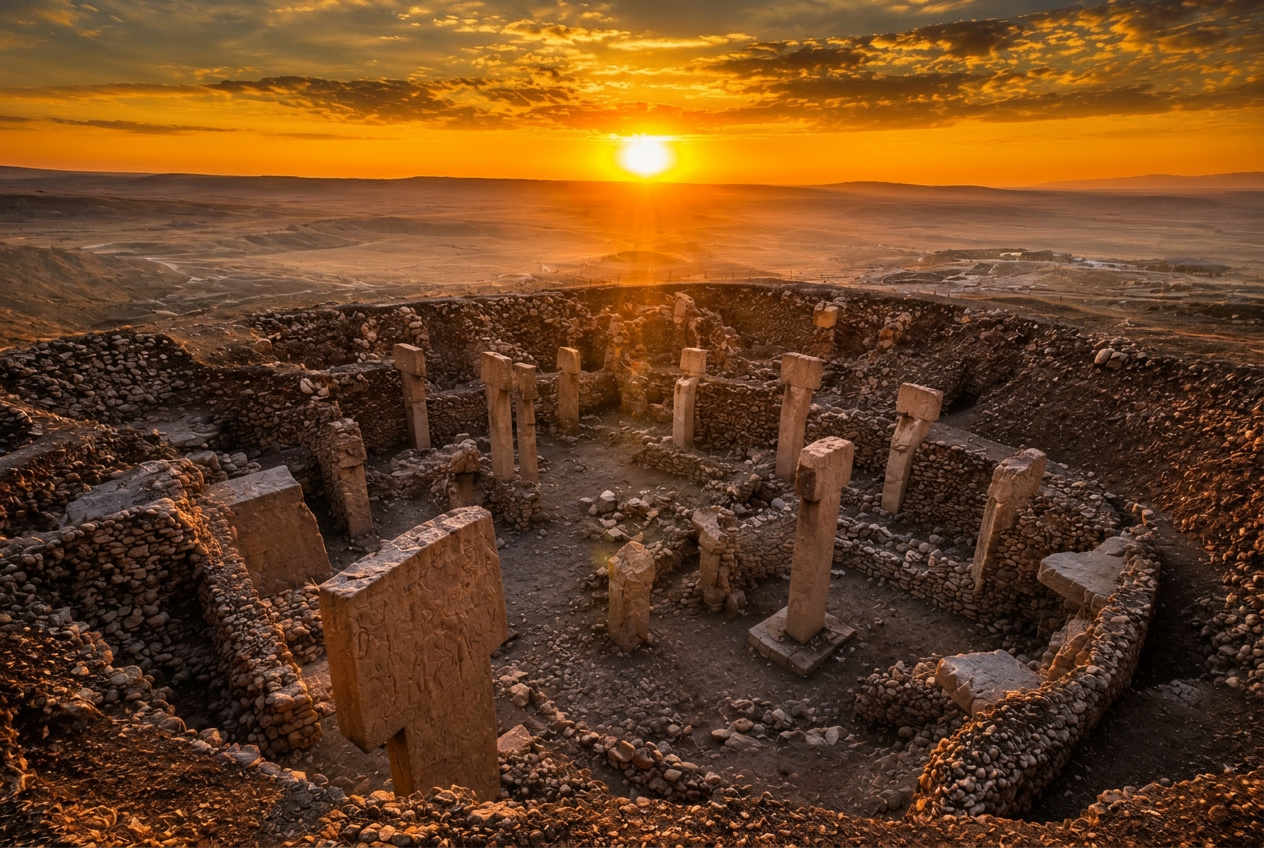
The excavated enclosures unfold across the limestone plateau — older, larger and far quieter than their famous neighbour.
Eleven monoliths, one watching face
Eleven tall pillars rise in a tight semi-circle from a floor cut into the bedrock. From the opposite wall, a single life-size human head — carved in high relief from the same continuous rock — gazes back across the room.
A bestiary cut into limestone twelve thousand years ago
Snakes, leopards, vultures, foxes and wild bulls run across Karahantepe's pillars in low relief — not as decoration, but in deliberate sequences. Predators above, prey below; serpent always descending.
9,400 BCE
Earliest layer
250+
Pillars mapped
2019
Excavation begins
The sacred pool, the bazaar, and the long Anatolian night.
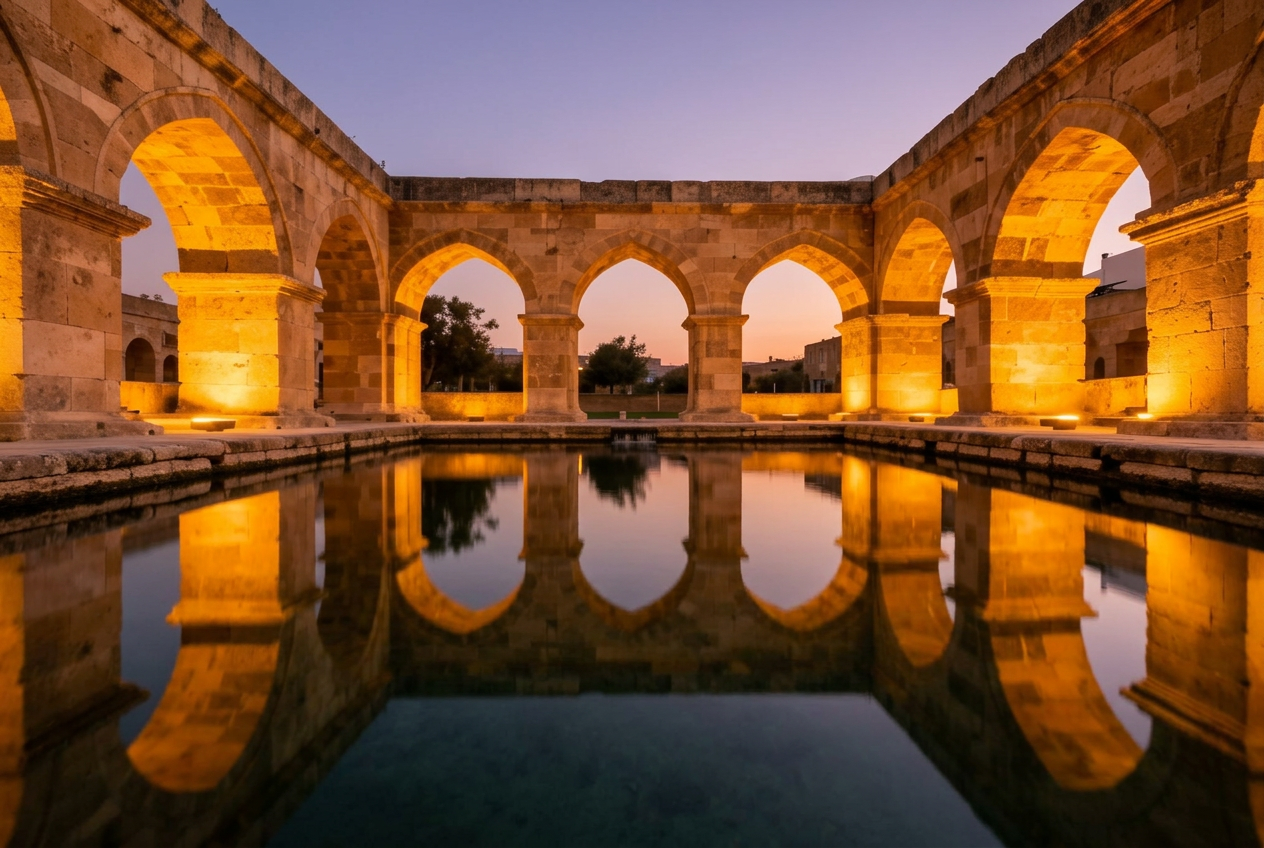
At Balıklıgöl — the Pool of Abraham — sacred carp glide beneath Ottoman arches at the place where, according to tradition, King Nimrod's pyre was turned into water. Beyond the pool, the old city unfolds into copperware lanes, isot stalls and the deep stone hush of Gümrük Han.
Evenings are reserved for a private Sıra Gecesi — an Anatolian night of bağlama, çiğköfte and tea, hosted in a vaulted hall where the music has not changed in centuries.
A half-drowned Ottoman town, black roses and the fortress of Rumkale.
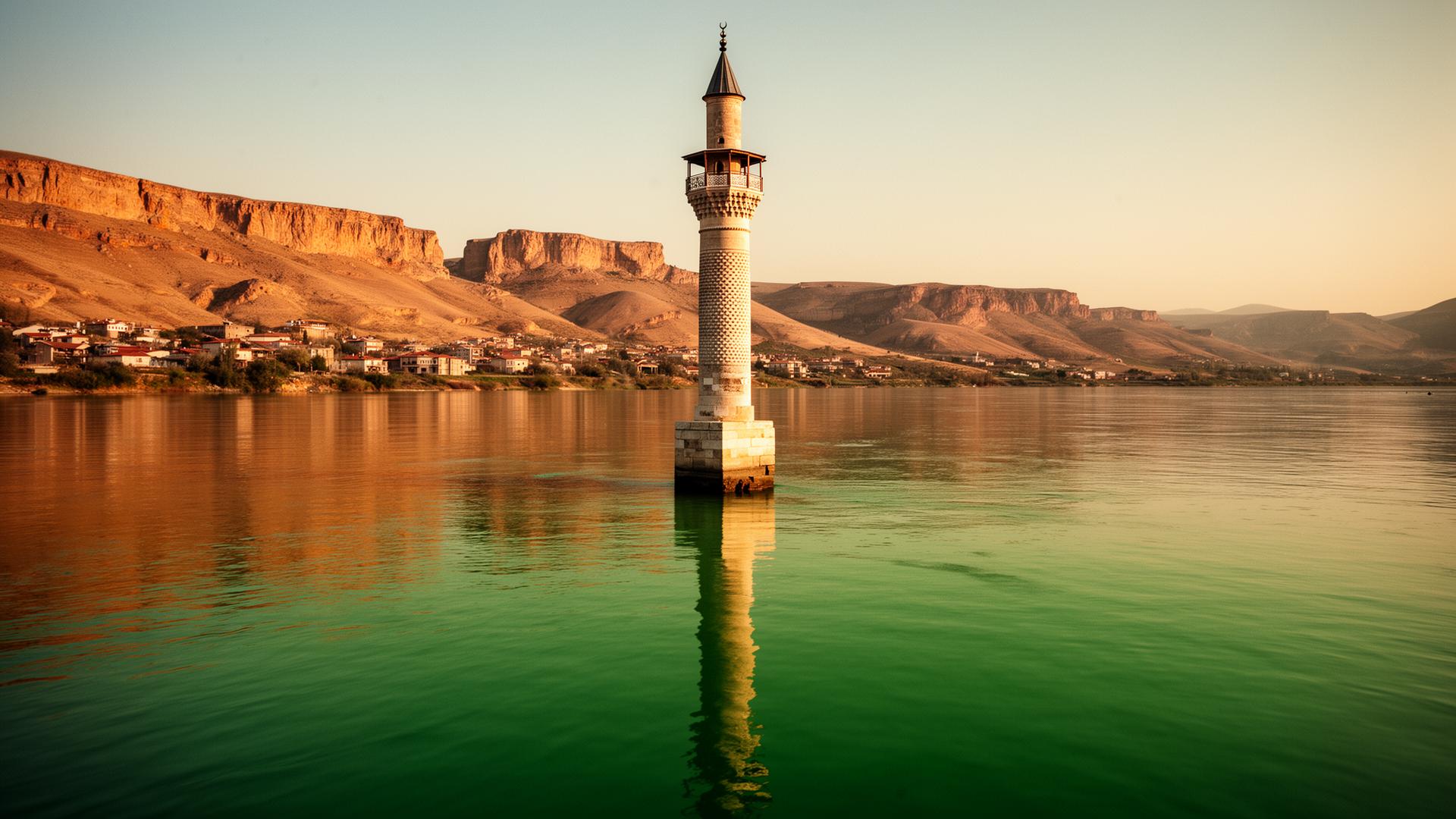
West of Şanlıurfa lies a town half-swallowed by the emerald waters of the Birecik Dam: Halfeti. When the dam gates closed in 1999, the old bazaar, mosques and gardens slipped beneath the Euphrates; today a single minaret reflected on the water lifts the memory of an entire civilisation back to the surface.
Halfeti's roots reach back to the 9th century BC and the Assyrian king Shalmaneser III. The Romans knew it as Urima, the Byzantines as Romaion Koila, and the Ottomans as a quiet harbour on the Euphrates trade. The microclimate fed by underground springs gave rise to a botanical legend closely associated with this stretch of the Euphrates — the Karagül, or Black Rose: deep crimson at dawn, almost jet-black by late afternoon.
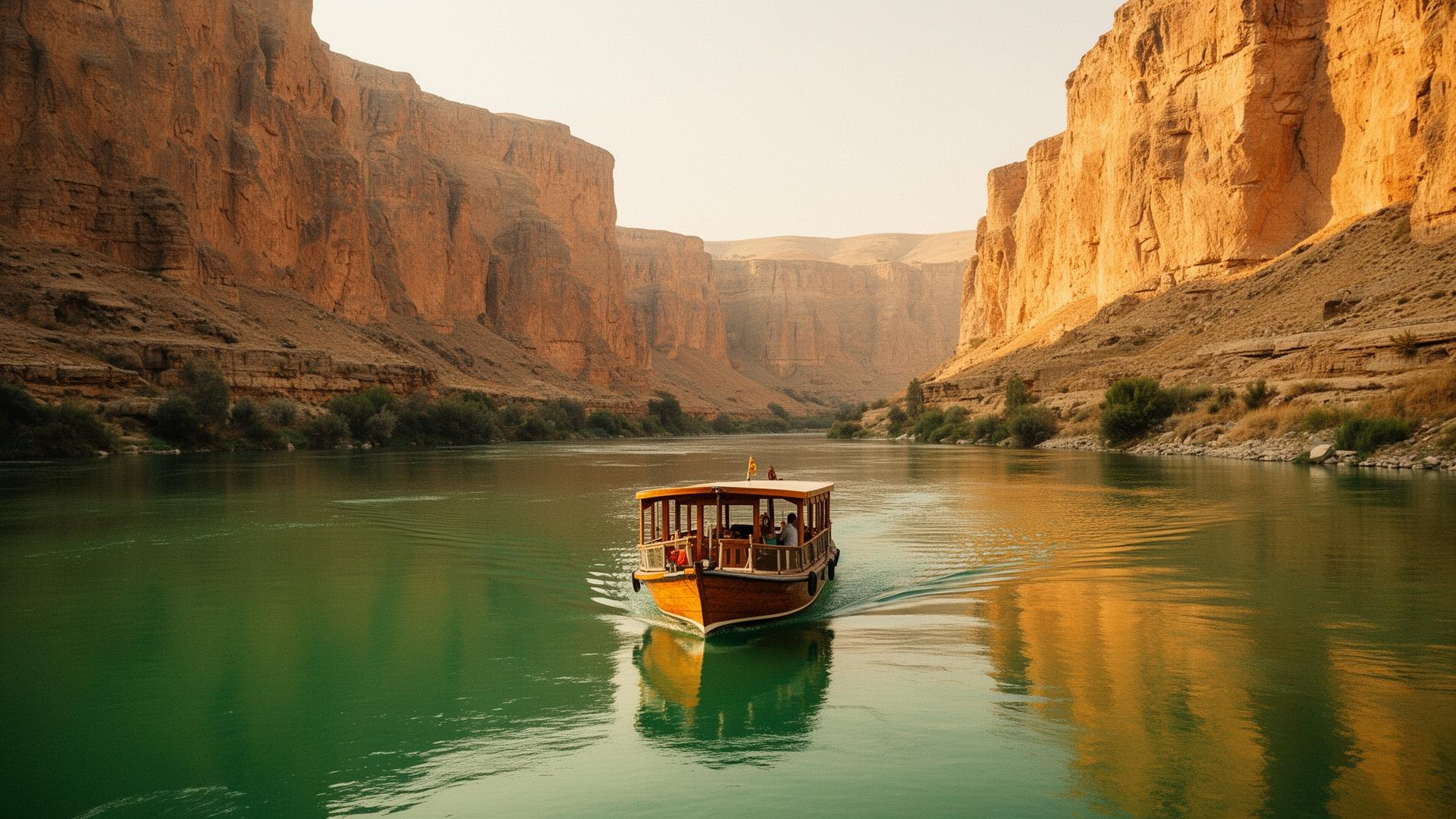
To explore Halfeti today is to board a private wooden boat that glides silently along the Euphrates: past the half-submerged minaret of the Savaşan village mosque, between sheer canyon walls to the Roman-Byzantine citadel of Rumkale, then back through Halfeti's narrow stone lanes for a glass of strong tea as the light fades.
A silent passage between the canyon walls.
From the deck of a small wooden boat you drift across the jade-green Euphrates, the ochre limestone cliffs doubling themselves in the mirror of the water.
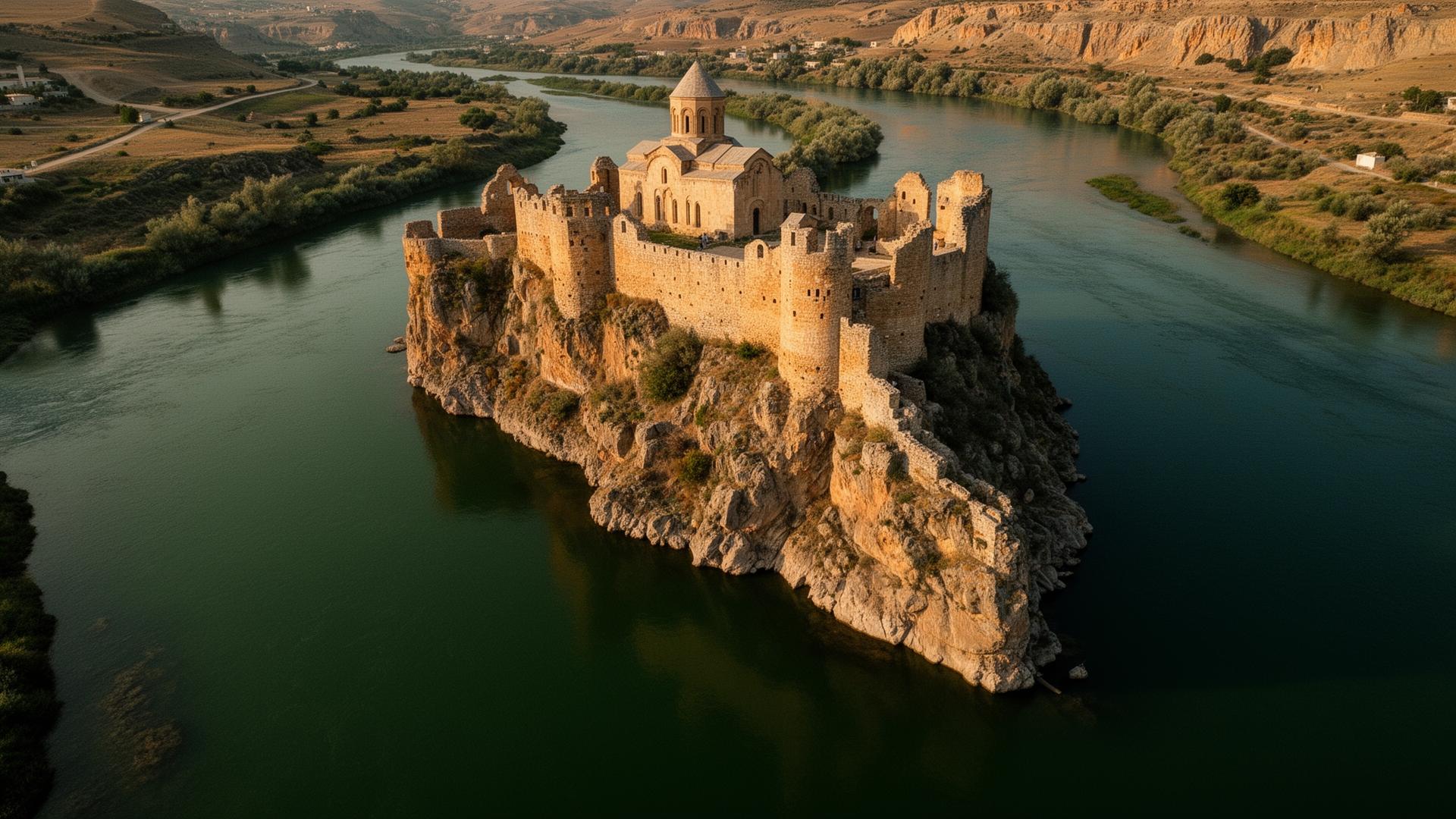
A Byzantine monastery above the Euphrates.
Rising on a sheer promontory at the confluence of the Euphrates and the Merzimen, Rumkale was a bishopric in Late Roman and Byzantine times; its St. Nerses church and cisterns form the most arresting historical silhouette of the region.
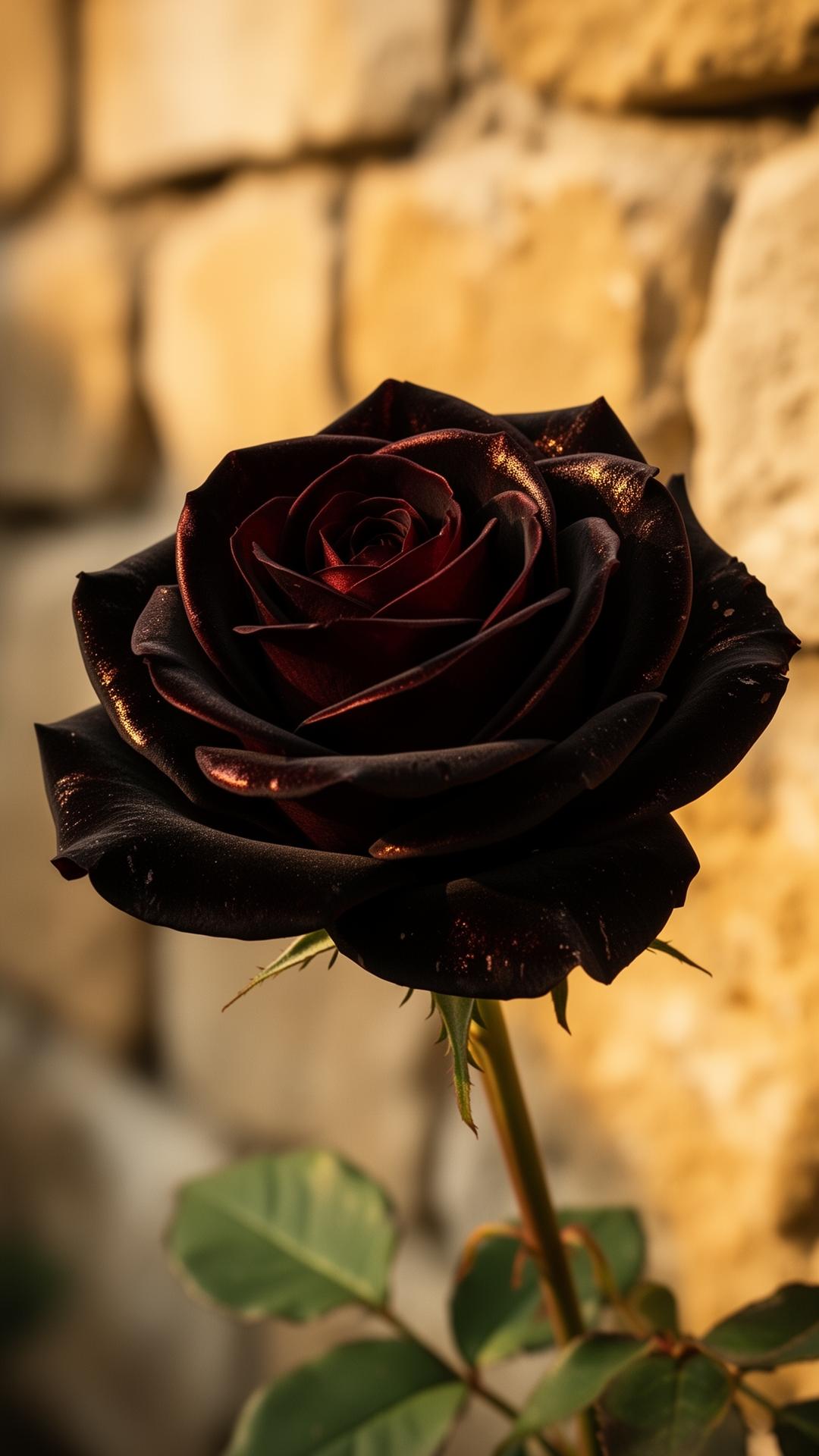
A rose closely associated with the microclimate of the Euphrates.
Fed by the soil's distinctive pH and the underground waters of the Euphrates, the Karagül opens a velvet crimson at dawn and deepens to almost-black by late afternoon — the mythology of a mourning town turned into a single bloom.
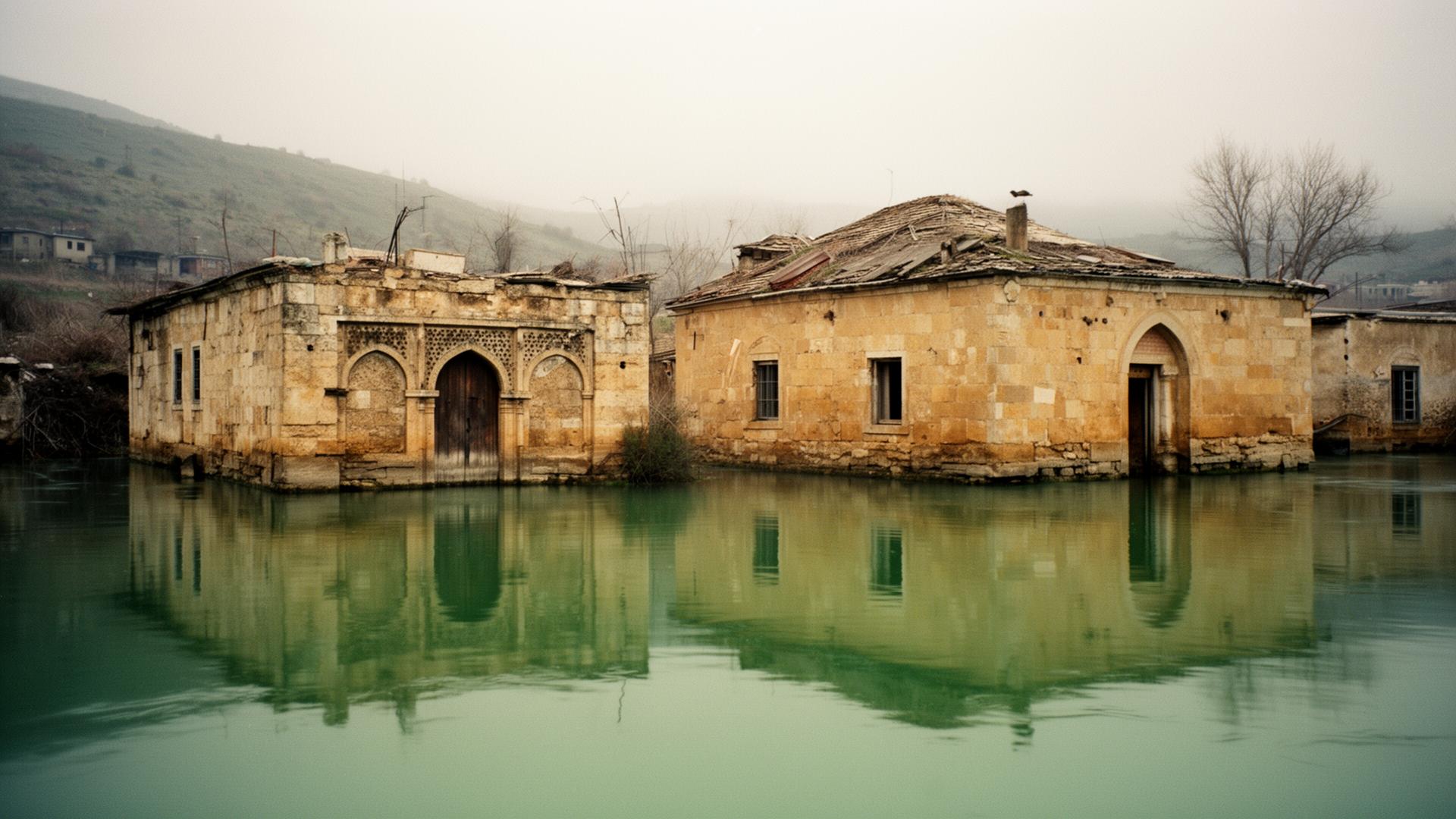
A stone memory still standing on the surface.
Parts of old Halfeti still rise above the waterline: half-submerged Ottoman houses, arched doorways, abandoned courtyards. Their silhouettes mirrored in the green water feel like a quiet, beautiful aftermath.
A moon cult sanctuary carved into the Mesopotamian stone.
Two hours east of Şanlıurfa, Sogmatar gathers a sacred mound, Syriac reliefs, rock-cut burial chambers and night skies almost untouched by modern light. Dedicated to Sin, the moon god, this late-antique sanctuary preserves one of Upper Mesopotamia's most atmospheric pagan landscapes.
25 images
Göbeklitepe from the Air
One of the world's earliest known monumental ritual sites seen from above — circular enclosures carved into the limestone ridge more than eleven thousand years ago.
Summit at First Light
Dawn over the Harran Plain. We arrive in the earliest visiting hours, subject to official permissions, for the quietest time on the hill.
The Carved T-Pillar
A limestone monolith bearing the relief of a fox — one of the earliest examples of figurative monumental art.
Inside the Enclosure
Standing within a ring of T-pillars older than agriculture, older than pottery, older than the wheel.
The Sacred Hill of Sin
The sanctuary mound rises from the plain like an earthen observatory — the ceremonial heart of a moon cult that endured long after the Roman world turned Christian.
Reliefs in Living Rock
Figures, niches and inscriptions are cut directly into the limestone face, turning the plateau itself into a votive wall for Sin and his celestial court.
The Rock-Cut Chamber
Below the dry grasses, a carved chamber opens into the earth — a stark funerary space whose arched niches still hold the silence of late antiquity.
The Standing Figure at Sunset
Caught in the last amber light, the haloed standing figure and its surrounding inscriptions reveal how devotion, image and stone once merged across this remote sacred landscape.
The Sister Sanctuary at Golden Hour
Forty kilometres from Göbeklitepe, the excavated enclosures of Karahantepe catch the last light across the Tek Tek plain.
Eleven Pillars, One Watching Face
Eleven monoliths carved from the living bedrock rise beneath the gaze of a single human head — one of the earliest known narrative compositions yet found.
Snake Above, Leopard Below
A Neolithic bestiary in low relief — predator and prey arranged in a cosmology eleven millennia before the first written word.
Before the Road Wakes
Karahantepe receives a fraction of Göbeklitepe's visitors. We arrive at first light, often before the gates have officially opened.
The Karahantepe Seated Man
He sits in absolute stillness — a 2.45-metre figure carved twelve millennia ago, older than the pyramids by six thousand years.
Hall of the T-Pillars
For the first time since the Stone Age, T-pillars from Göbeklitepe and Karahantepe stand indoors — and you can walk between them at eye level.
Blue Hour at the Museum
Blue hour settles over the pavilion. Low light across limestone and glass, the gardens quiet before the doors open.
The Amazon Queens of Haleplibahçe
A late-Roman hunting scene in coloured stone, unearthed metres from the museum entrance — the Amazons pursue their prey across a floor older than the city's walls.
The First Story Carved in Stone
Five figures, one scene — the oldest known narrative composition in human art, carved into a limestone bench around 9000 BCE.
Visit destinationThe Communal Building
A round building cut half into bedrock, its bench running along the inner wall — the room where the world's first story was told in pictures.
Visit destinationThe Aurochs
Horns lowered, body taut — the aurochs of Sayburç charges across the bench beside its coiled snake, eleven millennia after the chisel was set down.
Visit destinationThe Half-Submerged Minaret
The minaret of the old mosque rises from the still waters of the Euphrates — the only visible trace of the village beneath.
Boat on the Euphrates
A slow drift along the sunken canyon, limestone cliffs reflected in glass-flat water.
Rumkale Fortress
A crusader-era stronghold abandoned on a promontory where two rivers meet — reachable only by boat.
The Black Rose of Halfeti
Grown only in the soil and microclimate of this single valley — a rose so deep red it appears black.
The Sunken Village
Rooftops and walls beneath the surface — the village submerged by the Birecik Dam in 2000.
Balıklıgöl — The Pool of Sacred Fish
Where the prophet Abraham is said to have been cast into fire — the flames became water, the embers became fish.