Sayburç — The First Story Carved in Stone
A communal building buried beneath a village courtyard, holding one of the earliest known narrative scenes in human art.
Eleven thousand years ago, someone at Sayburç carved a story across a stone bench — and a single afternoon in 2021 rewrote what we thought prehistoric art could do.
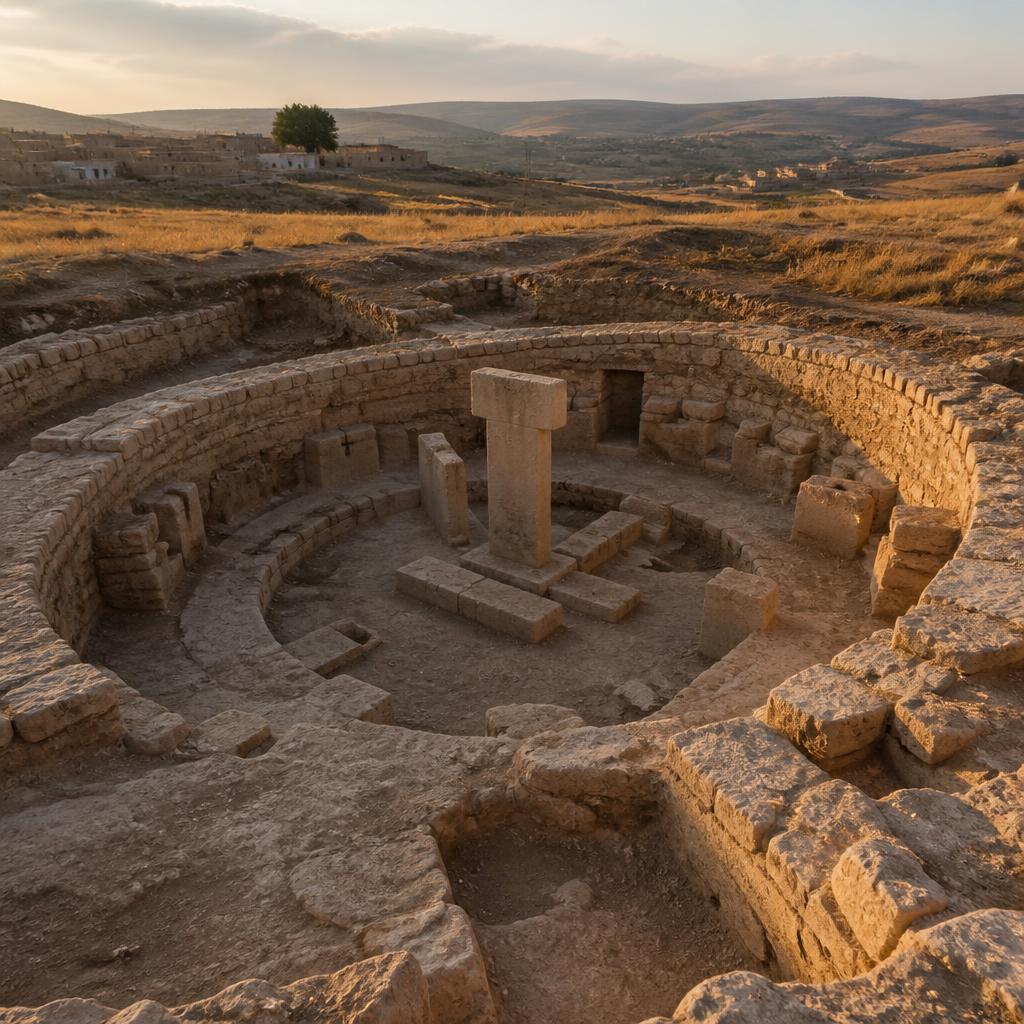
Sayburç sits in the courtyards of a still-inhabited village sixty kilometres west of Şanlıurfa, on the southern flank of the Taş Tepeler ridge. Excavated since 2021 by Dr. Eylem Özdoğan of Istanbul University, the site has revealed a circular communal building cut half into bedrock — and along the inner face of its limestone bench, one of the earliest known narrative scenes yet found.
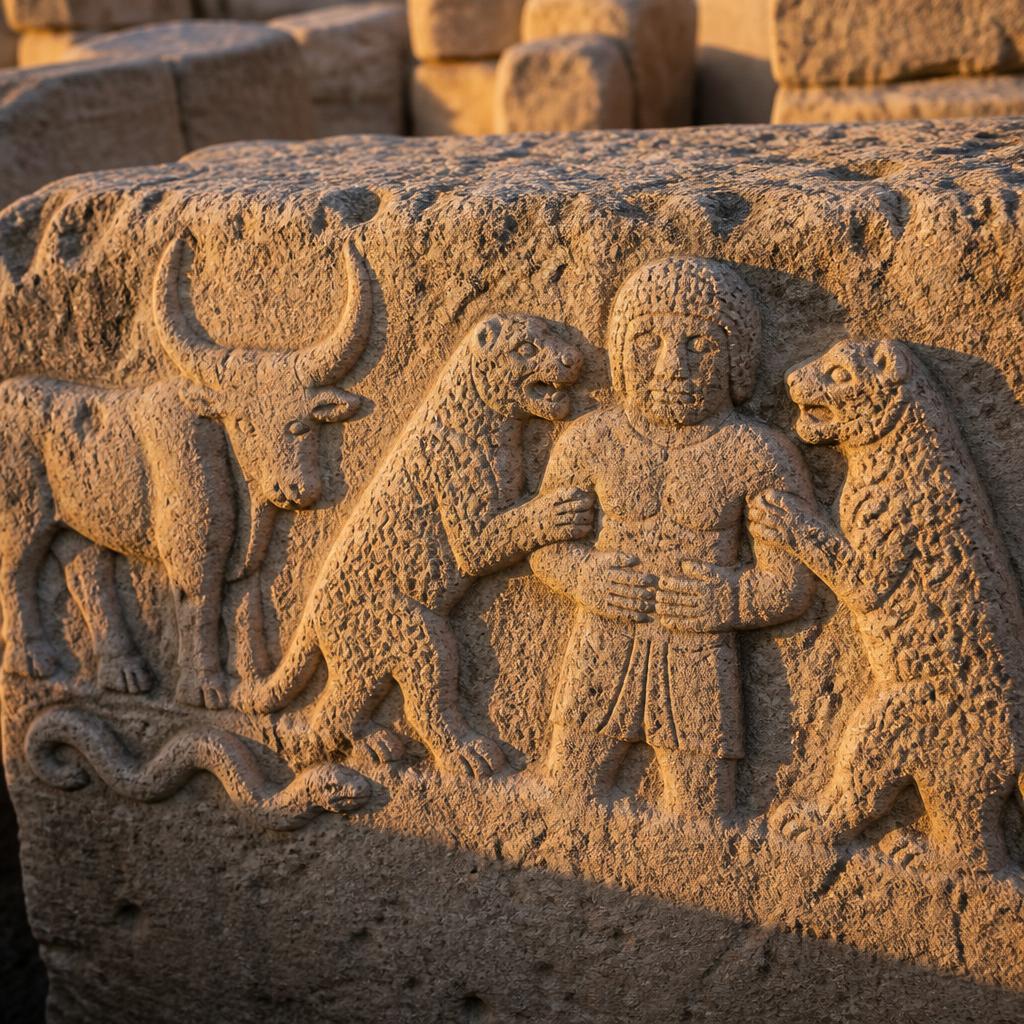
Five figures. One scene. One story.
On the right of the bench, a male figure stands flanked by two snarling leopards that grip him at the hips. On the left, a powerful aurochs lowers its horns above a coiled snake. Read together — and not as isolated motifs — these are five characters in a single composition: the earliest known attempt by a human hand to tell a story in pictures, published in Antiquity in December 2022 and now accepted as a landmark in the history of art.
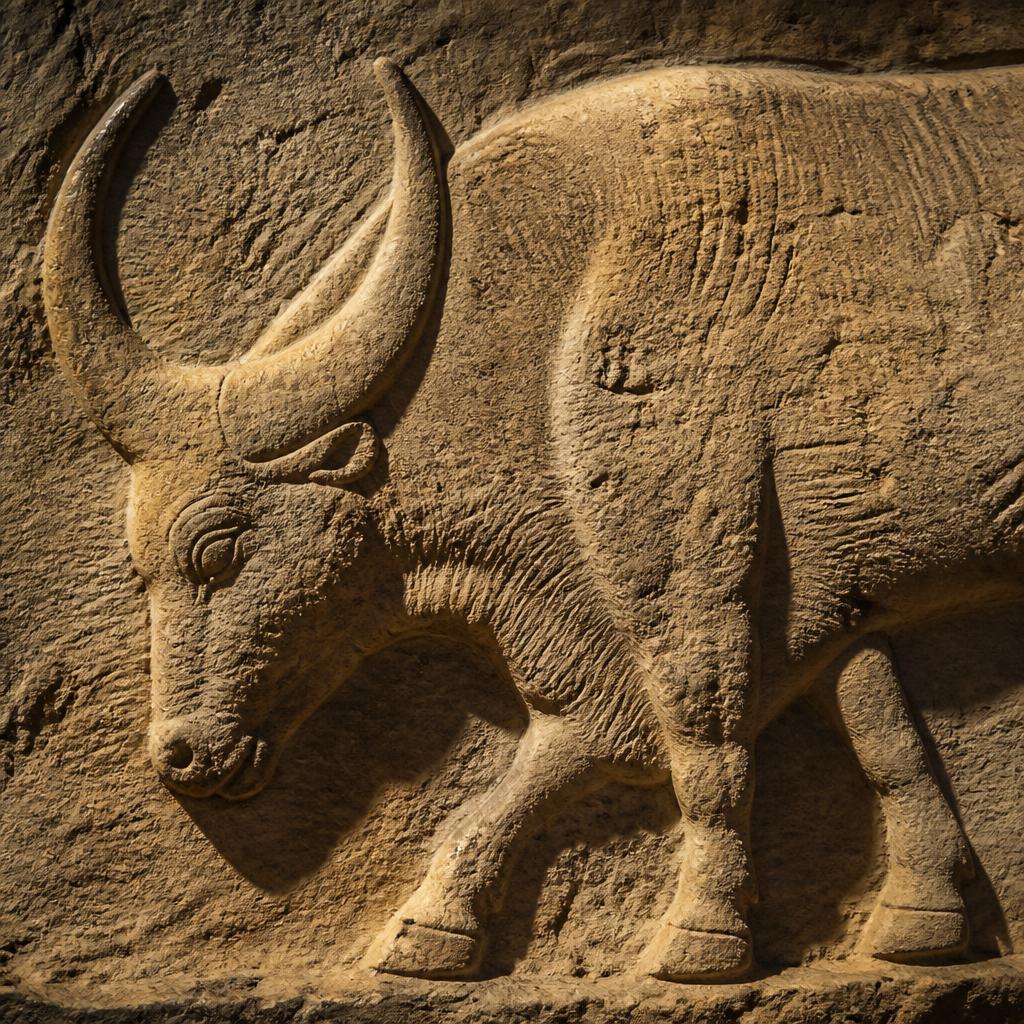
Before writing, there was Sayburç.
Göbeklitepe gave us monumental architecture. Karahantepe gave us the first life-sized human statue. Sayburç gives us something even more intimate — evidence that the people of the Taş Tepeler were not only carving the world, they were telling stories about it. The composition reads left to right, with consistent scale and shared baseline, more than seven millennia before the first cuneiform tablet at Uruk.
Whether the scene is myth, hunt, initiation rite, or origin story, its grammar is unmistakable: a sequence of related figures arranged to be read.
A quiet morning with the world's first story.
Sayburç is an active dig in a living village, not a ticketed monument. Any visit depends on prior arrangement, official permissions and local conditions, and cannot be guaranteed. Where possible, Sumera Expeditions may arrange specialist encounters or enhanced access, subject to official approval and availability. We plan visits in the cooler hours and we always pair them with a long unhurried look at the relief casts and finds in the Şanlıurfa Archaeology Museum.
- 07:30 — Coffee at the village teahouse; a meeting with local specialists may be arranged on request, subject to availability.
- 08:30 — Sayburç communal building and bench relief, with expert interpretation.
- 11:00 — Drive back through pistachio groves to the city.
- 15:00 — Şanlıurfa Archaeology Museum: cast of the relief, in context with Karahantepe and Göbeklitepe.
Read the world's first story — on the bench where it was carved.
We pair Sayburç with Göbeklitepe, Karahantepe and the Şanlıurfa Archaeology Museum across a private two-day choreography with licensed professional guiding and expert-led interpretation.