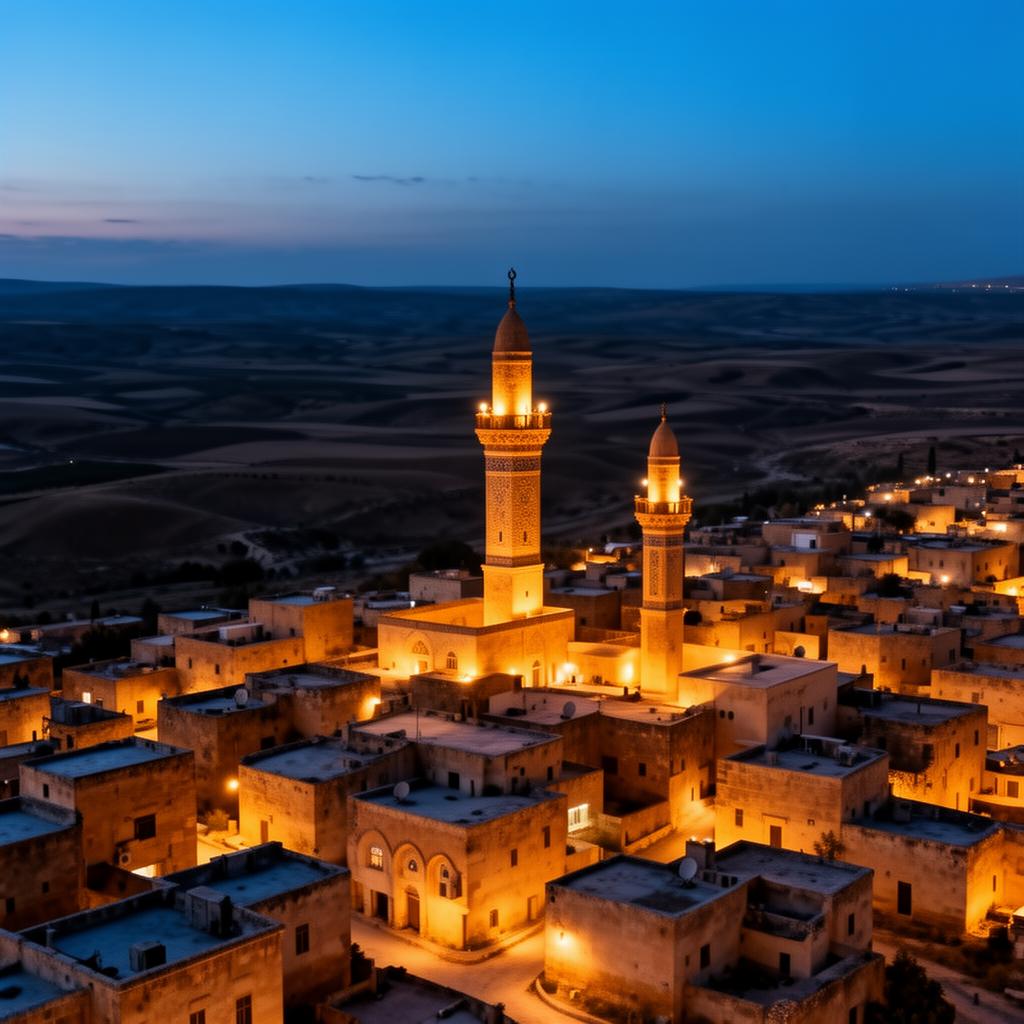
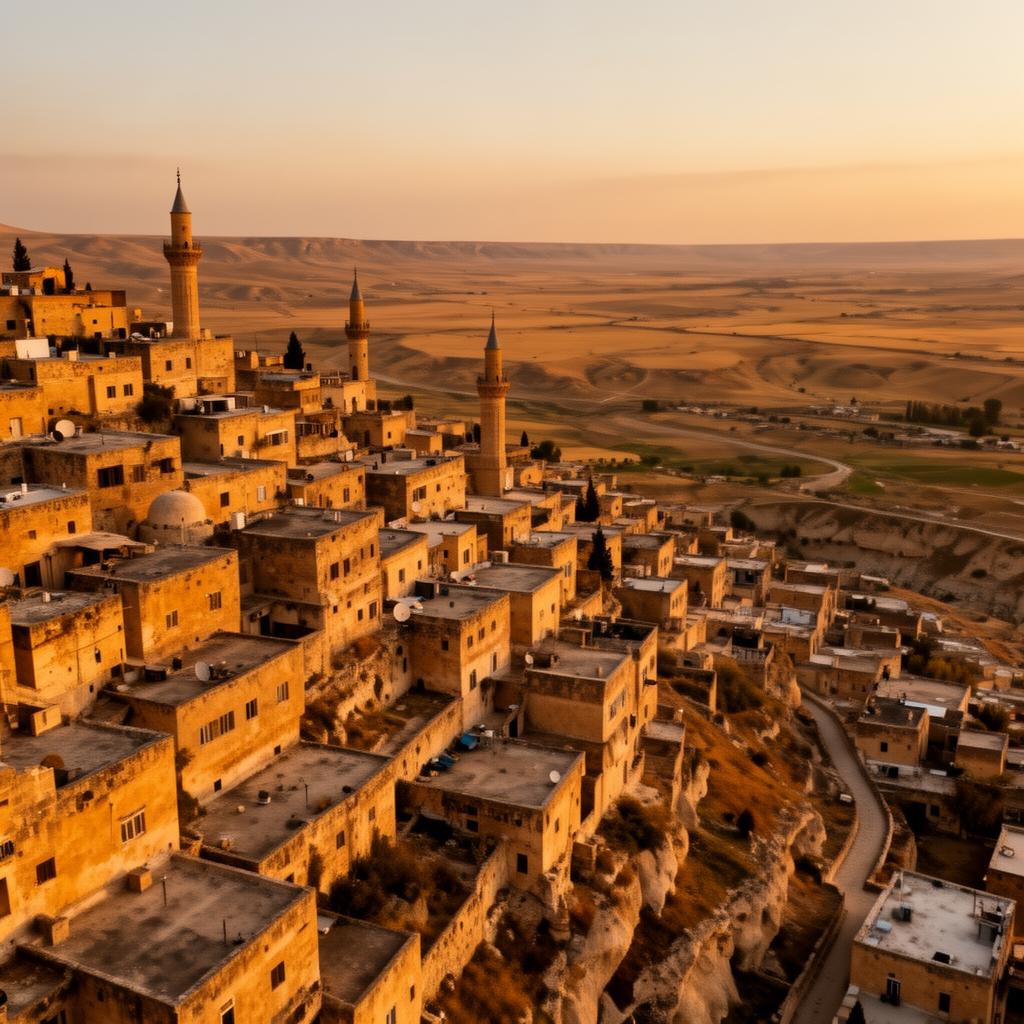
Mardin — a honey-stone balcony above Mesopotamia.
A city of Assyrian, Arab, Armenian and Kurdish neighbours, terraced down a limestone ridge that looks south across the cradle of civilization.
A single ridge of honey-coloured stone, terraced over two thousand years. Beneath it, the plain where writing, the wheel and the city were born.
Mardin is one of the great surviving palimpsests of the ancient Near East — a city where Syriac Orthodox monasteries, Artuqid madrasas, Armenian churches and Ottoman mansions stand within walking distance of one another. Carved entirely from local limestone, its old town glows at sunset like a single sculpted object set against the Mesopotamian horizon.
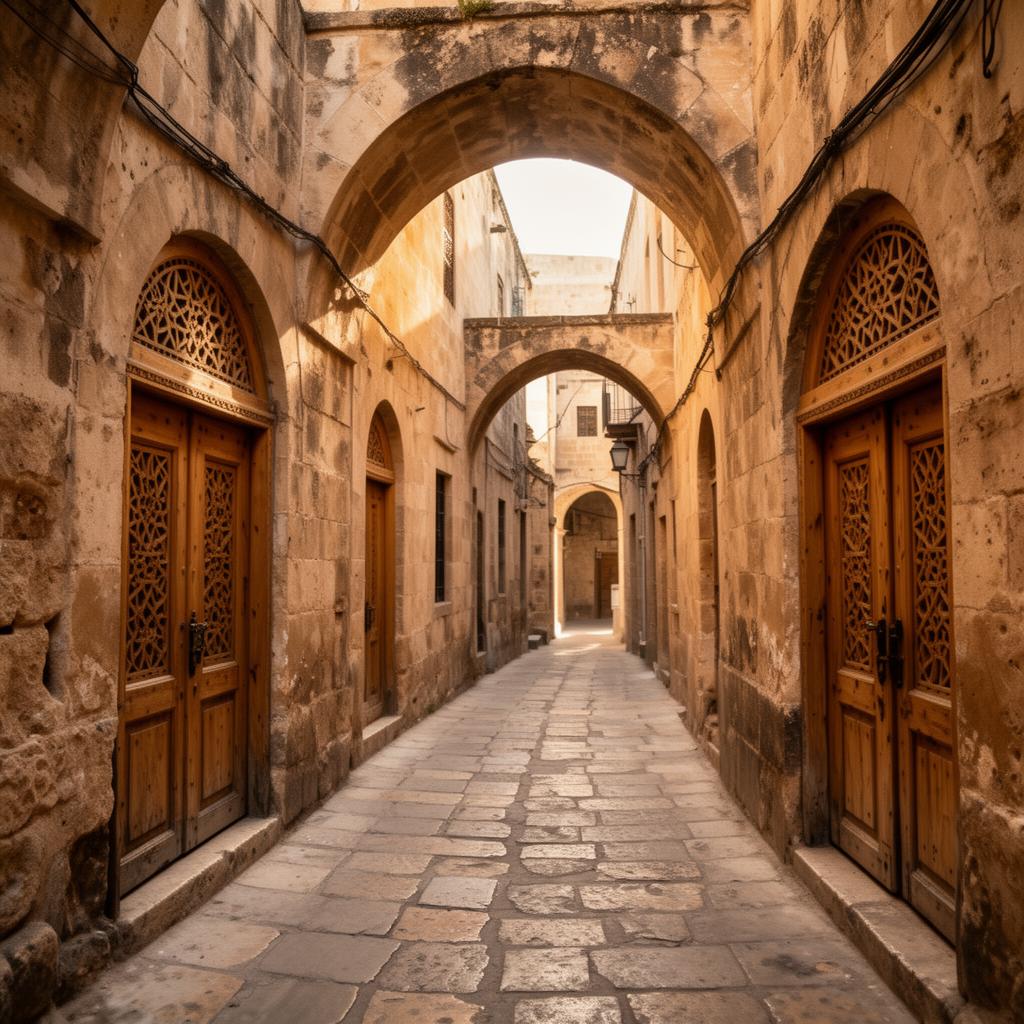
A city carved from a single ridge of light.
We stay in a restored 17th-century mansion above the plain, with vaulted rooms, courtyard fountains and a rooftop that opens onto the long pink silence of a Mesopotamian dusk. Mornings are spent in private with the keepers of the Ulu Camii, Kasımiye Medresesi and the silversmiths who still hammer the telkâri filigree that defines the city.
Tables are set in private courtyards — Assyrian, Arab and Kurdish recipes carried by neighbours who have shared this ridge for longer than any single empire has held it.
Arrange a private stay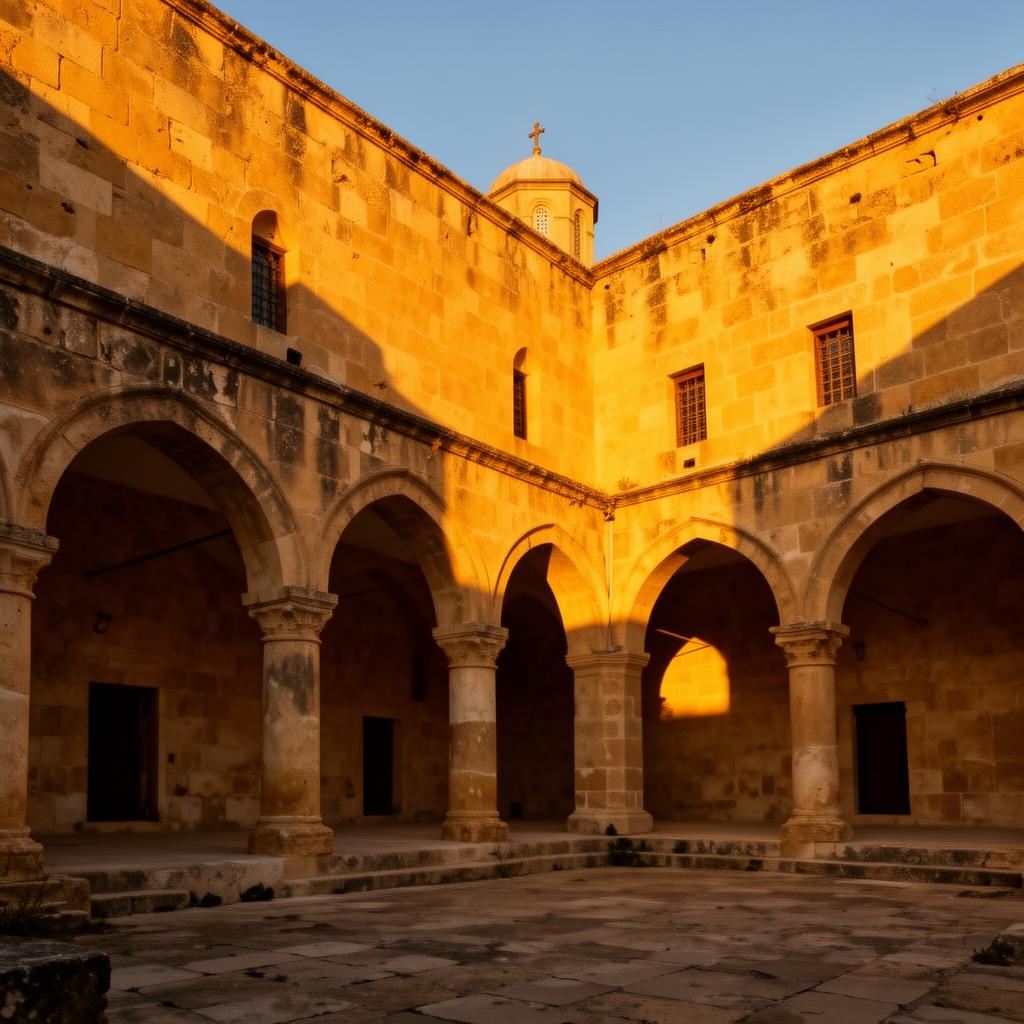
Where Aramaic — the language of Christ — is still sung.
A short drive from the city, the Saffron Monastery of Deyrulzafaran has been a centre of Syriac Orthodox Christianity since the fifth century. Built atop an even older sun temple, its candlelit chapels still echo with hymns in Aramaic — the language spoken by Christ.
We arrange privately guided visits to the monastery with expert-led interpretation, followed — where the community permits and availability allows — by a quiet table in its gardens. All visits follow current opening conditions and the monastery's own regulations.
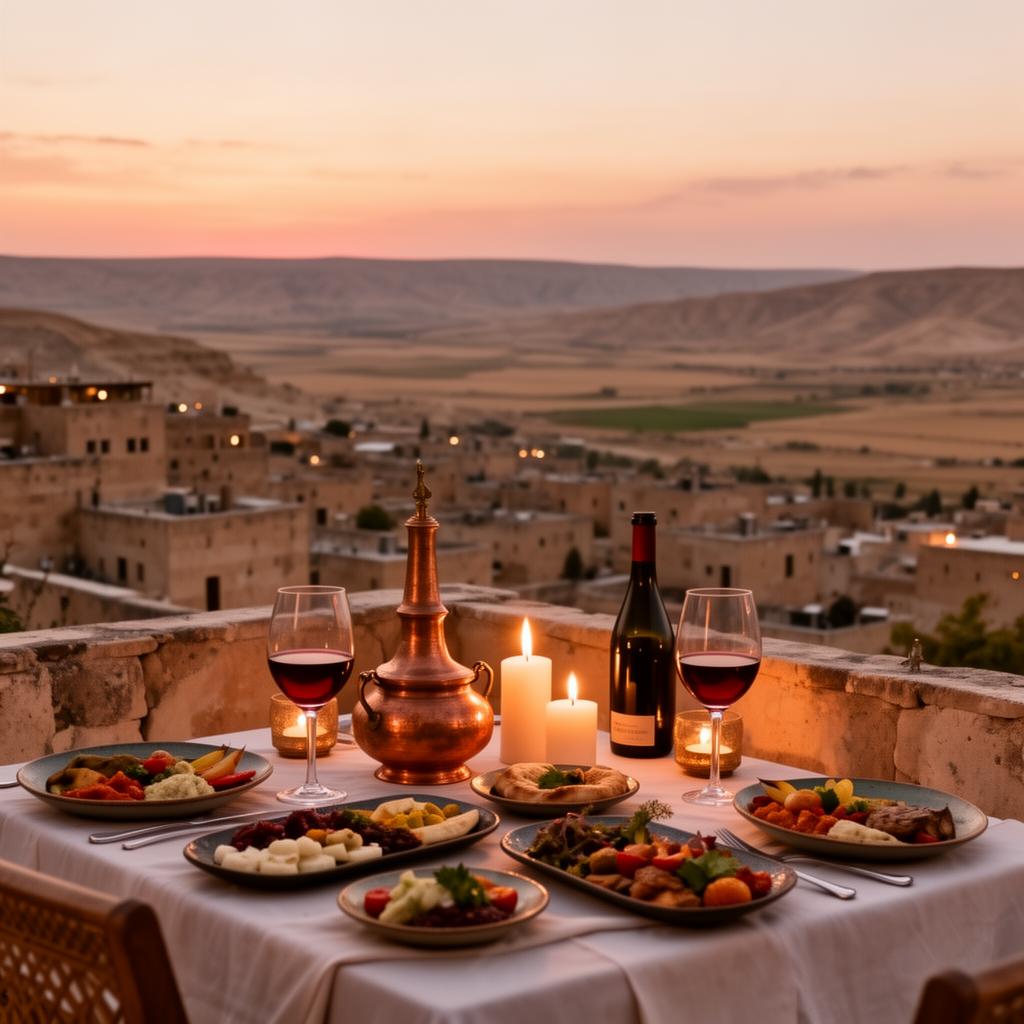
Dinner served against two thousand years of horizon.
On a private terrace cut from honey-coloured stone, a long table is laid as the plain slips from gold to indigo. Local Boğazkere and Öküzgözü wines are poured beside ikbebet, kaburga dolması and saç tava — recipes guarded by Assyrian, Arab and Kurdish households for centuries.
The candles are lit only when the last light leaves Mesopotamia. From this height, the silence is older than every empire that has tried to claim it.
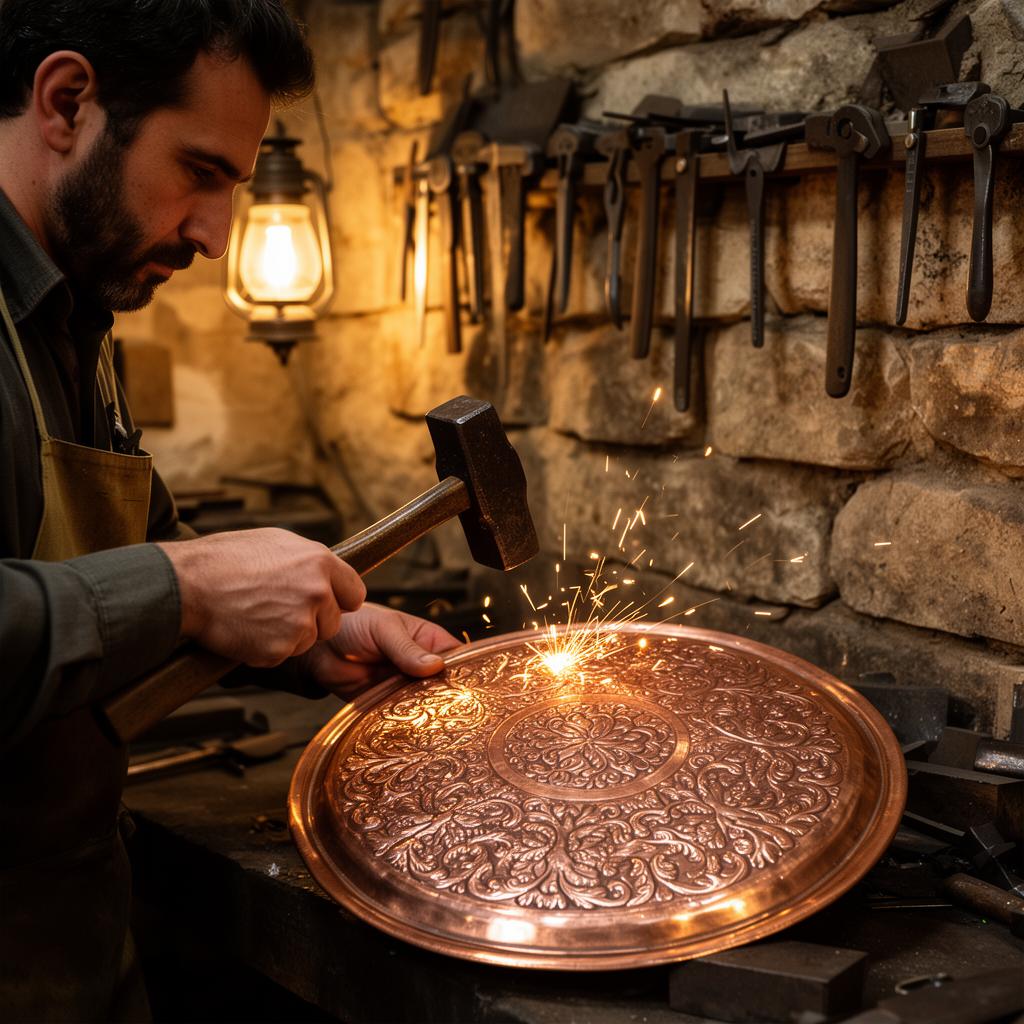

The last hands keeping a thousand-year language alive.
In the covered bazaar, the rhythm of hammer on copper has not stopped since the Artuqid era. We arrange private studio visits with the few remaining masters of telkâri — the silver filigree once worn by the women of Mesopotamia — and with the coppersmiths whose vessels still set the tables of the old city.
A Byzantine frontier carved from honey-stone.
From sunset over the necropolis to aerial views of the carved quarter, from sarcophagi beneath the cliffs to the long wall of tomb façades — five cinematic glimpses of Dara, an hour east of Mardin.
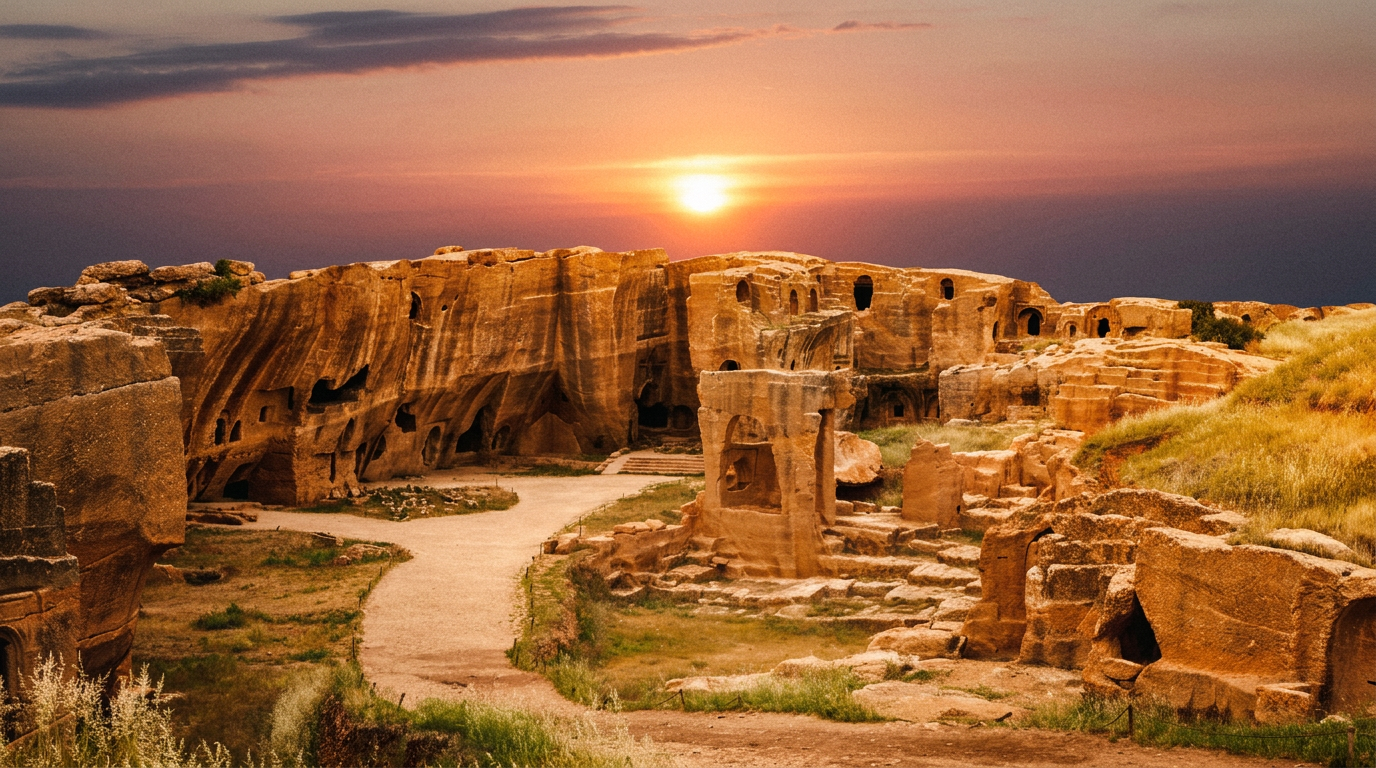
The Sunset Necropolis
The great rock-cut city glows amber at sundown — chambers, shrines and weathered façades turning Dara into a stage of Mesopotamian light.
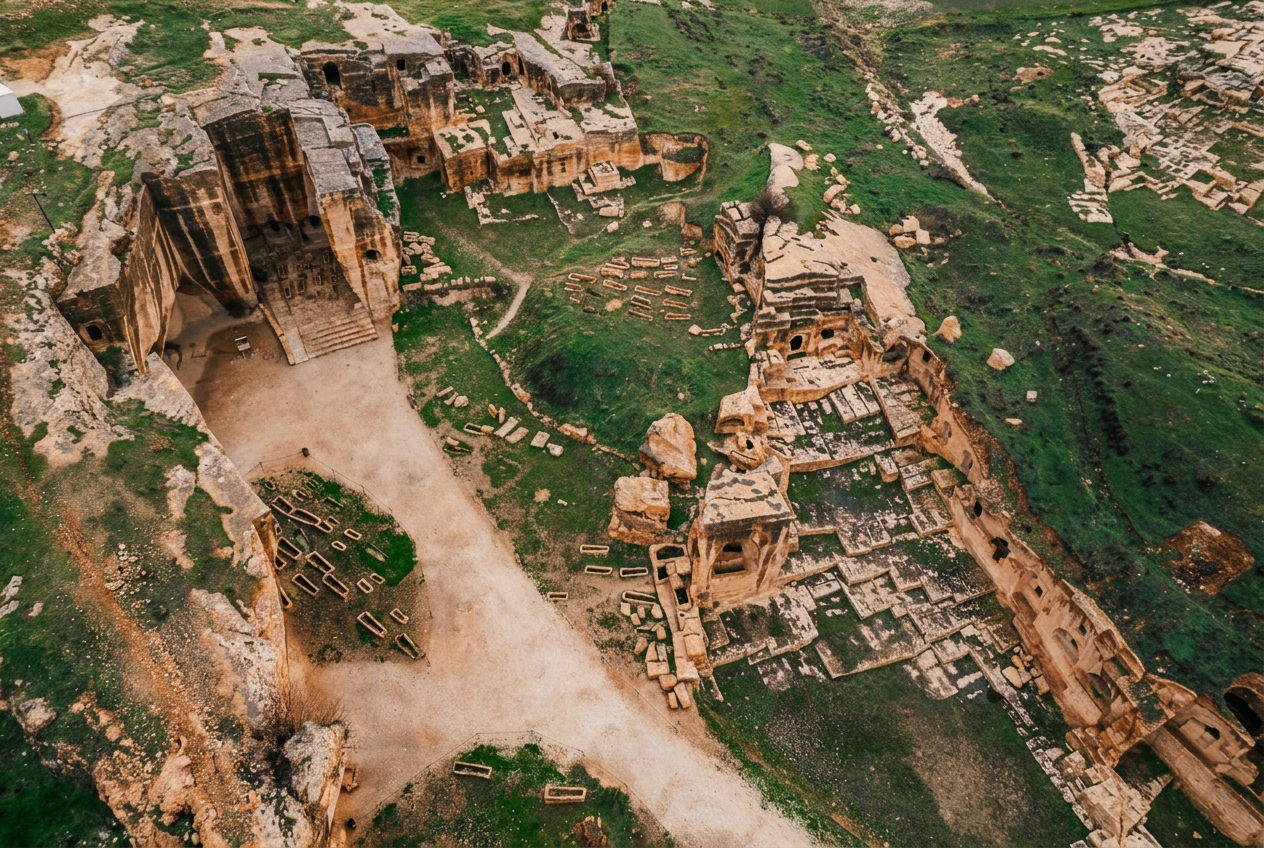
Dara from Above
From the air, the carved city reads like a frontier blueprint — tombs, courtyards and excavated chambers set into the green plain east of Mardin.
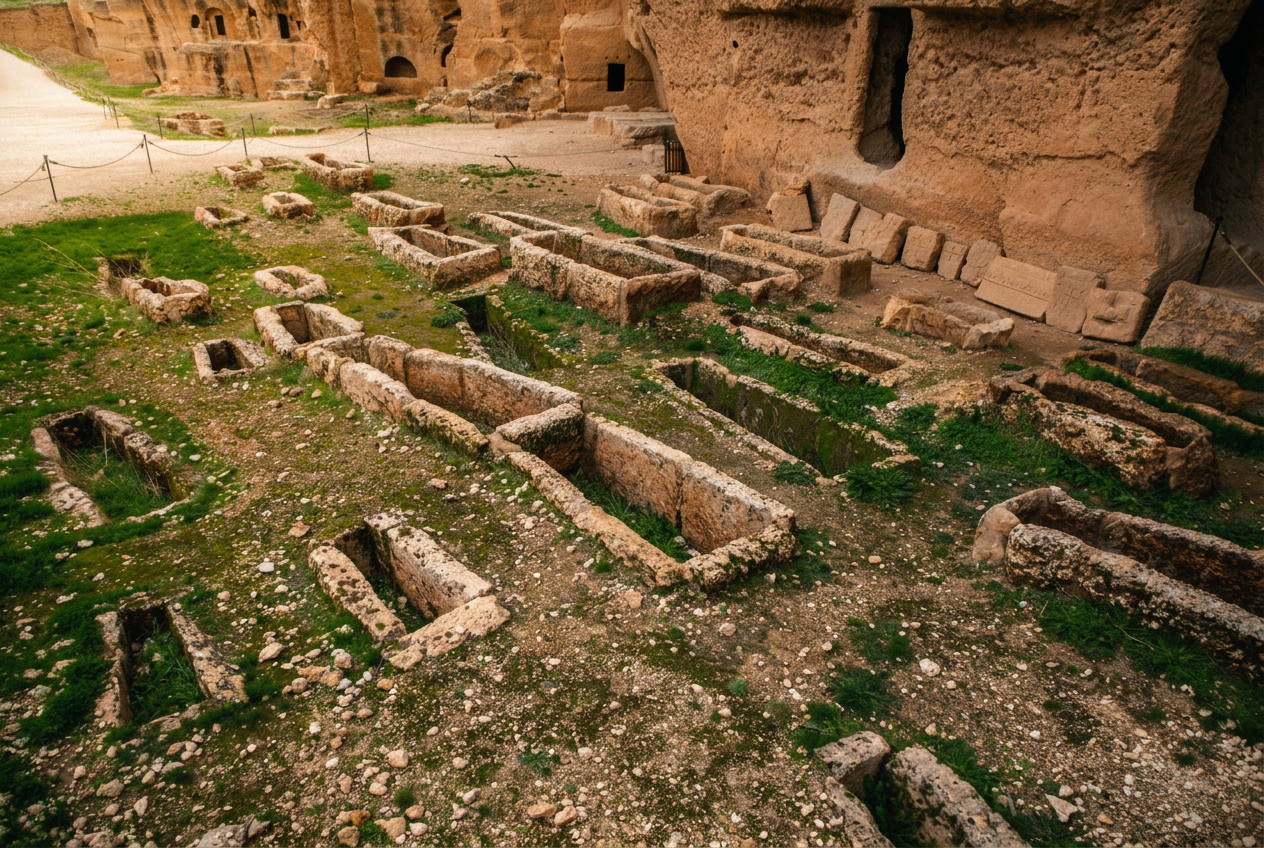
Stone Graves of the Ridge
Sarcophagi lie open beneath the cliff face, revealing the funerary landscape of a city that watched caravans and armies cross Upper Mesopotamia.
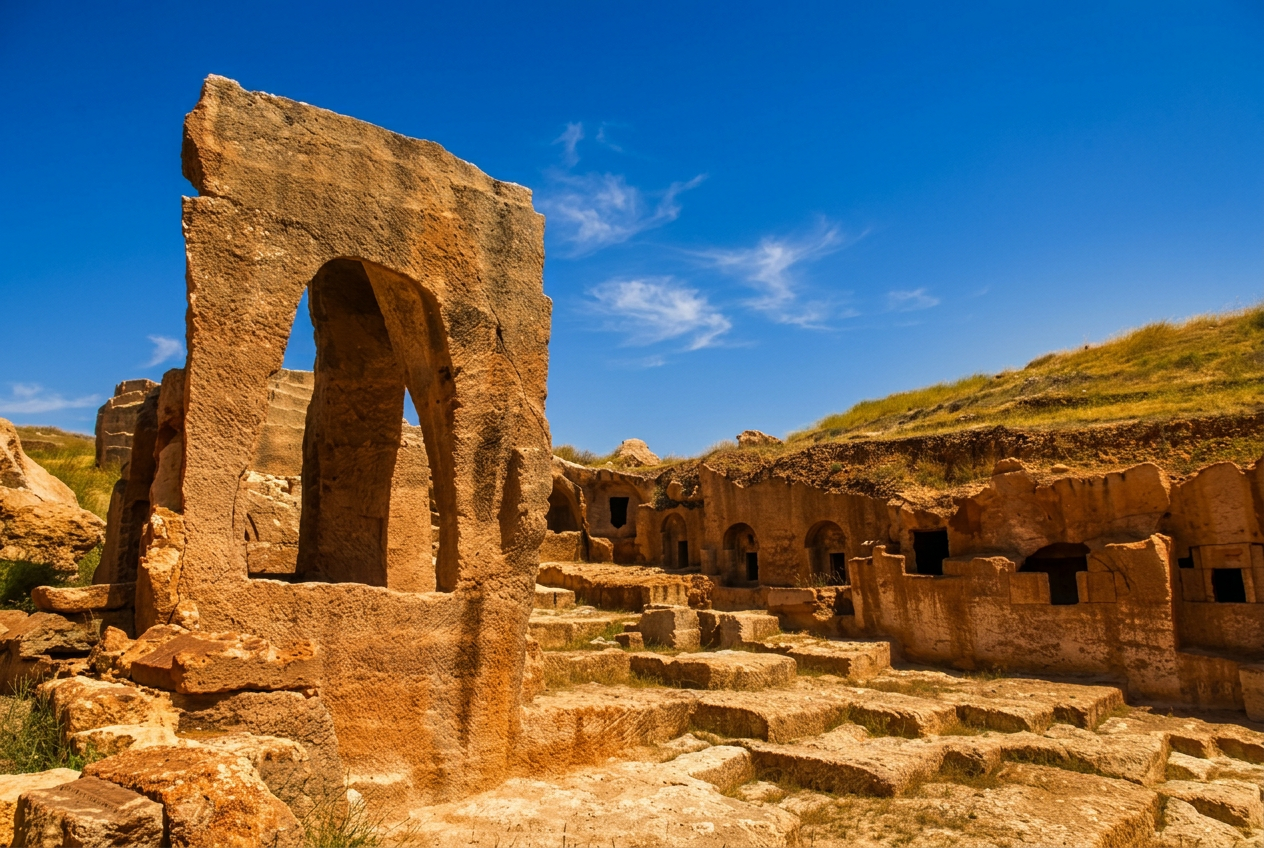
The Arch and the Silent Court
A solitary arch rises from the carved precinct — a scene of sunlit stone, ceremonial geometry and the hush that still defines Dara's interior courts.
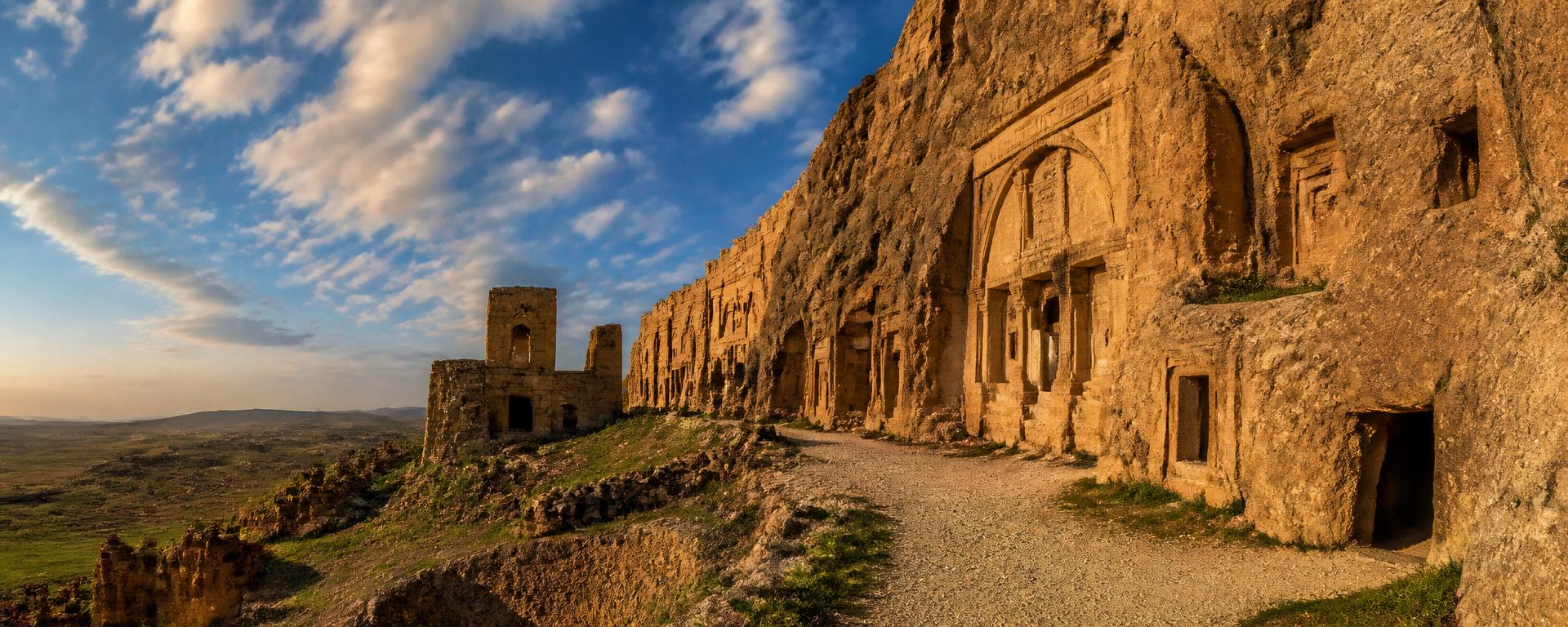
The Long Wall of Tombs
A panoramic sweep along the honey-stone escarpment reveals carved façades stretching toward the horizon — Dara as fortress, necropolis and border memory at once.
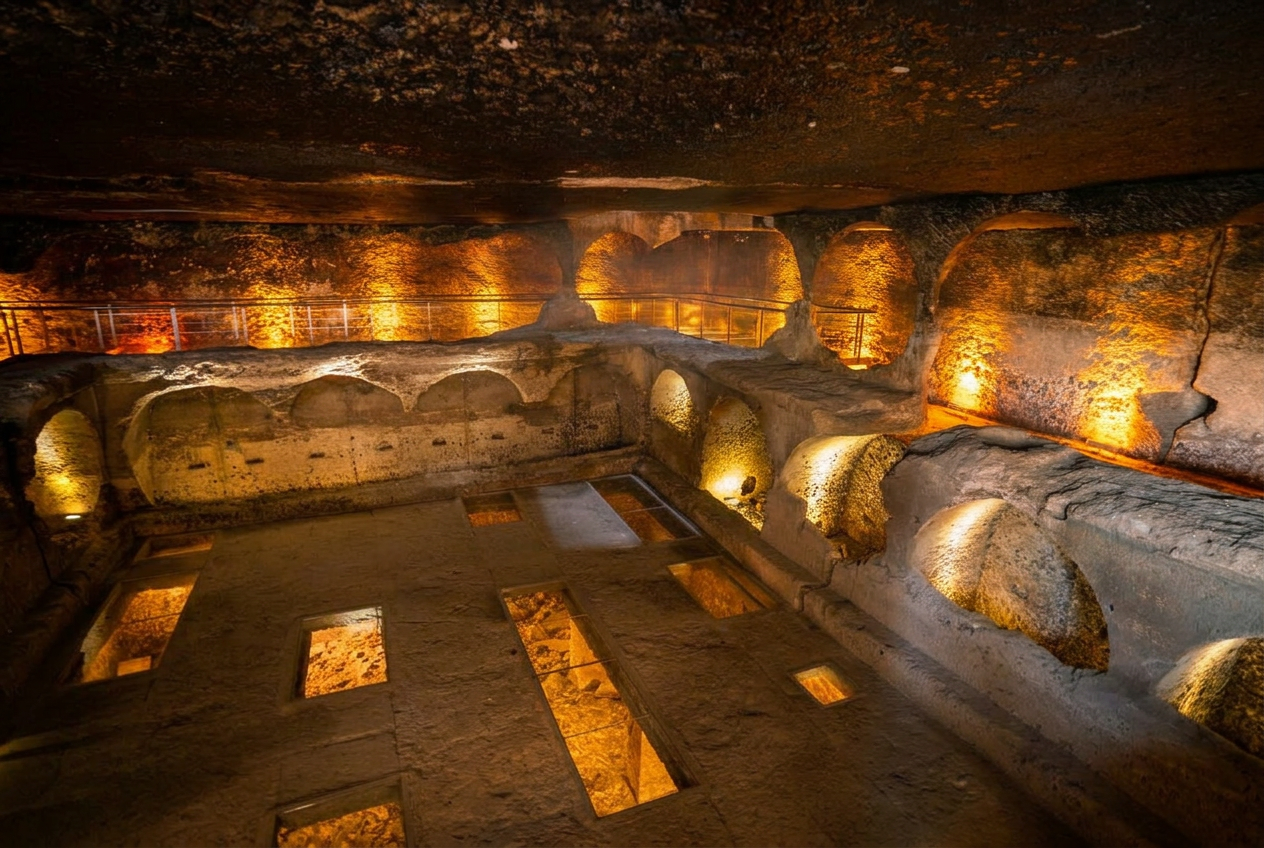
The Underground Cistern
Lamplight spills across niches carved into living rock — Byzantine engineering that held water for an entire frontier city.
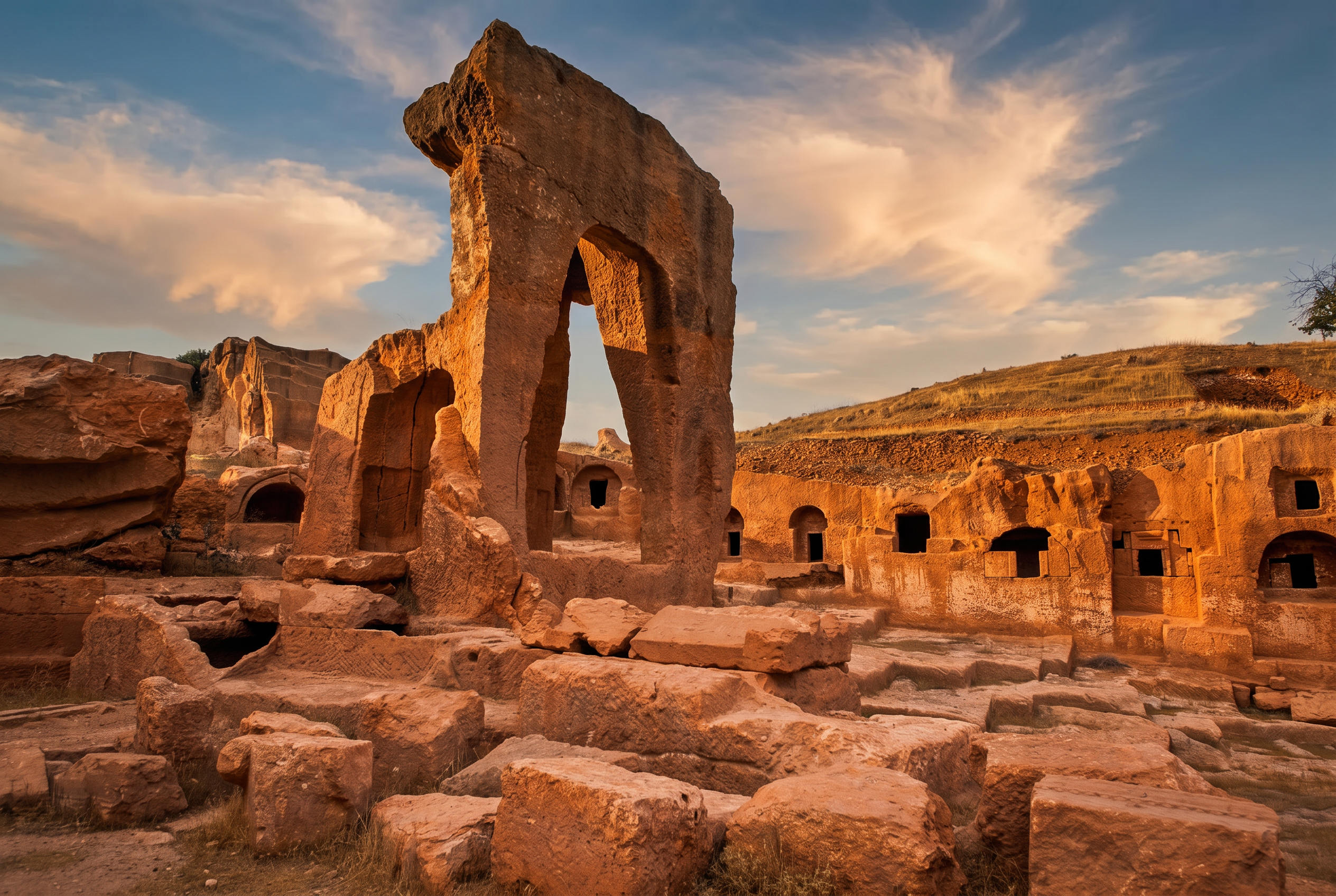
The Solitary Arch at Dusk
A single arch survives where palaces once stood, the last column of a fallen capital glowing in golden hour.
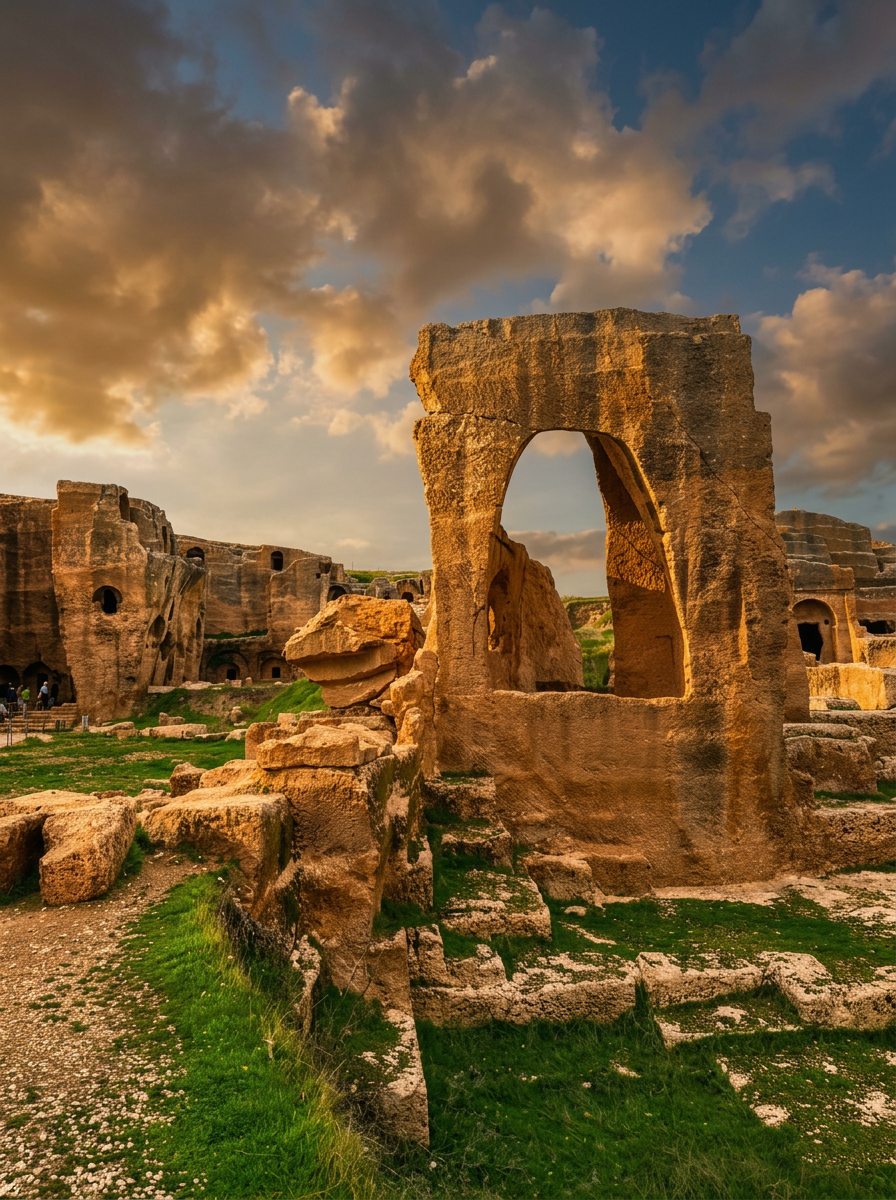
The Gateway in Spring
After winter rains the necropolis greens — a portal of honeyed limestone framing fifteen centuries of silence.