
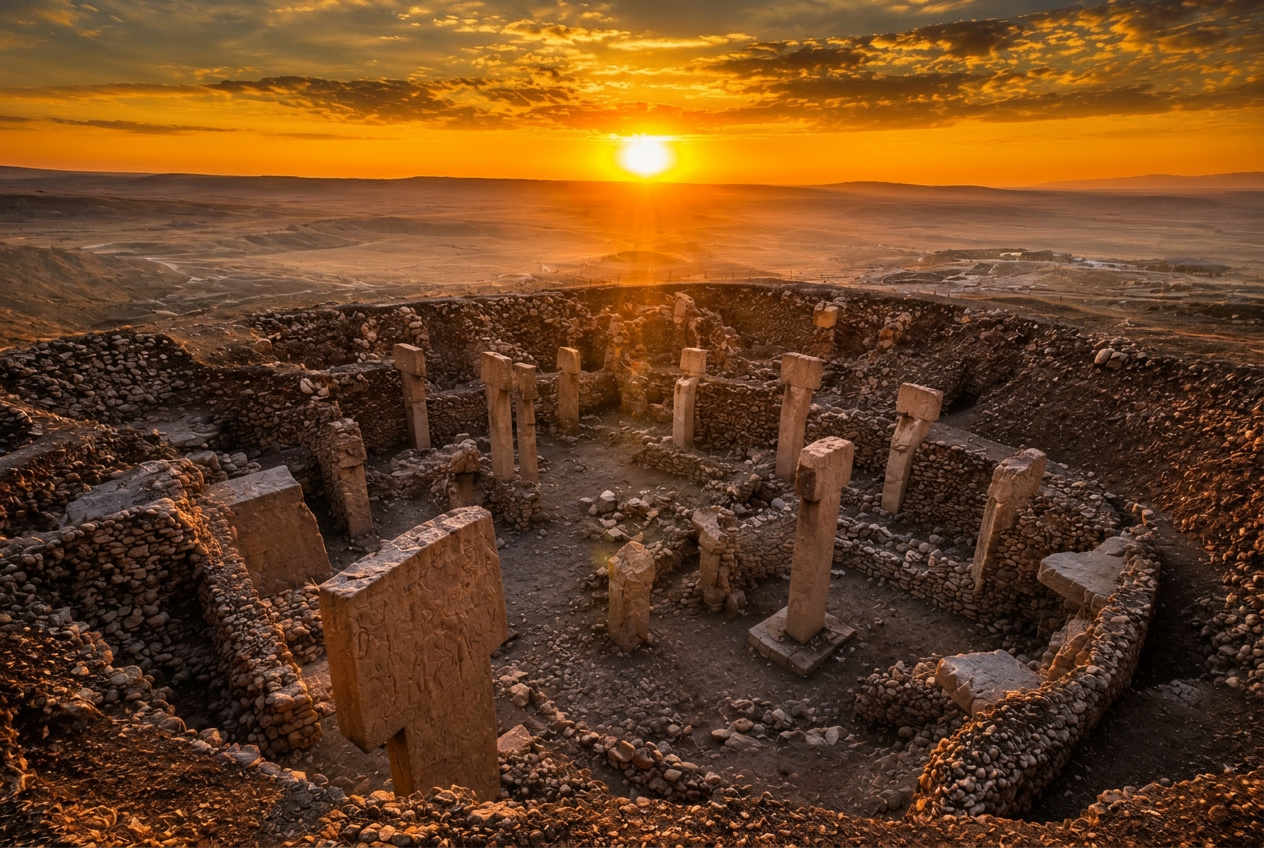
Karahantepe — حجرة التماثيل
على بعد أربعين كيلومتراً جنوب Göbeklitepe، المعبد الشقيق الذي يعيد كتابة القصة البشرية مرة ثانية.
إذا كانت Göbeklitepe هي الكاتدرائية، فإن Karahantepe هو السرداب — حميمي، وتصويري، ويكاد يكون إنسانياً بشكل صادم بالنسبة للألفية الحادية عشرة قبل الميلاد.
تم مسح موقع Karahantepe لأول مرة في عام 1997، وبدأت أعمال التنقيب المنهجي فيه منذ عام 2019 في إطار مشروع Taş Tepeler التابع لوزارة الثقافة التركية. يقع الموقع على نفس النتوء الجيري الذي يقع عليه Göbeklitepe، على بعد خمسة عشر كيلومتراً جنوباً في خط مستقيم. وفي حين يتحدث شقيقه الأكثر شهرة بلغة الحيوانات المنحوتة بنقش بارز، فإن Karahantepe يتحدث بلغة الجسد البشري — بأبعاده الثلاثية الكاملة، وحجمه الطبيعي، وحضوره الذي يكاد يكون صدامياً.
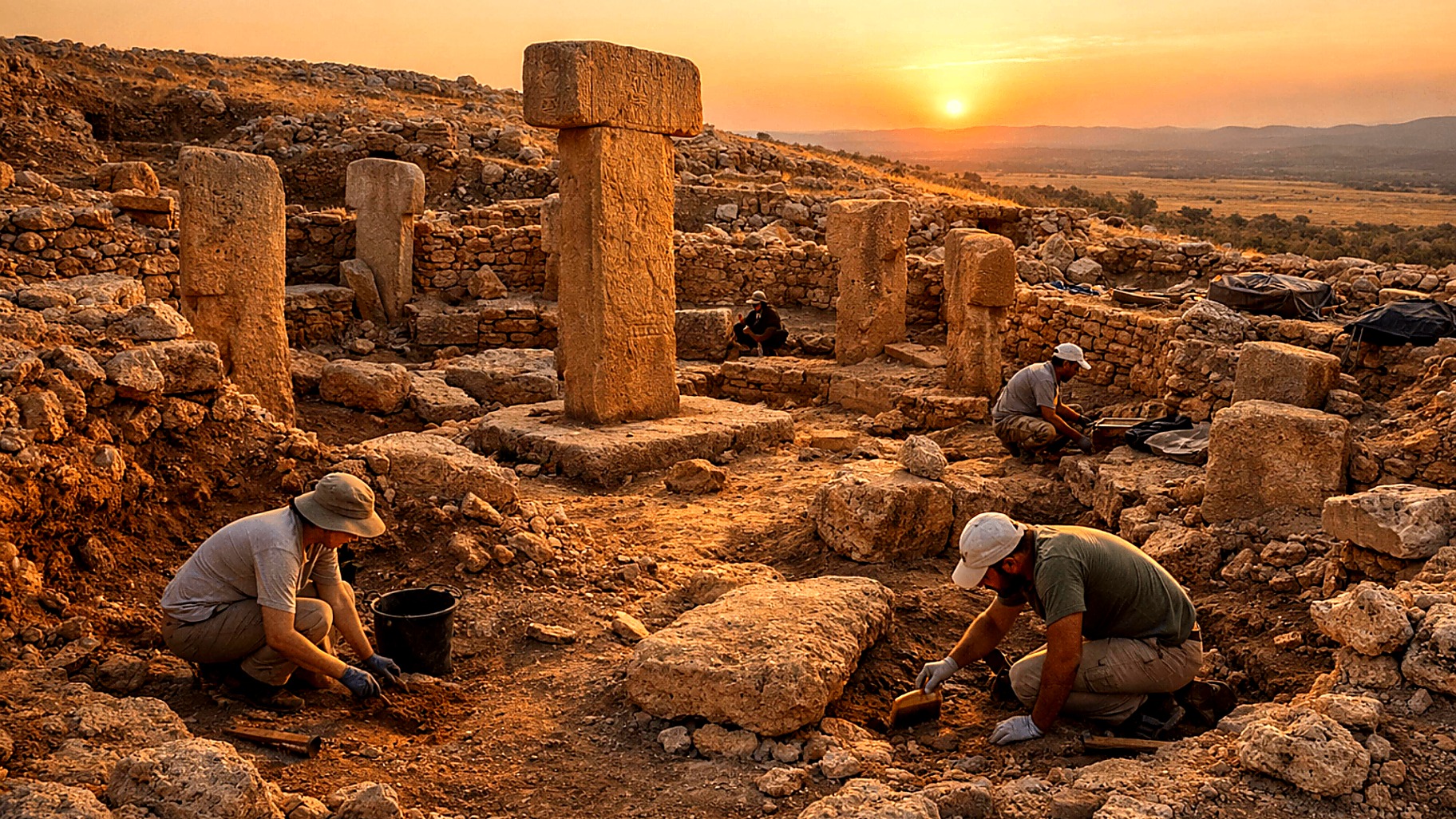
إحدى عشرة دعامة، ووجه واحد يراقب.
إن أكثر الاكتشافات التي تم تصويرها في الموقع هي الحجرة المنحوتة في الصخر — وهي غرفة محفورة في الصخر الأصلي ترتفع من أرضيتها إحدى عشرة دعامة قضيبية الشكل، ويراقبها من كُوّةٍ رأسٌ بشري واحد بعينين غائرتين تشبهان عيني أفعى. وتُعد هذه الحجرة من أبرز الأمثلة على فن النحت في بواكير العصر الحجري الحديث التي تم الكشف عنها حتى الآن.
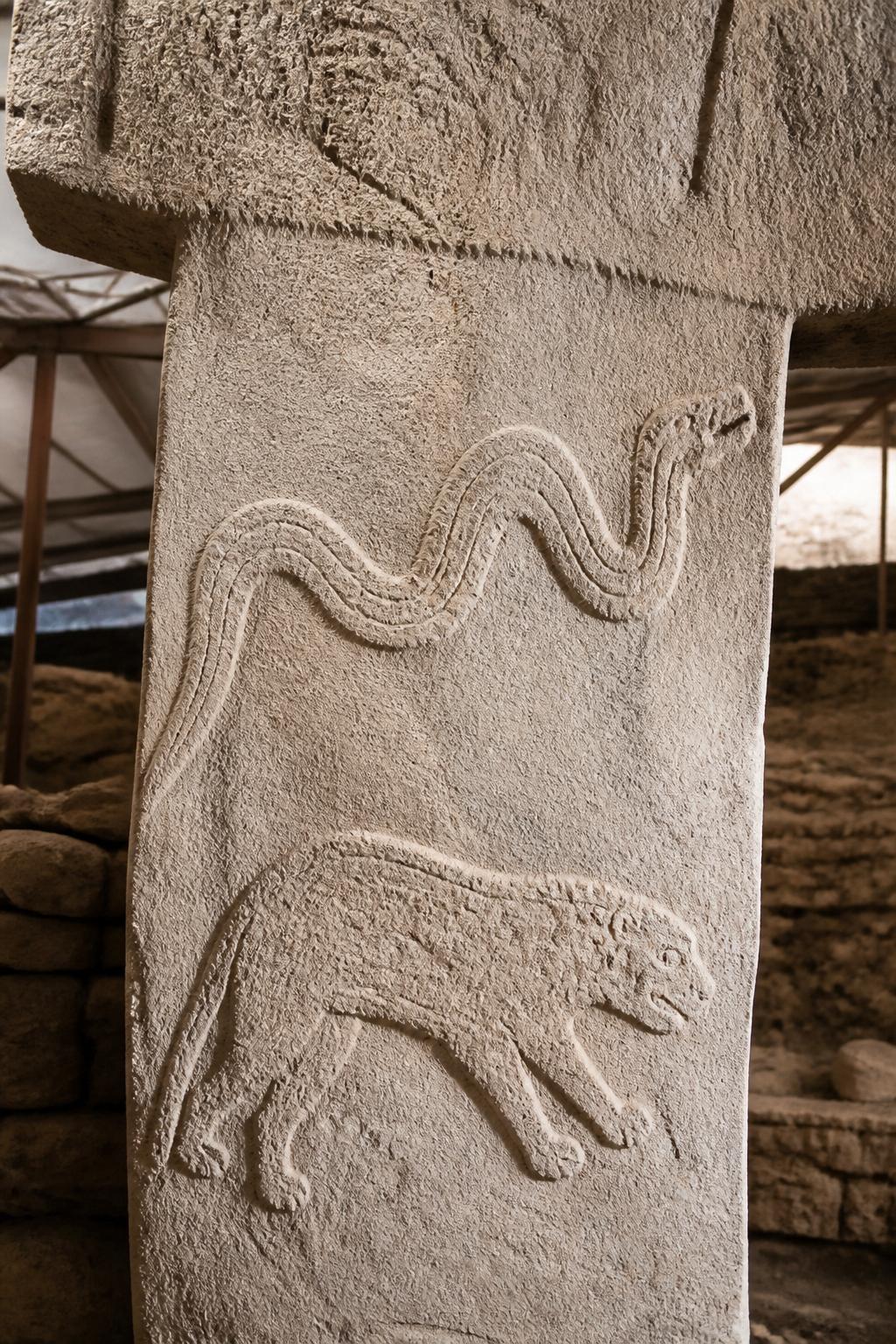
تمثال بشري لافت من بواكير العصر الحجري الحديث.
اكتُشف هذا التمثال في Karahantepe عام 2023 وهو معروض الآن في متحف آثار Şanlıurfa. يبلغ ارتفاعه حوالي 2.3 متر وهو مصنوع من الحجر الجيري، ويمثل شخصية ذكر بأضلاع هيكلية، ويدين تقبضان على فخذيه. يُعد التمثال أحد أبرز تجسيدات الموقع للشكل البشري ومثالاً استثنائياً على فن النحت في بواكير العصر الحجري الحديث. إن مقابلته وجهاً لوجه، بعد قضاء الصباح في الحجرة، هي اللحظة التي يكتمل فيها يومك في Şanlıurfa.
يوم واحد فاخر مع زيارة إلى Göbeklitepe.
- 08:00 — زيارة Göbeklitepe عند الافتتاح، قبل اشتداد حرارة الجو ووصول الحافلات السياحية.
- 10:30 — التوجه جنوباً عبر بساتين الفستق إلى Karahantepe.
- 11:00 — زيارة خاصة إلى Karahantepe برفقة مرشد محترف ومرخص، مع شرح يقدمه خبير، وذلك رهناً بشروط وأنظمة فتح الموقع الحالية.
- 13:30 — غداء متأخر يتضمن «تشي كفتة» وكباب أورفا في فناء ذي أقبية حجرية.
- 16:00 — متحف آثار Şanlıurfa: لقاء وجهاً لوجه مع التمثال الجالس.
إرث Klaus Schmidt.
1953 — 2014
ما كان لأي من هذا — لا Karahantepe، ولا مشروع Taş Tepeler، ولا الفصل الأول المُعاد كتابته في كل كتاب من كتب تاريخ العالم — أن يكون على هذه التلة لولا Klaus Schmidt. عندما سار عالم الآثار الألماني على نتوء Göbeklitepe في عام 1994، بناءً على معلومة من راعٍ، أدرك في صباح واحد ما أغفله مسح سابق طيلة ثلاثين عاماً: أن الحجارة التي على شكل حرف T البارزة من التربة كانت قمم دعامات ضخمة من العصر الحجري الحديث ما قبل الفخاري، أقدم بسبعة آلاف عام من Stonehenge.
«أولاً المعبد، ثم المدينة.»— Klaus Schmidt، معلقاً على قلب سردية العصر الحجري الحديث.
- 1953
وُلد في فورشتنبرغ، بادن-فورتمبيرغ. درس عصور ما قبل التاريخ والآثار الكلاسيكية في جامعتي إرلنغن وهايدلبرغ، وتخصص في العصر الحجري الحديث ما قبل الفخاري في أعالي بلاد ما بين النهرين.
- 1983
يبدأ عمله الميداني في «نيفالي تشوري» على نهر الفرات، تحت إشراف هارالد هاوبتمان. ينقب في بيوت من العصر الحجري الحديث ما قبل الفخاري ويكتسب الخبرة العملية في الأفق الحضاري الذي سيحدد مسيرته المهنية.
- 1994
راعٍ محلي، محمد يلدز، يذكر وجود حجارة غريبة منحوتة على تلة. يزور شميدت الموقع في صباح اليوم التالي ويتعرف في غضون ساعات على الدعامات التي على شكل حرف T على أنها من العصر الحجري الحديث. كانت المسوحات منذ عام 1963 قد استبعدت الموقع باعتباره مقبرة بيزنطية.
- 1995
نيابة عن المعهد الألماني للآثار (DAI)، يطلق شميدت حفريات منهجية في Göbeklitepe. سيستمر المشروع عقدين من الزمن وسيقلب التسلسل الزمني السائد للدين والتحضر.
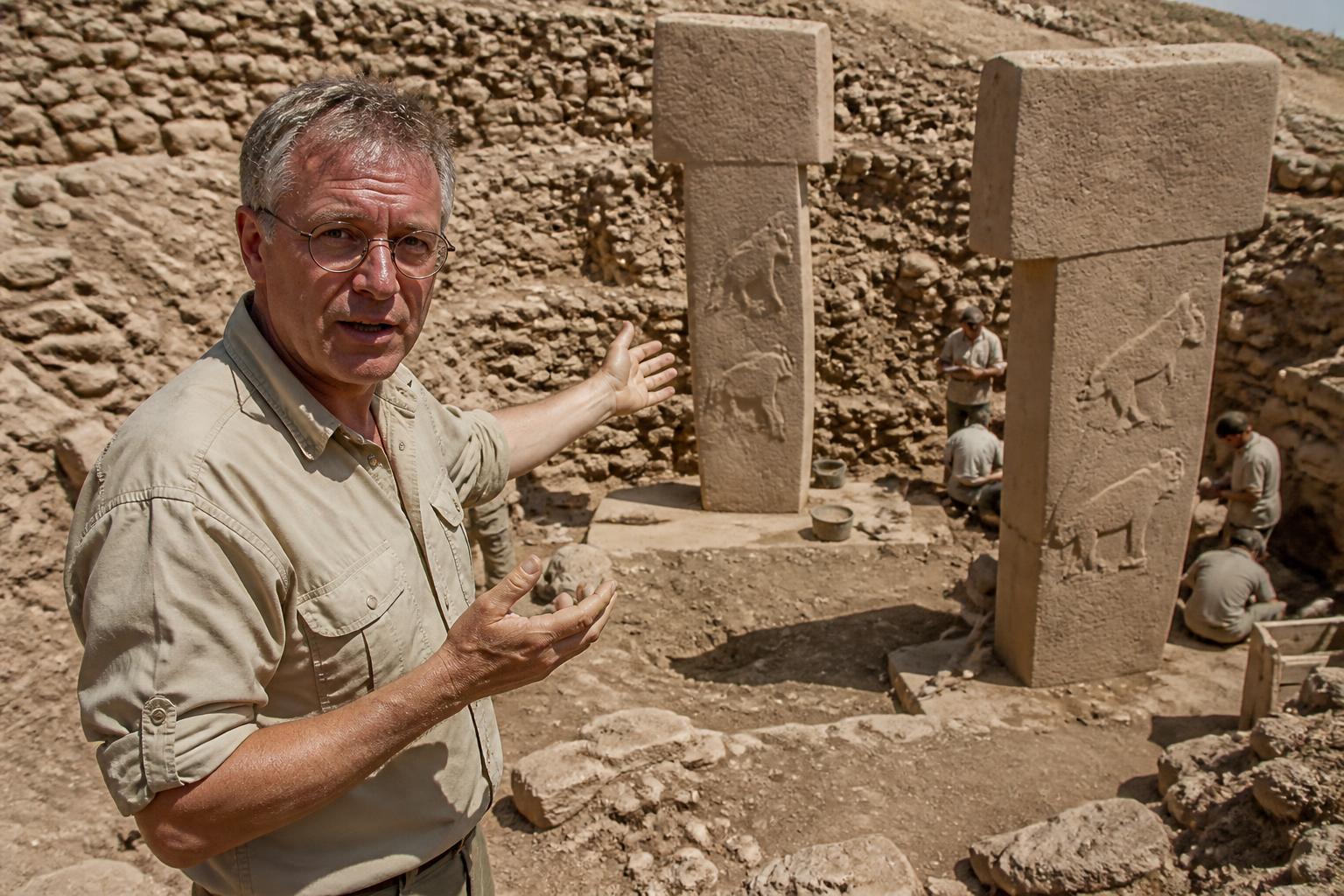
Klaus Schmidt يشرح لفريقه عن السياجات ذات الدعامات على شكل حرف T، موقع Göbeklitepe، عام 1995
- 2007
ينشر Sie bauten die ersten Tempel مع دار النشر C.H. Beck، وتُرجم الكتاب في جميع أنحاء العالم. يجادل الكتاب بأن الصيادين وجامعي الثمار بنوا Göbeklitepe كمركز طقوسي بحت، مما يقلب نموذج «المدن أولاً، ثم المعابد» الراسخ رأساً على عقب.
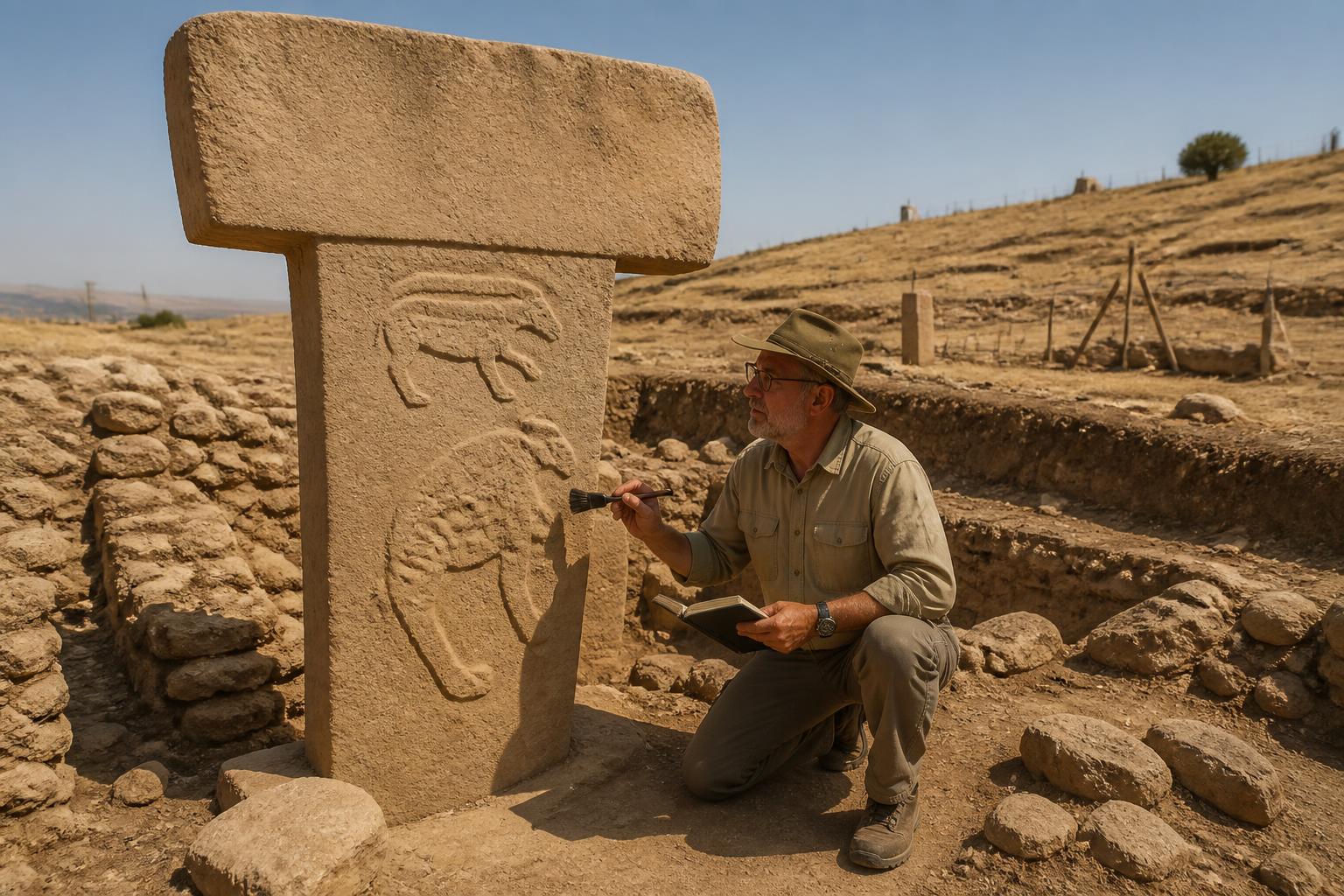
Klaus Schmidt يزيل الغبار عن دعامة منحوتة على شكل حرف T أثناء التنقيب في Göbeklitepe، عام 2007
- 20 يوليو 2014
يتوفى فجأة بنوبة قلبية أثناء عمله في Şanlıurfa، عن عمر يناهز 60 عاماً. يُدفن في ألمانيا، لكن إرثه الفكري يعيش في كل خندق من خنادق Taş Tepeler — بما في ذلك حجرة التماثيل في Karahantepe، التي نُقّب عنها بعد خمس سنوات من وفاته.
المراجع
لطالما شكَّ Schmidt أن موقع Göbeklitepe لم يكن وحيدًا في منطقته. وتُعَدُّ غرفة التماثيل في Karahantepe، التي نُحتت من الصخر الأم بعد وفاته بخمس سنوات، الوريث الفكري المباشر لعمله. وفي كل زيارة نقوم بها، نتوقف عند المصطبة الجنوبية التي اعتاد الجلوس عليها في نهاية يوم التنقيب. لا يوجد هناك لوح تذكاري، ولا حاجة لوجوده.
اقرأ الإشادة الكاملة
تجوّل في خصوصية تامة بين أقدم المواقع الطقوسية الضخمة المعروفة في العالم.
تجمع رحلاتنا الخاصة عبر منطقة Taş Tepeler بين زيارة Göbeklitepe وKarahantepe ومجموعات الآثار في متاحف Şanlıurfa، مع إرشاد احترافي مرخّص، وشروحات يقدمها الخبراء، وزيارات منسقة بعناية. يخضع أي اجتماع مع متخصصين أو أي ترتيبات إضافية للتصاريح الرسمية، ولوائح الموقع، ومدى التوافر.