Perspective d’expert — Yüksel İskol, professeur associé, archéologue et universitaire spécialiste du patrimoine culturel anatolien.
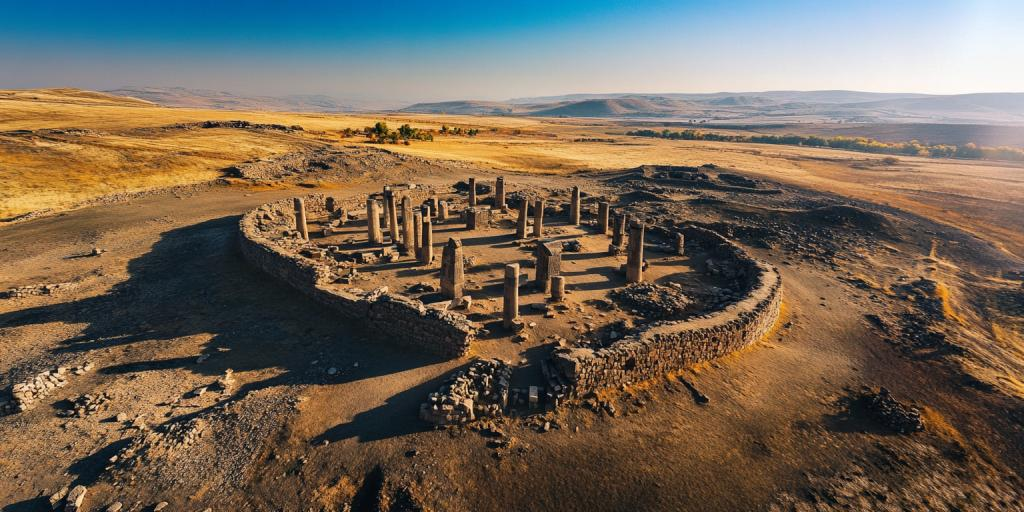
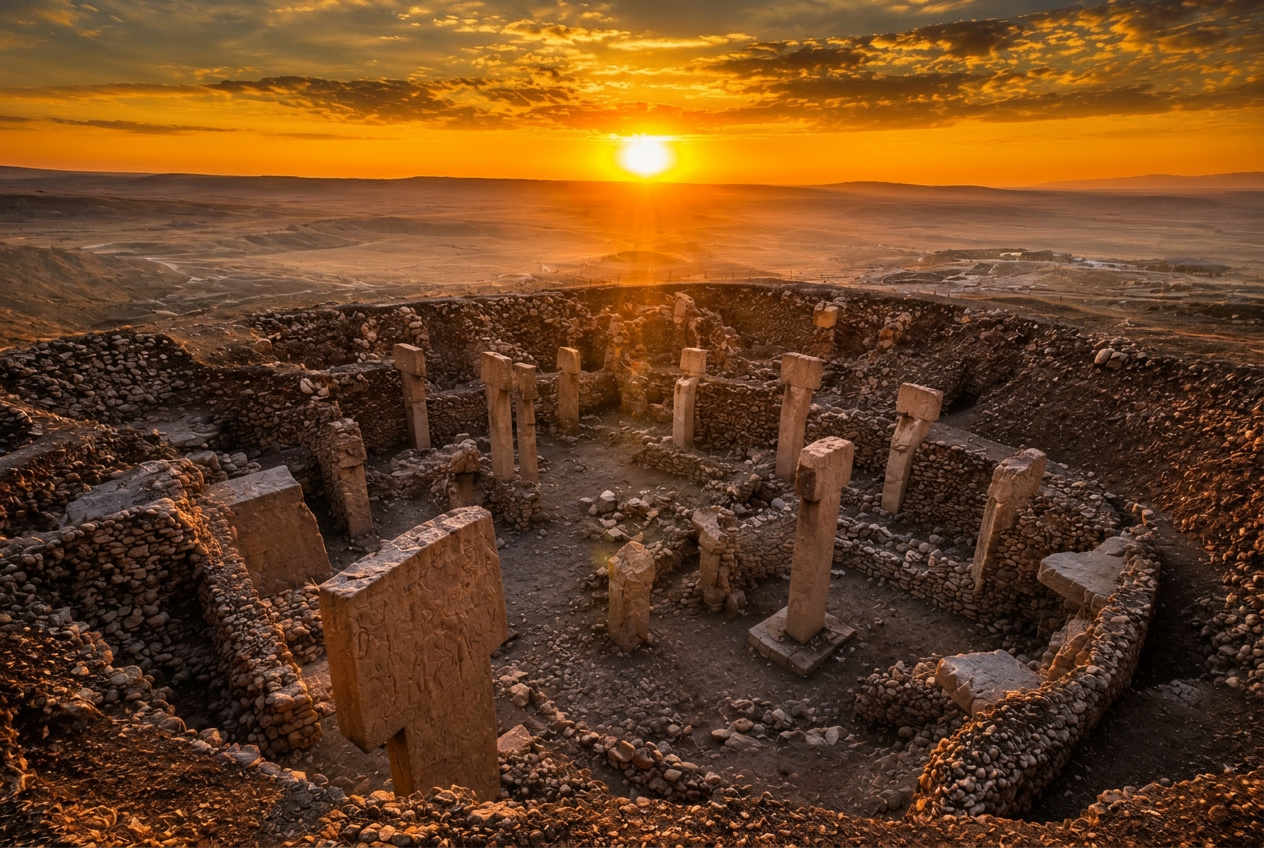
Pendant de nombreuses années, l’histoire du Néolithique ancien en Haute-Mésopotamie s’est principalement racontée à travers l’architecture. Des bâtiments monumentaux en pierre, des piliers en forme de T, des enclos soigneusement organisés et une imagerie animale extraordinaire ont transformé notre compréhension des communautés qui vivaient il y a plus de onze mille ans.
Aujourd’hui, Karahantepe ajoute une nouvelle dimension à ce récit.
Ici, la forme humaine devient de plus en plus visible.
Cela ne signifie pas que l'image humaine était absente de Göbeklitepe. Les piliers en forme de T eux-mêmes sont depuis longtemps interprétés comme des formes anthropomorphes : certains portent des bras, des mains, des ceintures et d'autres éléments qui suggèrent des corps humains stylisés. L’imagerie de Göbeklitepe appartient également à un monde symbolique complexe où les représentations animales et humaines apparaissent conjointement.
Karahantepe, cependant, présente le corps humain avec une clarté saisissante.
Du corps symbolique à la présence humaine
L'une des plus importantes découvertes de Karahantepe a été portée à l'attention du public en 2023 : une statue humaine assise d'environ 2,3 mètres de haut, sculptée dans le calcaire.
La sculpture n'est pas seulement remarquable par sa taille. Le traitement du corps y est très réfléchi. Les côtes, la colonne vertébrale et les épaules sont fortement accentuées, tandis que les mains sont posées sur le corps. Elle a été découverte fixée dans une structure ressemblant à une banquette, en association avec d'autres objets, dont une représentation de vautour et des objets en pierre.
Nous devons résister à la tentation de donner à cette statue une identité simple.
Elle est peut-être liée à des rituels, à la mémoire, à la mort, aux ancêtres, à l'identité sociale ou à des concepts qui ne cadrent pas facilement avec nos catégories modernes. L'archéologie fournit rarement d'explication écrite pour l'imagerie de cette époque.
Ce qu'elle fournit, en revanche, c'est un contexte.
Et à Karahantepe, ce contexte suggère de plus en plus que le corps humain lui-même était porteur d'une puissante signification.
Un visage apparaît sur le pilier en T
L'importance de la représentation humaine à Karahantepe a pris une tournure encore plus intéressante avec une découverte annoncée en 2025.
Les fouilles ont révélé un pilier en forme de T portant un visage humain clairement dessiné. Jusqu'à cette découverte, l'interprétation anthropomorphique des piliers en T reposait principalement sur des caractéristiques telles que des bras et des mains sculptés sur certains exemplaires. La découverte de Karahantepe a ajouté un élément nouveau et d'une clarté inhabituelle : un visage incorporé à la forme même du pilier.
Cela n'apporte pas de réponse définitive à ce que chaque pilier en T représentait.
Toutefois, cette découverte renforce une importante ligne d'interprétation.
Les pierres monumentales du paysage de Taş Tepeler n'étaient peut-être pas comprises simplement comme des éléments architecturaux. Certaines, du moins, semblent avoir incarné des identités humaines ou quasi humaines.
Cela rend la relation entre l'architecture et l'image particulièrement importante.
Un bâtiment n'était pas simplement un espace contenant des sculptures.
Les piliers, les banquettes, les murs, les reliefs et les formes humaines ont tous pu participer à la création d'un environnement symbolique commun.
Le corps humain comme langage
Quand on observe l'imagerie préhistorique, le danger est toujours de poser des questions modernes : Qui est cette personne ? Est-ce un dieu ? Est-ce un souverain ? Est-ce un ancêtre ?
Ce sont des questions naturelles, mais les sociétés qui ont créé Karahantepe vivaient des milliers d'années avant l'écriture et avant les institutions politiques et religieuses que nous connaissons des civilisations mésopotamiennes ultérieures.
Leur langage visuel appartenait à un monde différent.
La question la plus utile n'est donc peut-être pas de savoir qui représente une figure particulière, mais pourquoi la forme humaine est devenue suffisamment importante pour être monumentalisée.
Un corps à l'échelle humaine ou plus grand que nature modifie l'expérience d'un espace. Il crée une présence. Il établit une relation entre le spectateur, l'architecture et l'image.
À Karahantepe, la figure humaine n'est pas réduite à un petit motif décoratif. Elle peut occuper le même monde physique que les personnes qui pénétraient dans ces espaces.
Cette différence compte.
Göbeklitepe et Karahantepe ne doivent pas être interprétés isolément
Le plus grand changement dans notre compréhension de cette période est peut-être la disparition progressive de l'idée que Göbeklitepe était un phénomène isolé.
Les recherches menées dans l'ensemble du paysage de Taş Tepeler ont révélé de nombreux sites néolithiques présentant des traditions architecturales et symboliques apparentées.
Les recherches récentes ont également contribué à une compréhension plus complexe de Göbeklitepe lui-même, plaçant de plus en plus l'activité rituelle dans le contexte plus large de l'habitat, de la vie domestique et des interactions régionales.
Cette évolution de l'interprétation est importante.
L'archéologie ne progresse pas parce que chaque fouille confirme ce que nous croyons déjà, mais parce que de nouvelles preuves nous obligent à reconsidérer les modèles antérieurs.
Karahantepe est particulièrement précieux à cet égard.
Il ne remplace pas Göbeklitepe.
Il nous offre une autre perspective pour comprendre cette même période extraordinaire de l'histoire humaine.
Un paysage de communautés
Considérés ensemble, Göbeklitepe, Karahantepe et les autres sites des Taş Tepeler nous incitent à penser à l'échelle d'un paysage.
Il s'agissait de communautés liées par la géographie, les matériaux, les connaissances architecturales et les éléments d'un vocabulaire symbolique commun.
Pourtant, elles n'étaient pas nécessairement identiques.
Différents sites ont pu exprimer différents aspects du monde social.
Un site pouvait mettre l'accent sur des animaux particuliers. Un autre pouvait accorder une plus grande importance au corps humain. Les formes architecturales pouvaient être partagées tandis que des communautés individuelles développaient des langages visuels distinctifs.
C'est précisément cette combinaison de similitude et de différence qui rend la région si importante.
Au lieu de chercher une explication unique à la transformation néolithique, nous pouvons commencer à entrevoir un réseau de communautés expérimentant de nouvelles manières de construire, de se rassembler, de se souvenir et de se représenter.
L'importance de voir les sites dans leur ensemble
Pour le visiteur d'aujourd'hui, c'est aussi pourquoi Karahantepe ne doit pas être considéré simplement comme une alternative à Göbeklitepe.
Les deux sites dialoguent l'un avec l'autre.
À Göbeklitepe, l'architecture monumentale et une puissante imagerie animale dominent la première impression.
À Karahantepe, la rencontre avec la forme humaine peut sembler plus immédiate.
Et au Musée d'archéologie de Şanlıurfa, les objets retirés de leur contexte de fouille peuvent être étudiés de près et compris dans le cadre d'une chronologie régionale plus large.
Découvrir ces lieux ensemble crée quelque chose qu'aucun site ne peut offrir à lui seul : le contexte.
La question n'est plus seulement : « Quel âge a cet objet ? » Elle devient : quel type de société a créé cela ? Comment ces communautés comprenaient-elles le corps humain ? Qu'ont-elles choisi de graver dans la pierre pour la postérité ? Et pourquoi, à ce moment de l'histoire humaine, les images monumentales et l'architecture monumentale sont-elles devenues si importantes ?
L'archéologie est une conversation, pas une réponse définitive
Karahantepe est encore un paysage archéologique actif.
De nouvelles découvertes modifieront les interprétations. Certaines idées qui semblent convaincantes aujourd'hui seront révisées demain. Ce n'est pas une faiblesse de l'archéologie ; c'est la force de la discipline.
Les figures humaines qui émergent de Karahantepe ne nous donnent pas une réponse simple sur les origines de la croyance, de la société ou de la civilisation.
Elles nous offrent quelque chose de plus précieux.
Elles nous permettent de voir que les peuples qui vivaient en Haute-Mésopotamie il y a plus de onze mille ans développaient déjà des manières sophistiquées de se représenter, d'organiser l'espace commun et d'exprimer des idées à travers l'architecture et l'imagerie.
Les pierres sont anciennes.
La conversation qui les entoure est toujours en cours.
Et Karahantepe est devenu l'un des lieux les plus fascinants d'où l'on peut écouter.
Point de vue de l'expert — Prof. agrégé Yüksel İskol
Archéologue et universitaire spécialiste du patrimoine culturel anatolien.
Ses travaux et ses intérêts académiques portent sur l'archéologie et le patrimoine culturel de l'Anatolie et de la Haute-Mésopotamie, avec une attention particulière pour l'interprétation et la préservation des paysages archéologiques.