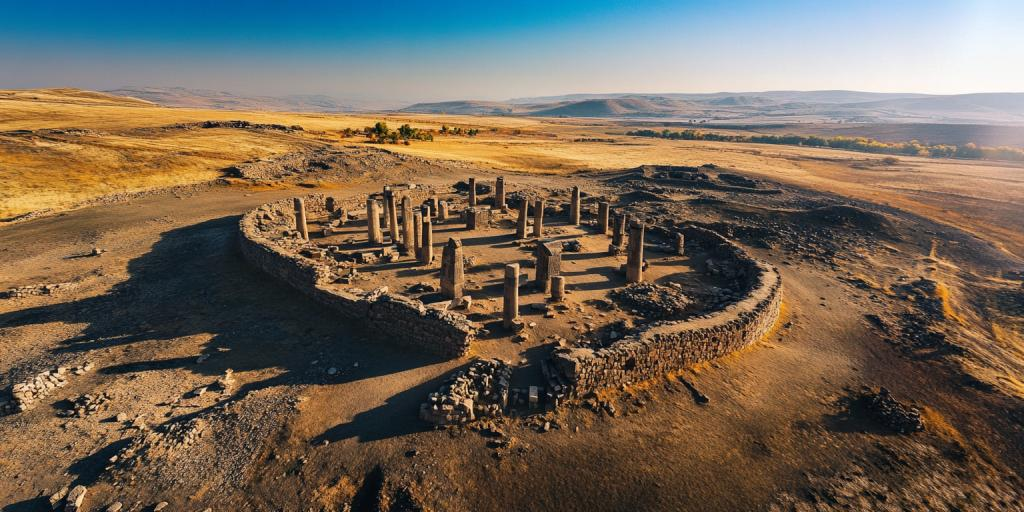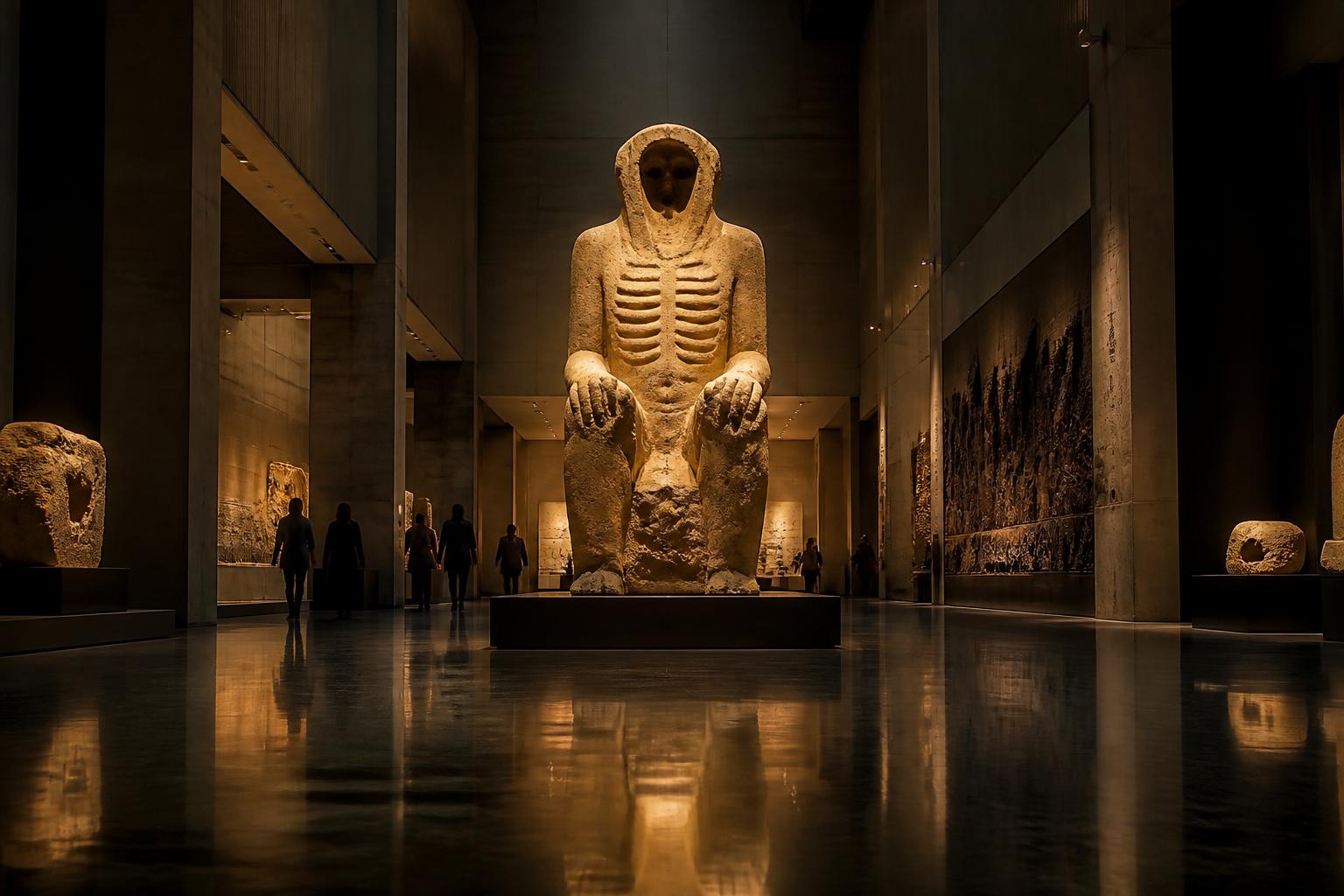
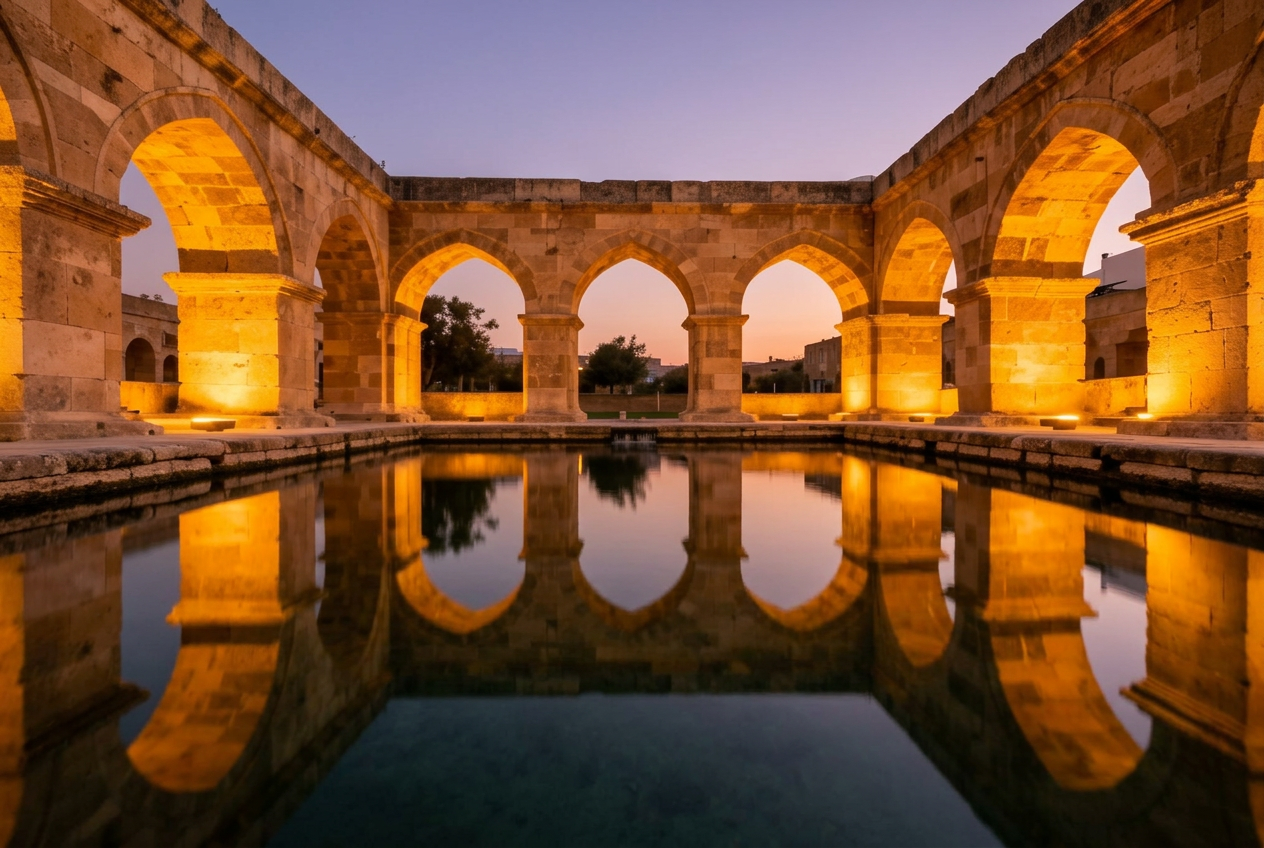
Şanlıurfa se trouve en bordure de la plaine de haute Mésopotamie, à environ 500 mètres d'altitude, avec un climat aux variations saisonnières extrêmes. C'est une ville qui peut se parer de la floraison des amandiers et d'une lumière ambrée, ou se transformer en une cité aux après-midis à 44 °C, où l'appel à la prière flotte au-dessus des cours désertes. Choisir le bon mois est la décision la plus importante que vous prendrez pour organiser un voyage à Göbeklitepe, Karahantepe et dans l'ensemble des Taş Tepeler.
En bref
Nos deux périodes favorites s'étendent de la mi-avril à la mi-juin, et de la mi-septembre au début du mois de novembre. Au sein de ces fenêtres, la meilleure quinzaine est sans conteste la dernière semaine d'avril et la première de mai : fleurs sauvages dans la plaine, des températures clémentes avoisinant les 25 °C et cette longue lumière du soir pour laquelle les photographes traversent le monde.
Mois par mois
Janvier et février — calme, froid, une atmosphère singulière
Les maximales diurnes oscillent entre 9 et 12 °C et les nuits avoisinent le point de congélation. Pluies occasionnelles. La fréquentation de Göbeklitepe et Karahantepe peut être nettement plus faible, et les visites matinales offrent souvent une atmosphère plus paisible. Les cours en pierre de la vieille ville invitent à la contemplation. Idéal pour les voyageurs érudits qui privilégient le silence à la chaleur.
Mars — la floraison des amandiers
La plaine s'éveille. Amandiers et abricotiers fleurissent dès la mi-mars ; les vergers de pistachiers verdissent. Les maximales grimpent de 14 à 19 °C. Averses de pluie légères. Un mois merveilleux pour ceux qui souhaitent profiter à la fois des sites et du paysage printanier, avec très peu d'autres visiteurs.
Avril — notre premier choix (avec mai)
Environ 25 °C en journée, soirées fraîches, fleurs sauvages sur les pentes autour de Karahantepe, et la lumière du soir commence à s'étirer. Les vacances de Pâques amènent un bref afflux de visiteurs européens, mais la ville l'absorbe sans difficulté. Réservez votre hébergement 8 à 10 semaines à l'avance.
Mai — la période dorée
Maximales de 26 à 30 °C, longues soirées, temps sec. La récolte des roses de Hilvan commence vers la fin du mois. C'est l'une de nos périodes de prédilection pour les voyages privés dans les Taş Tepeler. Si le calendrier du Ramadan le permet, les soirées dans la vieille ville — musique des sıra geceleri, fumée des grillades au charbon de bois — sont plus vivantes que jamais.
Juin — chaud, animé, dernières lueurs douces
Autour de 35 °C en journée, mais le début de matinée (de 6h00 à 9h00) et la fin d'après-midi (après 17h00) restent magnifiques sur les sites de fouilles. La première quinzaine du mois est encore une période idéale. Après le 20 juin, attendez-vous à une forte chaleur.
Juillet et août — nous déconseillons généralement
Maximales diurnes de 38 à 44 °C, parfois plus. Le calcaire des Taş Tepeler rayonne et renvoie la chaleur. Les visites de sites se font alors à 6h30 et le reste de la journée se passe à l'abri des cours ombragées. Possible pour les voyageurs aguerris, mais vous en verrez moins et en garderez moins de souvenirs. Si vous devez absolument venir à cette période, nous réorganisons entièrement la journée en fonction de la chaleur.
Septembre — le retour de la clémence
La première quinzaine est encore chaude (autour de 30-32 °C) ; à partir du 15 septembre environ, l'air s'adoucit et les soirées rafraîchissent. La dernière semaine, les conditions sont proches de celles de la fin avril. La récolte des pistaches bat son plein et la vieille ville embaume les fruits secs torréfiés et l'agneau grillé.
Octobre — notre autre coup de cœur
Maximales de 24 à 28 °C, ciel dégagé, faible humidité, lumière dorée. Sans doute le meilleur mois de l'année pour la photographie. La saison des fouilles de Karahantepe est à son apogée, ce qui signifie que vous pouvez observer un chantier en pleine activité.
Novembre — calme et lumineux
Maximales de 15 à 20 °C, soirées fraîches, pluies occasionnelles. La plaine prend des teintes ocre. Un mois magnifique et contemplatif pour les voyageurs passionnés d'archéologie, et notre saison de prédilection pour un voyage privé en Mésopotamie.
Décembre — la basse saison
Froid, ciel souvent gris, parfois de la neige sur les hauteurs des Taş Tepeler. Les sites restent ouverts et les visites hivernales peuvent offrir une atmosphère remarquablement plus calme. À combiner avec la gastronomie de Gaziantep et la cité de pierre de Mardin pour une boucle hivernale en Mésopotamie.
Événements et dates d'intérêt
- Récolte des roses de Hilvan — de la mi-mai à la mi-juin ; visites privées organisées sur demande.
- Récolte des pistaches dans le corridor Şanlıurfa–Gaziantep — de la fin août à la fin septembre.
- Journées internationales de la photographie, Şanlıurfa — généralement en octobre.
- Saison des fouilles de Karahantepe — généralement d'avril à novembre. L'activité des fouilles et les conditions de visite varient selon la saison ; toute rencontre avec des spécialistes ou tout arrangement particulier nécessite une autorisation officielle et dépend des disponibilités.
Ce qu'il faut éviter
- De la mi-juillet à la mi-août — le problème est la chaleur, pas la foule.
- Les pics des fêtes religieuses (Ramadan Bayramı, Kurban Bayramı) — les voyages intérieurs augmentent et les horaires des musées changent. Nous pouvons organiser votre séjour en conséquence si vos dates sont fixes.
- Les semaines de fortes pluies en janvier — les pistes d'accès non goudronnées des plus petits sites des Taş Tepeler peuvent devenir impraticables.
Personnalisez vos dates avec nous
Si vous souhaitez que nous vous suggérions la semaine idéale pour votre groupe — en fonction de l'angle du soleil sur les sculptures, du calendrier des fouilles et des floraisons dans la plaine — écrivez-nous. Le choix de la bonne semaine a plus de valeur que n'importe quel surclassement.