Lorsque l'archéologue allemand Klaus Schmidt a dégagé le premier pilier en T à Göbeklitepe en 1995, la chronologie classique de la civilisation humaine s'est fissurée. Une génération plus tard, à quinze kilomètres au sud sur la même crête calcaire des Taş Tepeler, la chambre des statues de Karahantepe réitère l'exploit. Les voyageurs nous posent presque chaque semaine la même question : si je n'ai qu'une seule journée à Şanlıurfa, lequel des deux sites devrais-je visiter ? La réponse honnête est : les deux. Voici pourquoi.
Un monde partagé : les Taş Tepeler
Göbeklitepe et Karahantepe ne sont pas des sites rivaux. Ils sont deux membres d'une famille d'au moins une douzaine de sanctuaires du Néolithique précéramique disséminés dans les collines calcaires autour de Şanlıurfa — connus collectivement dans l'archéologie turque sous le nom de Taş Tepeler (« les collines de pierre »). Ils ont été construits et utilisés entre environ 9600 et 8000 avant notre ère, avant la poterie, avant le métal, avant la roue, et bien avant que les premières cités de Mésopotamie ne s'élèvent dans la plaine en contrebas.
Göbeklitepe : la découverte qui a réécrit la préhistoire
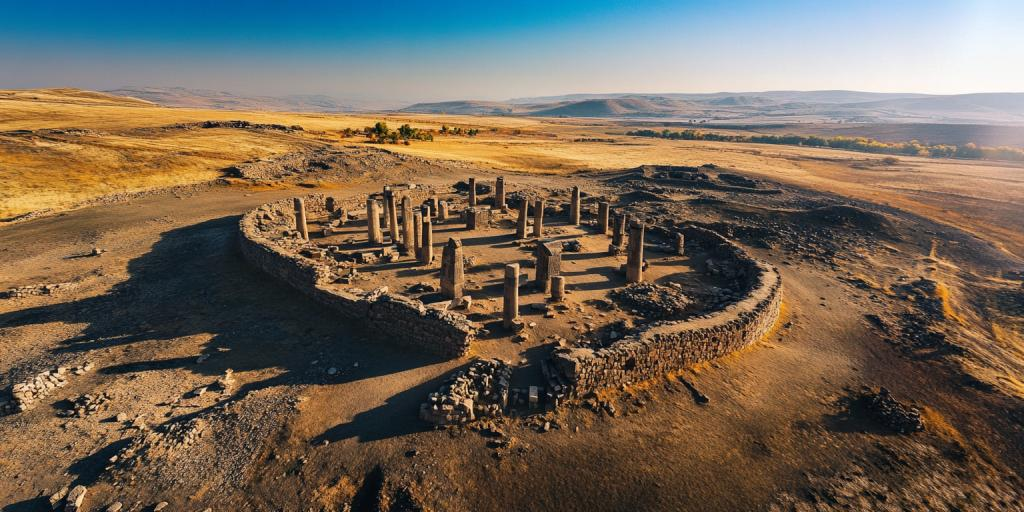
Dans l'imaginaire collectif, Göbeklitepe est le frère aîné. L'UNESCO l'a inscrit au patrimoine mondial en 2018. Ses grandes enceintes circulaires — A, B, C, D — sont dominées par des paires de piliers centraux en T pouvant atteindre 5,5 mètres de haut, entourés d'un cercle de piliers plus petits insérés dans une banquette. Les sculptures forment un bestiaire de pierre : renards, scorpions, vautours, serpents, sangliers, aurochs. Les piliers eux-mêmes sont largement interprétés comme des figures humaines stylisées — peut-être des ancêtres abstraits, ou des gardiens.
- Construit et utilisé vers 9600–8200 avant notre ère — soit environ 7 000 ans de plus que Stonehenge.
- Fouillé depuis 1995, ouvert au public en 2018 sous une spectaculaire toiture architecturale.
- Six enceintes monumentales sont visibles aujourd'hui ; la géophysique suggère qu'au moins vingt autres se trouvent sous le tell.
- Le site a été délibérément enseveli par ses bâtisseurs à la fin de son utilisation — une énigme que l'archéologie n'a pas encore résolue.
Karahantepe : la chambre des statues
Karahantepe a fait l'objet d'une première prospection en 1997, mais les fouilles systématiques n'ont commencé qu'en 2019 dans le cadre du projet Taş Tepeler du ministère turc de la Culture. Ce qui a été mis au jour depuis est, si possible, encore plus surprenant que Göbeklitepe. Là où Göbeklitepe nous a donné des animaux en relief, Karahantepe nous livre des humains — des figures humaines grandeur nature, entièrement en trois dimensions, taillées à même le substrat rocheux.
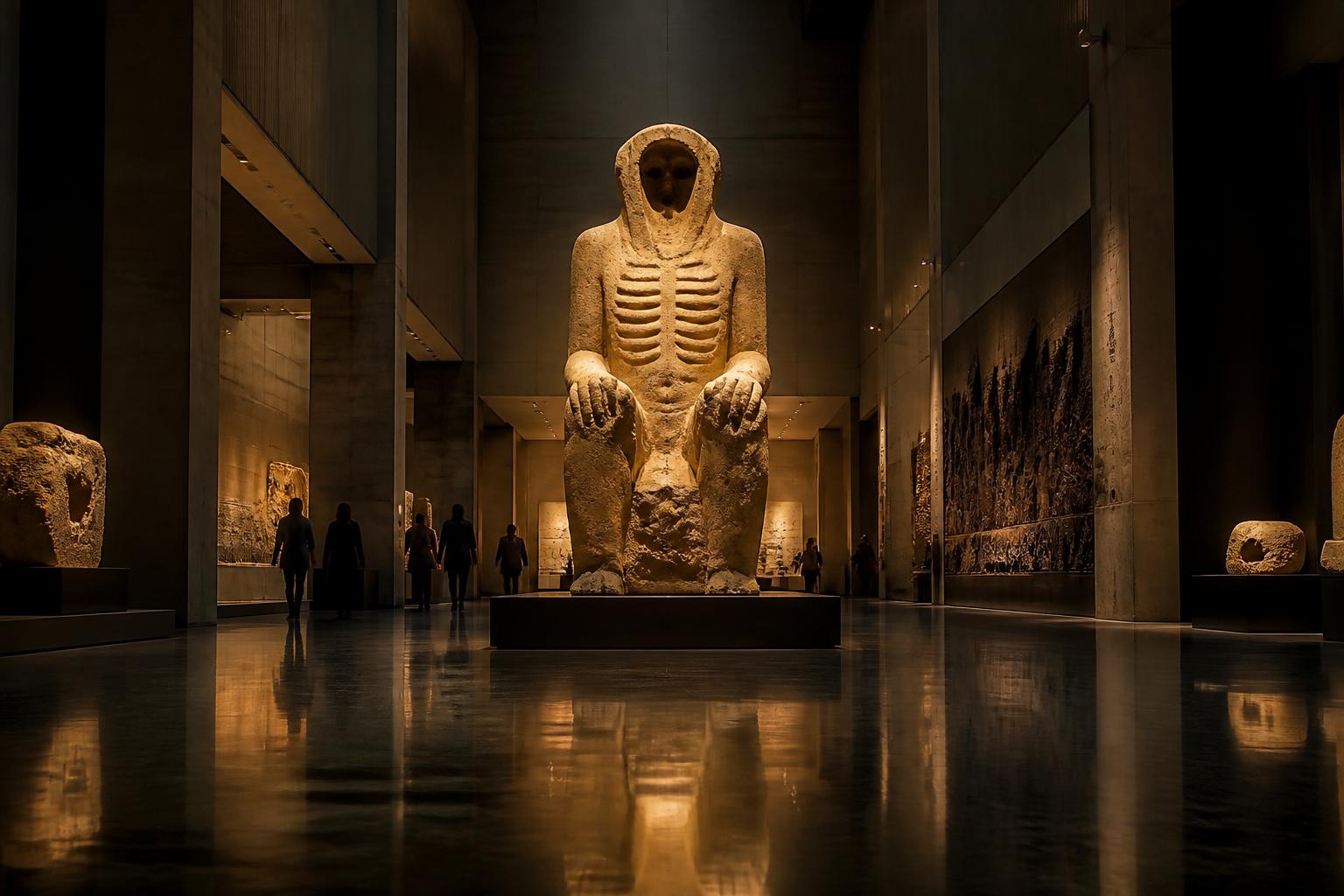
La découverte la plus photographiée est la « chambre » de Karahantepe — une salle creusée dans la roche avec onze piliers phalliques s'élevant du sol, observés depuis une niche par une unique tête humaine aux yeux de serpent encapuchonnés. Au-dessus de la chambre, la statue la plus célèbre de toutes a été extraite en 2023 : une figure masculine assise de 2,3 mètres, aux côtes squelettiques et aux mains agrippées, aujourd'hui exposée au musée d'archéologie de Şanlıurfa. C'est l'une des statues humaines grandeur nature les plus remarquables connues du Néolithique ancien.
Göbeklitepe et Karahantepe : un aperçu comparatif
Architecture
Göbeklitepe est circulaire : des cercles fermés avec des piliers centraux jumelés, une monumentalité tournée vers le public. Karahantepe est angulaire et intime : des salles rectilignes, de profondes chambres rupestres, d'étroits passages. Si Göbeklitepe est une cathédrale, Karahantepe est une crypte.
Imagerie
Göbeklitepe s'exprime par des animaux sculptés en relief sur les faces plates des piliers. Karahantepe s'exprime par le corps humain — en ronde-bosse, d'une manière presque étonnamment figurative pour l'époque. Les deux appartiennent au même univers symbolique, mais le dialecte est différent.
Expérience de visite
Göbeklitepe est entièrement équipé : un centre d'accueil des visiteurs, une toiture en toile tendue au-dessus des enceintes principales, un circuit de passerelles en bois, une navette électrique depuis le parking. Karahantepe est plus brut : à ciel ouvert, avec moins de barrières, un chantier de fouilles en activité dont on peut sentir la poussière. Les deux sont accessibles en fauteuil roulant le long de leurs itinéraires principaux.
Affluence et moment de la journée
Göbeklitepe connaît sa plus forte affluence entre 10h00 et 14h00, à l'arrivée des autocars de tourisme venant de Gaziantep. La lumière est meilleure à l'ouverture (vers 8h00 en été) et dans la dernière heure avant le coucher du soleil, lorsque les sculptures sur les faces sud des piliers s'animent. Karahantepe reçoit une fraction de ces visiteurs, et la lumière de fin d'après-midi sur les chambres rupestres est inégalée.
Comment visiter les deux sites en une journée
Les deux sites ne sont qu'à 35 minutes de route l'un de l'autre, tous deux au sud de la ville de Şanlıurfa. D'après notre expérience dans la conception de journées privées sur place, la chorégraphie qui fonctionne le mieux est la suivante :
- 8h00 — Arrivée à Göbeklitepe à l'ouverture, avant que l'air ne se réchauffe et que les autocars de tourisme n'arrivent.
- 10h30 — Route vers le sud à travers les pistacheraies jusqu'à Karahantepe ; la route elle-même fait partie de l'expérience.
- 11h00 — Visite guidée privée de Karahantepe avec un guide professionnel agréé et une interprétation experte, sous réserve des conditions d'ouverture et des réglementations en vigueur sur le site ; prévoir au moins 90 minutes pour la chambre et les terrasses supérieures.
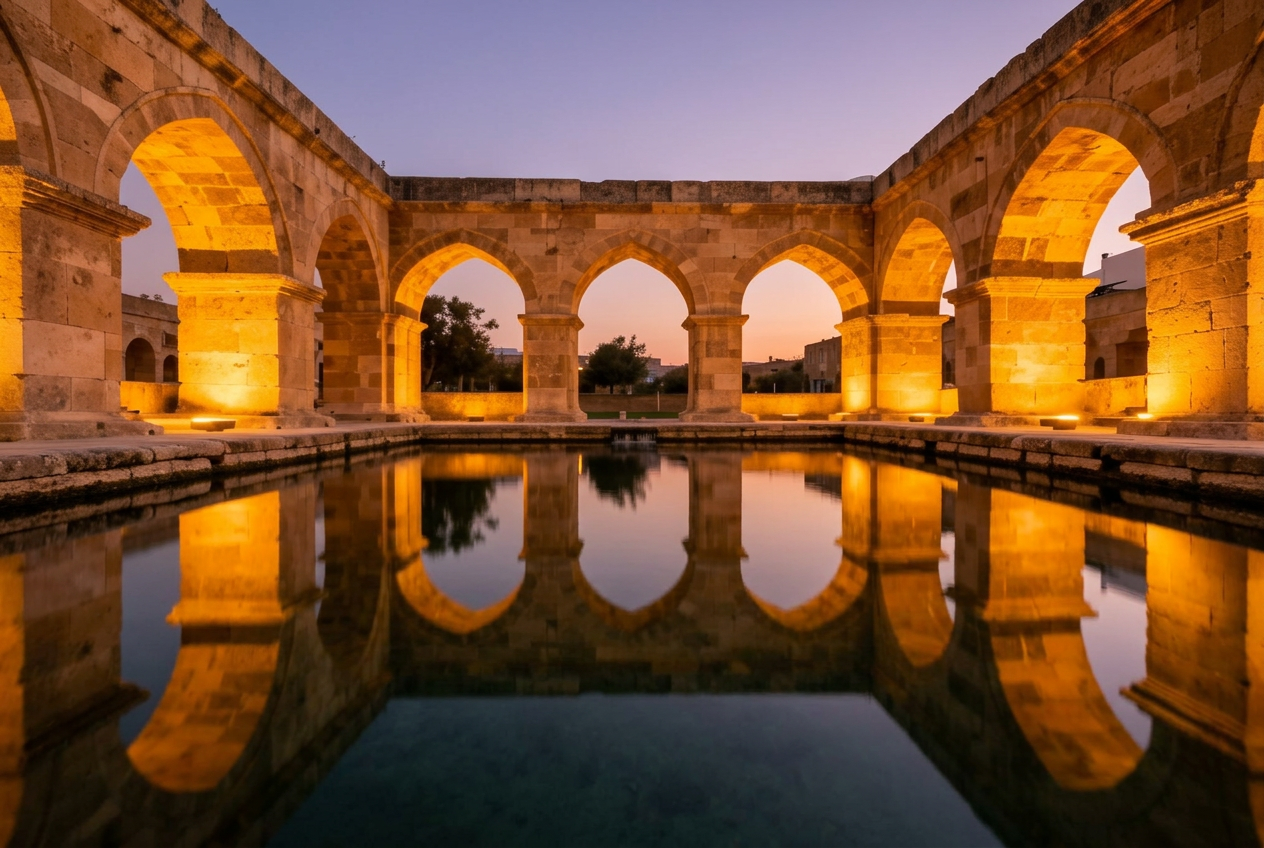
- 13h30 — Déjeuner tardif de çiğ köfte et de kebab d'Urfa dans la vieille ville, idéalement dans une cour voûtée en pierre.
- 16h00 — Musée d'archéologie de Şanlıurfa pour une rencontre en face à face avec la statue assise de Karahantepe. C'est le moment où la journée prend tout son sens.
Informations pratiques
- Billets : des pass combinés comme le Müzekart+ sont couramment utilisés pour les sites et le musée. La billetterie, les horaires d'ouverture et les règles d'admission peuvent changer ; les dispositions actuelles sont confirmées lors de la planification du voyage.
- Meilleures périodes : de fin mars à mi-juin, et de mi-septembre à début novembre. Juillet et août sont d'une chaleur accablante.
- Photographie : les trépieds et les drones nécessitent généralement une autorisation officielle préalable, accordée à la discrétion des autorités. Les règles en vigueur sont confirmées lors de la planification du voyage.
- Guides : les guides sur place à Göbeklitepe sont bons ; pour Karahantepe, un guide professionnel agréé offrant une interprétation experte fait toute la différence entre une simple visite et une véritable compréhension.
Organisée de cette manière, la journée se construit sans se répéter : les enceintes ouvertes de Göbeklitepe dans la lumière du matin, la chambre fermée de Karahantepe en fin d'après-midi, et la statue assise au musée pour conclure — le moment où le paysage et son imagerie se rencontrent enfin.
Planifiez votre journée avec Sumera
Nos voyages privés à travers les Taş Tepeler combinent Göbeklitepe, Karahantepe et les collections archéologiques de Şanlıurfa avec l'accompagnement d'un guide professionnel agréé, une interprétation experte et des visites soigneusement coordonnées. Toute rencontre avec des spécialistes ou tout aménagement particulier est soumis à l'autorisation officielle, aux réglementations du site et à la disponibilité. Si vous souhaitez que nous concevions un tel voyage pour vos dates, il vous suffit de nous envoyer un message.