
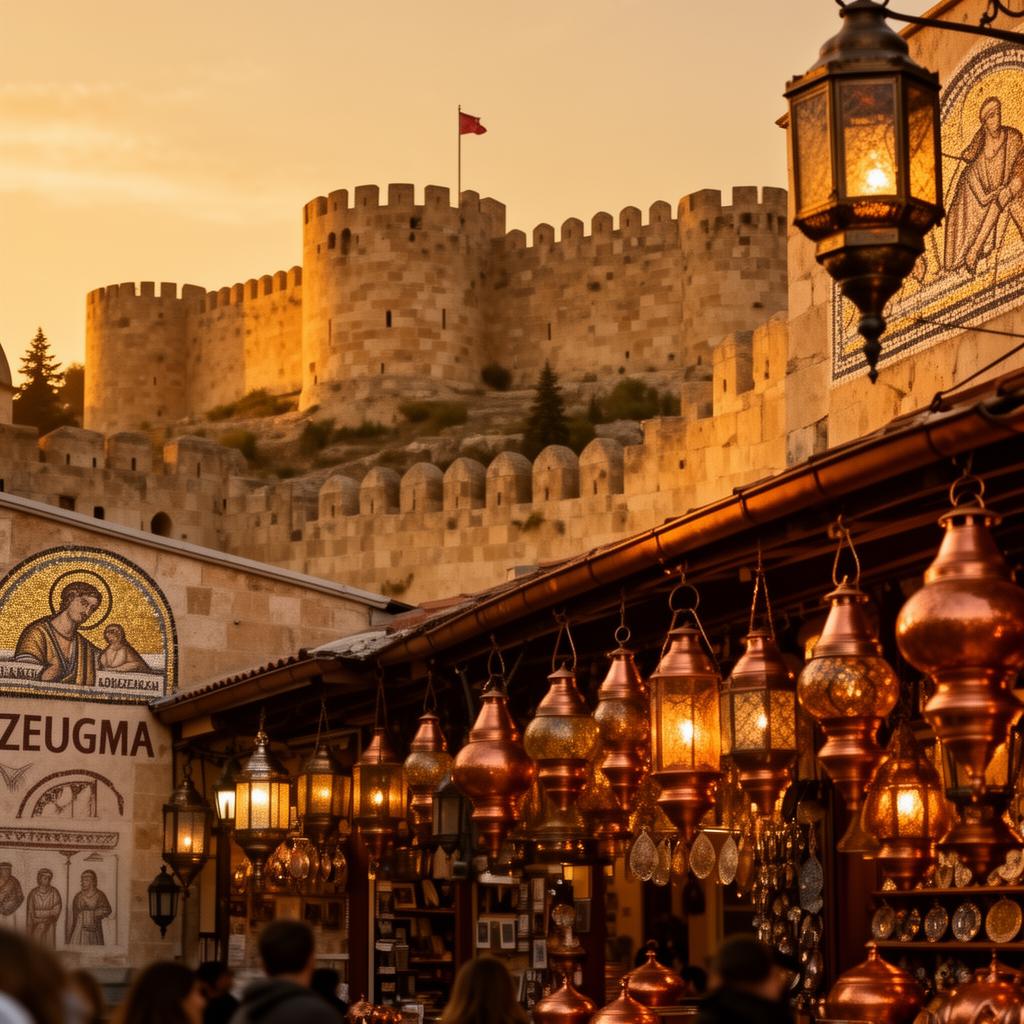
Gaziantep — where flavour and antiquity were born together.
An ancient city with millennia of settlement history. A UNESCO Creative City of Gastronomy. And the keeper of Zeugma — the Roman Pompeii of the East.
Six thousand years of unbroken kitchens. Two thousand years of Roman mosaics. A single city that has never stopped feeding the imagination.
Gaziantep is a UNESCO Creative City of Gastronomy — a distinction rooted in its pistachio orchards, copper kitchens and culinary traditions that have outlived empires. It is also the gateway to Zeugma, the Hellenistic-Roman frontier city on the Euphrates whose mosaics now rest in one of the world's largest mosaic museums.
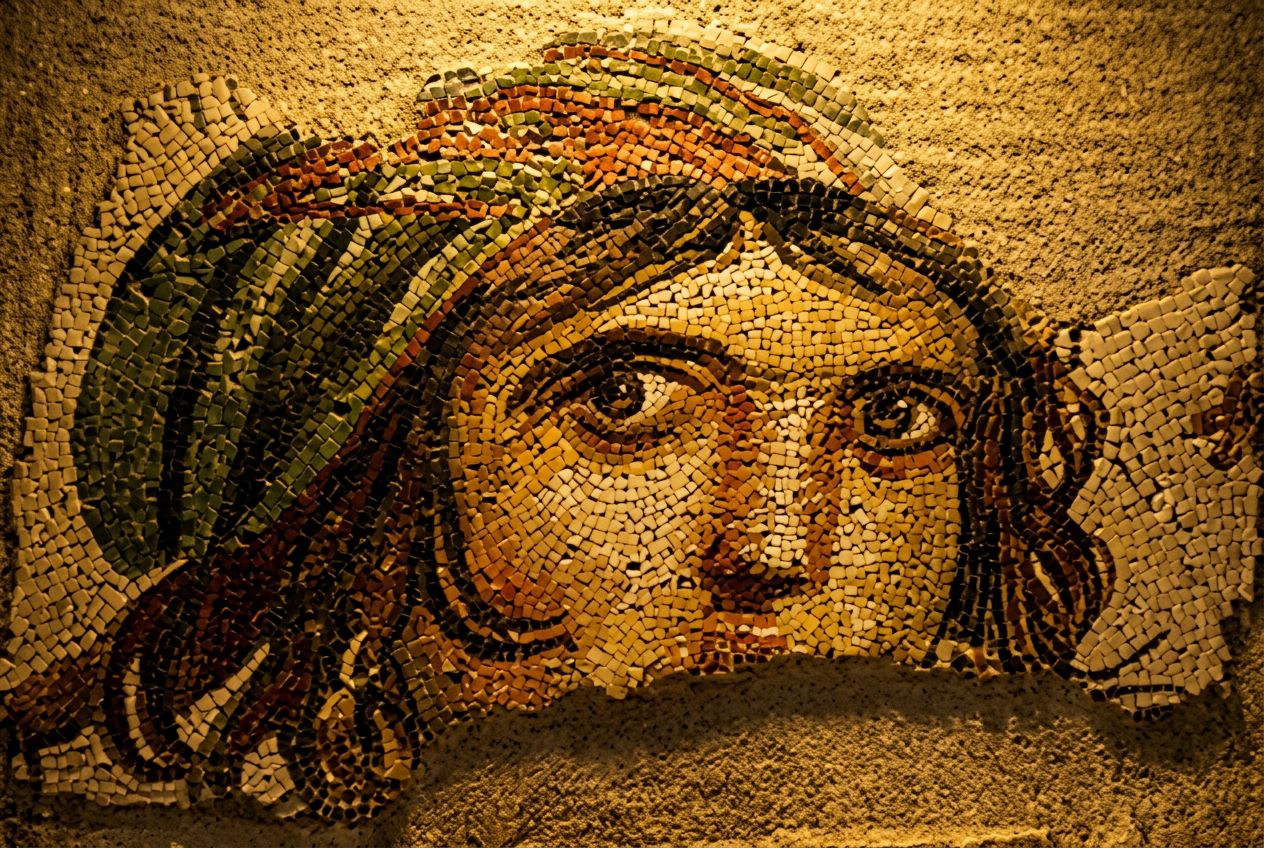
The Roman frontier city the Euphrates almost erased.
Founded by one of Alexander's generals and absorbed into Rome at the height of its eastern reach, Zeugma was the bridge between two empires and two rivers. When the rising waters of the Birecik Dam threatened to submerge it in the year 2000, an emergency excavation recovered the most extraordinary collection of Roman mosaics ever lifted from Anatolian soil.
Today they rest in the Zeugma Mozaik Müzesi — one of the world's largest mosaic museums. We arrange privately guided readings of the floors with licensed professional guides and specialists, including time with the Gypsy Girl: the haunting fragment that has become the face of Anatolian archaeology. Any enhanced access is subject to official permissions, availability and site regulations.
Arrange a private visit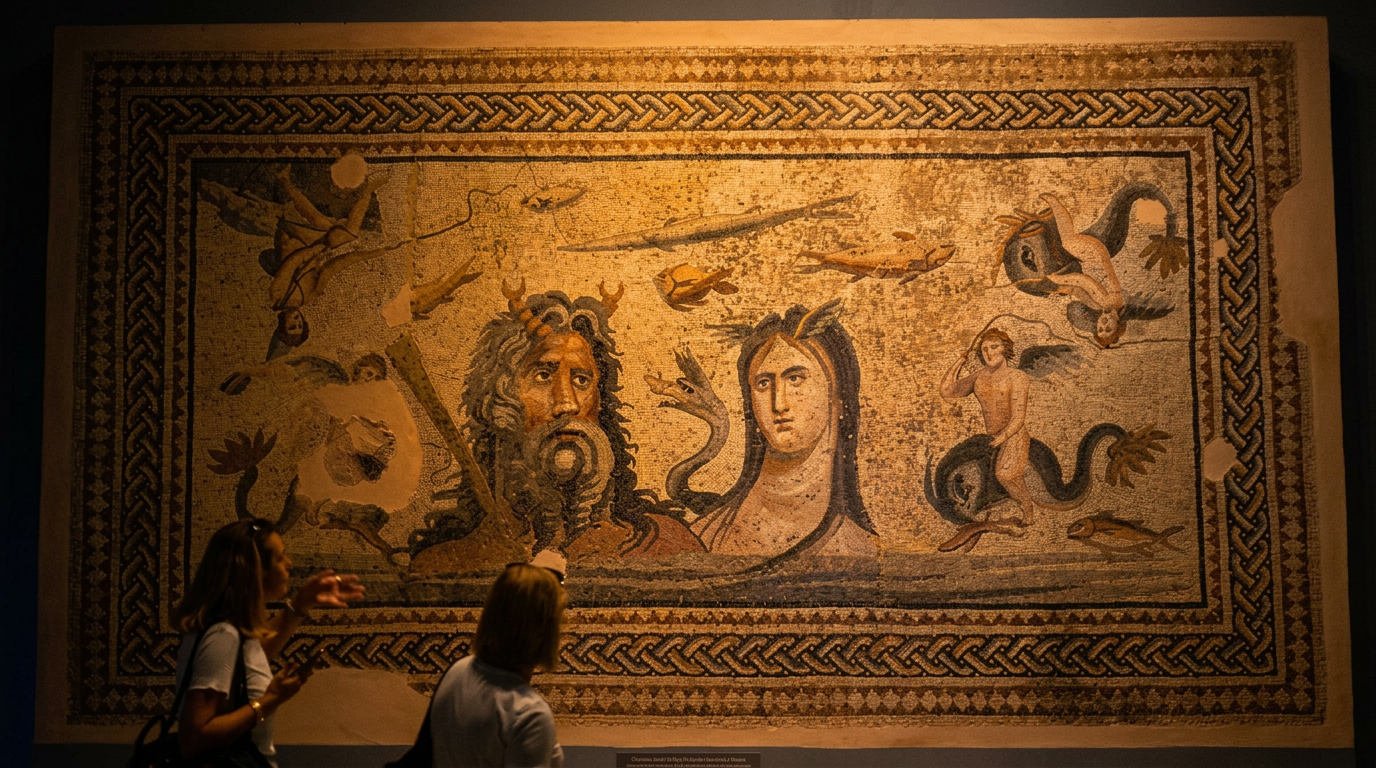
The braided sea-frame of the Oceanus and Tethys mosaic — fish, cupids and the titans of the deep, laid in tesserae for a Roman villa above the Euphrates and now the quiet centerpiece of the Zeugma Mosaic Museum.
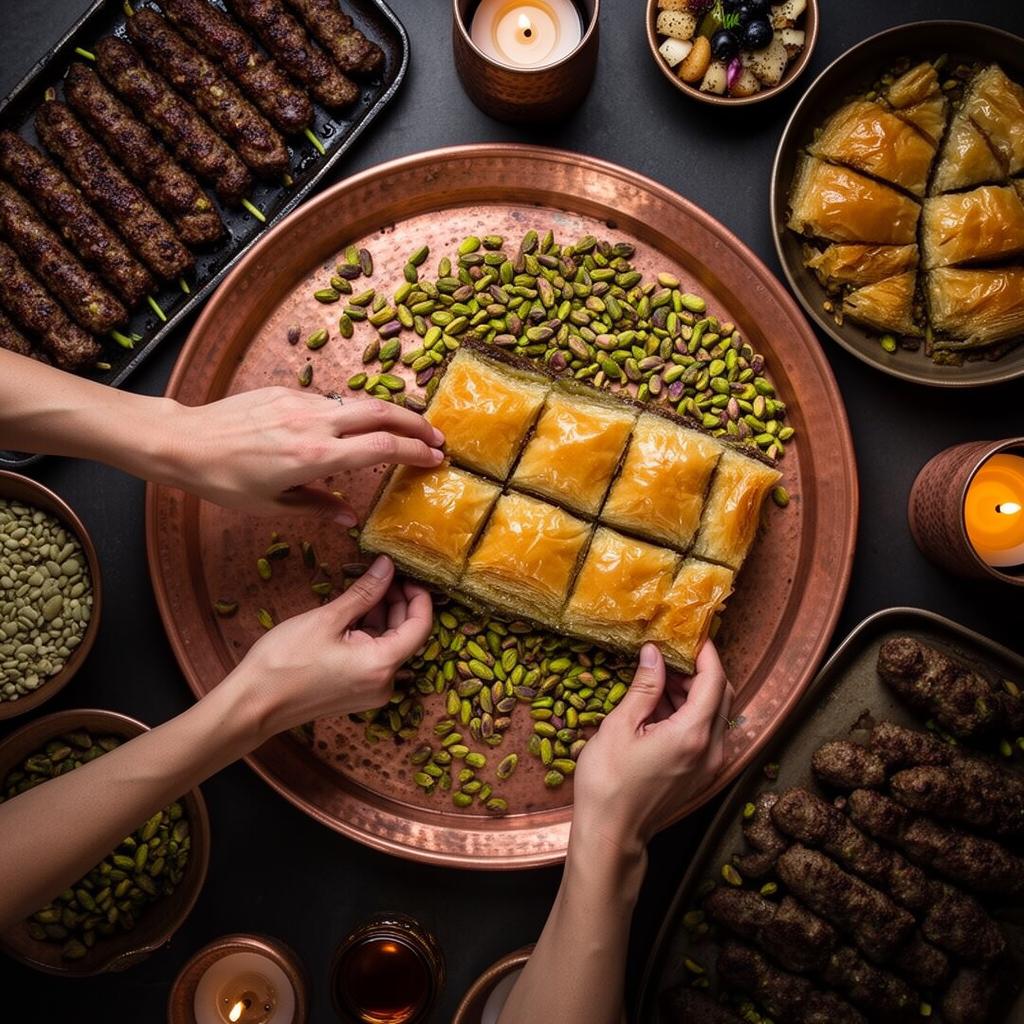
A cuisine older than the alphabet.
Forty layers of paper-thin yufka brushed with clarified butter and the green gold of Antep pistachio. Charcoal-grilled kebabs perfumed with sumac and isot. Copper trays of katmer carried at dawn from ateliers working to generations of Antep pastry tradition.
We compose private tastings inside historic Gaziantep mansions, guided by a culinary-history experience that traces the city's kitchen through its Hittite, Assyrian and Ottoman layers — a thirteen-course narrative of the Levantine table.
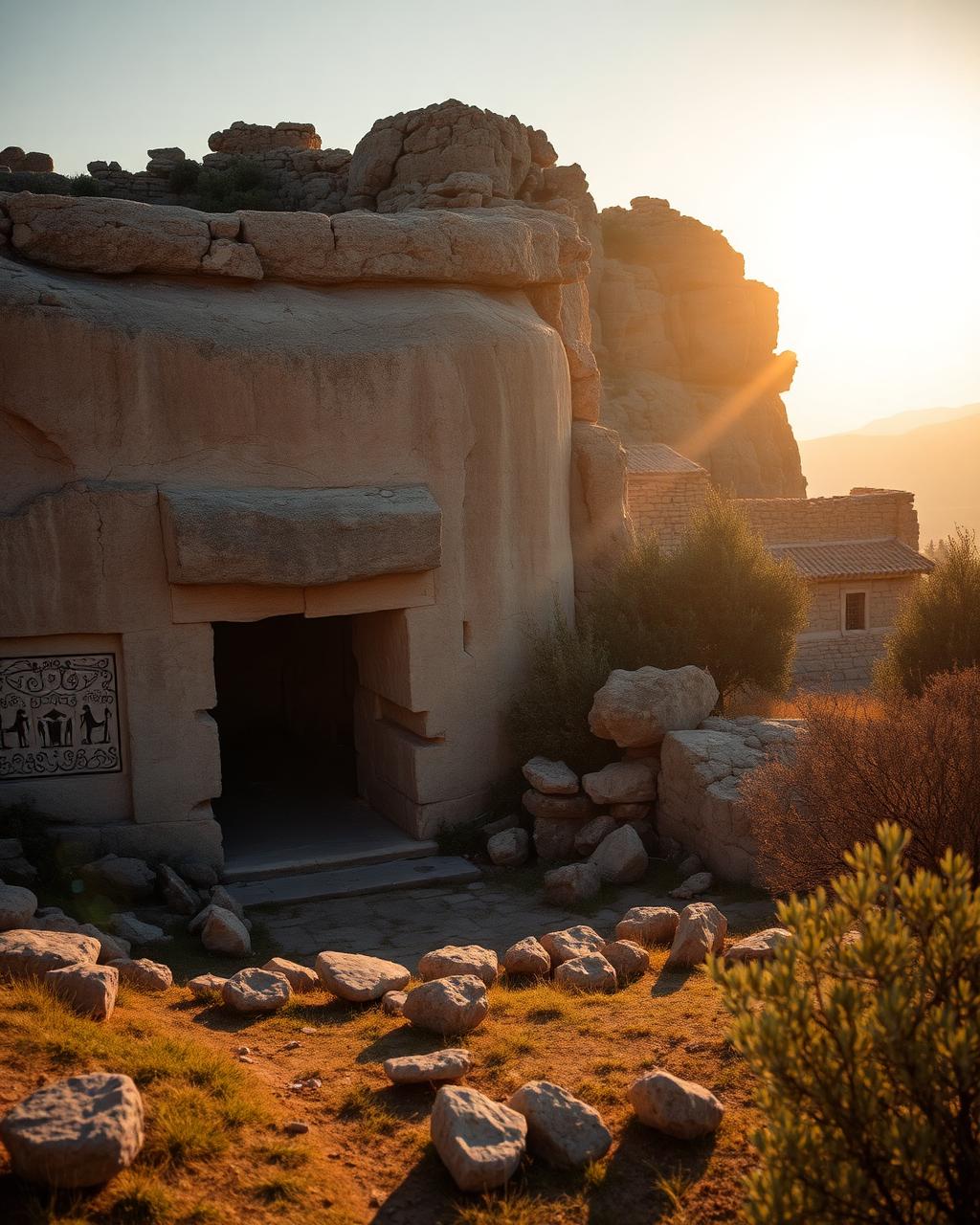
A sanctuary older than the Hittites.
On a wind-swept ridge north of Gaziantep stand the limestone remains of Dülük — the ancient Doliche — a sacred precinct whose layers reach from the Bronze Age through Hittite, Assyrian, Hellenistic and Roman worship. It was here that Jupiter Dolichenus, the syncretic storm-god of the Roman legions, took shape and travelled with the imperial armies from Britain to the Euphrates.
We arrange private morning walks through the rock-cut Mithraeum, the necropolis and the recently uncovered Roman cult terraces, accompanied by a licensed professional guide with expert-led interpretation of the German excavation record. Afterwards, breakfast under olive trees with the plain of Gaziantep spread below.
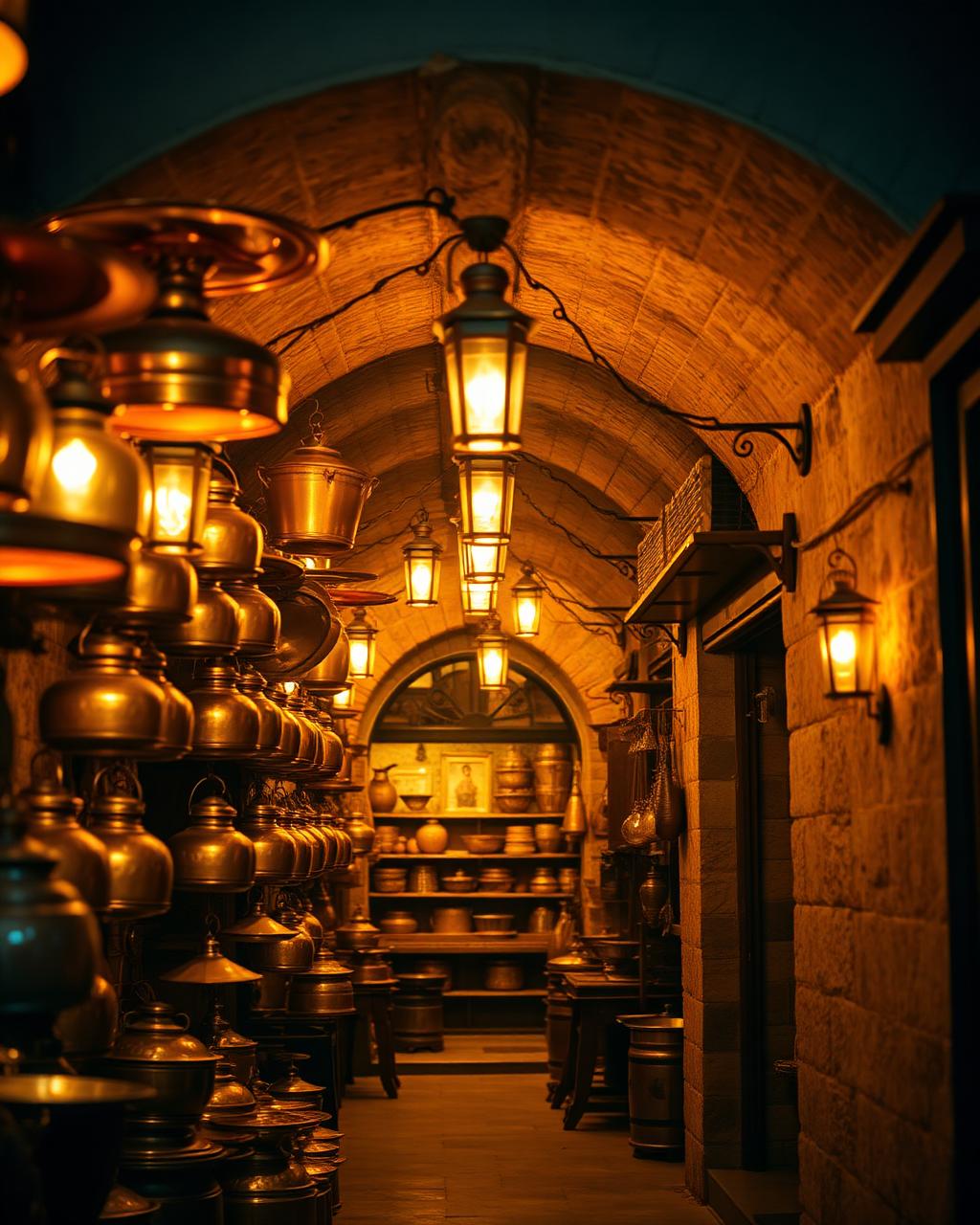
The Coppersmiths' Bazaar — a craft kept alive for five centuries.
Inside the vaulted stone arcades of the old city, the Bakırcılar Çarşısı still rings with the sound of hammers on copper — a rhythm unchanged since the Ottoman 16th century. Tinned cezveler, sahan trays, oklava-rolled basins: the working tools of Gaziantep's celebrated kitchen are still hand-raised here from a single sheet of copper.
We arrange privately guided visits with master coppersmiths whose families have worked the same stalls for four generations — a quiet tea, the demonstration of a thousand-strike basin, and the chance to commission a piece tinned to your name before you leave.
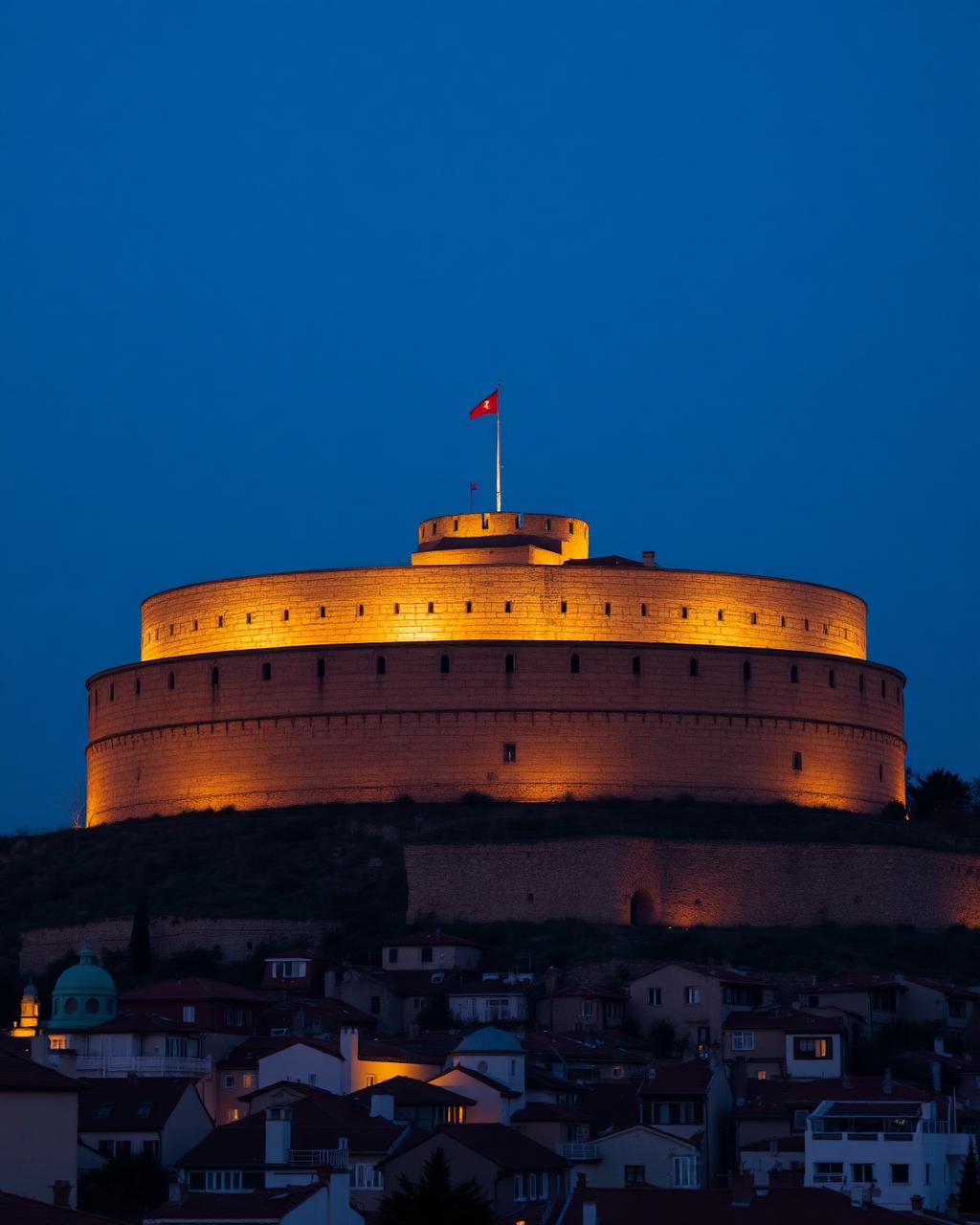
The hilltop fortress at the heart of the city.
Rising above the old quarter on a tumulus first settled in the Bronze Age, Gaziantep Castle was rebuilt in its present circular form by the Romans, expanded by the Byzantines under Justinian, and given its final cut-stone face by the Seljuks. From its ramparts the city unfolds in a single sweep — minarets, copper roofs, and the pistachio plain beyond.
We arrange private dusk readings of the citadel with a local historian, followed by a quiet descent into the old bazaar quarter just as the lanterns are lit — the most cinematic hour in Gaziantep.