
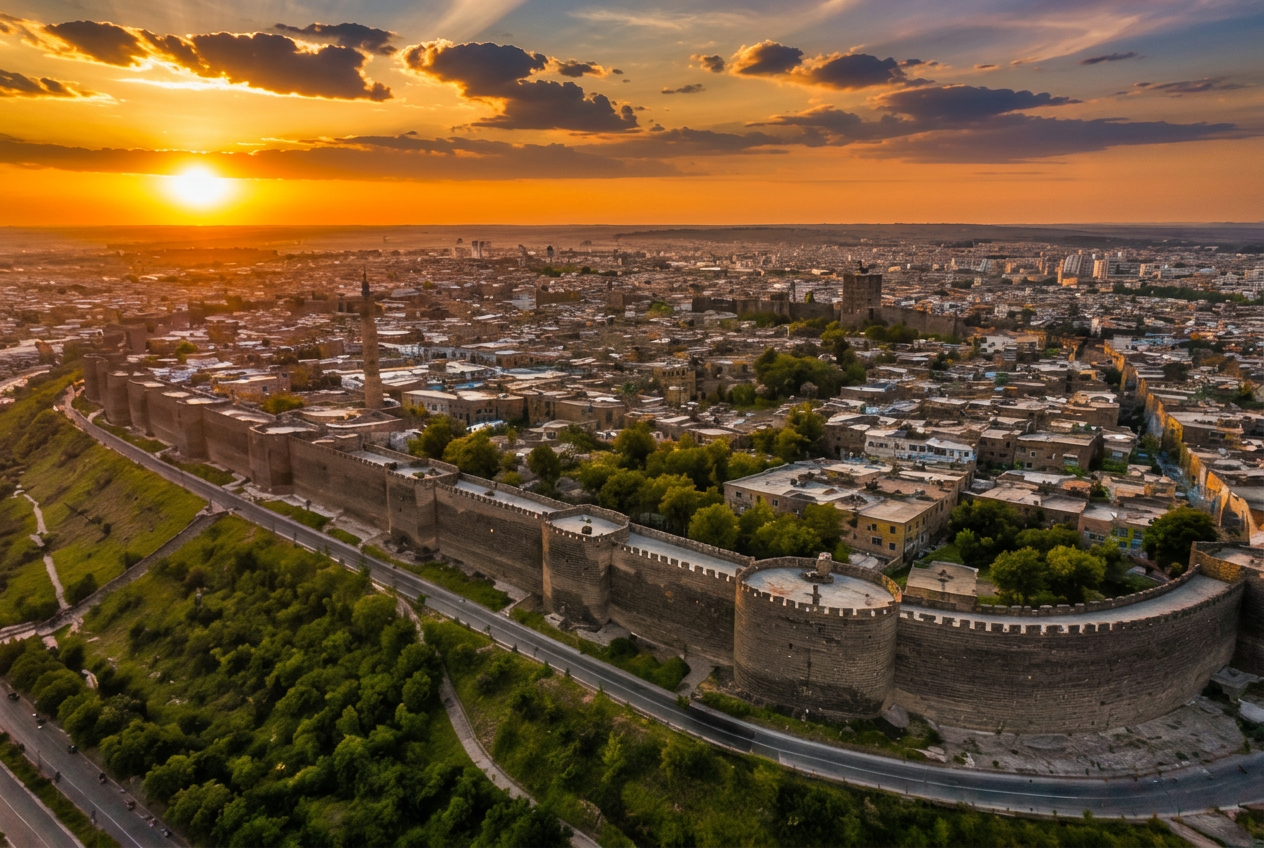
Diyarbakır — the black-walled city that has watched the Tigris for five thousand years.
Amida of the Romans. Amid of the Arabs. Diyâr Bakr of the Turkic tribes. A single basalt rampart, four kilometres long, holding twenty civilizations inside.
The longest defensive wall in the world after the Great Wall of China. Cut from a single basalt plateau by the hands of twenty empires.
Diyarbakır stands on a black basalt shelf above the Tigris — the largest of all Mesopotamian rivers and the artery of the world's first cities. Inside its five-kilometre ramparts lie a Roman cardo, a Sassanid citadel, four of the oldest mosques in Anatolia, Armenian and Syriac cathedrals, and the only continuously inhabited urban fabric in upper Mesopotamia. UNESCO inscribed the walls and the Hevsel Gardens as a single World Heritage cultural landscape in 2015.
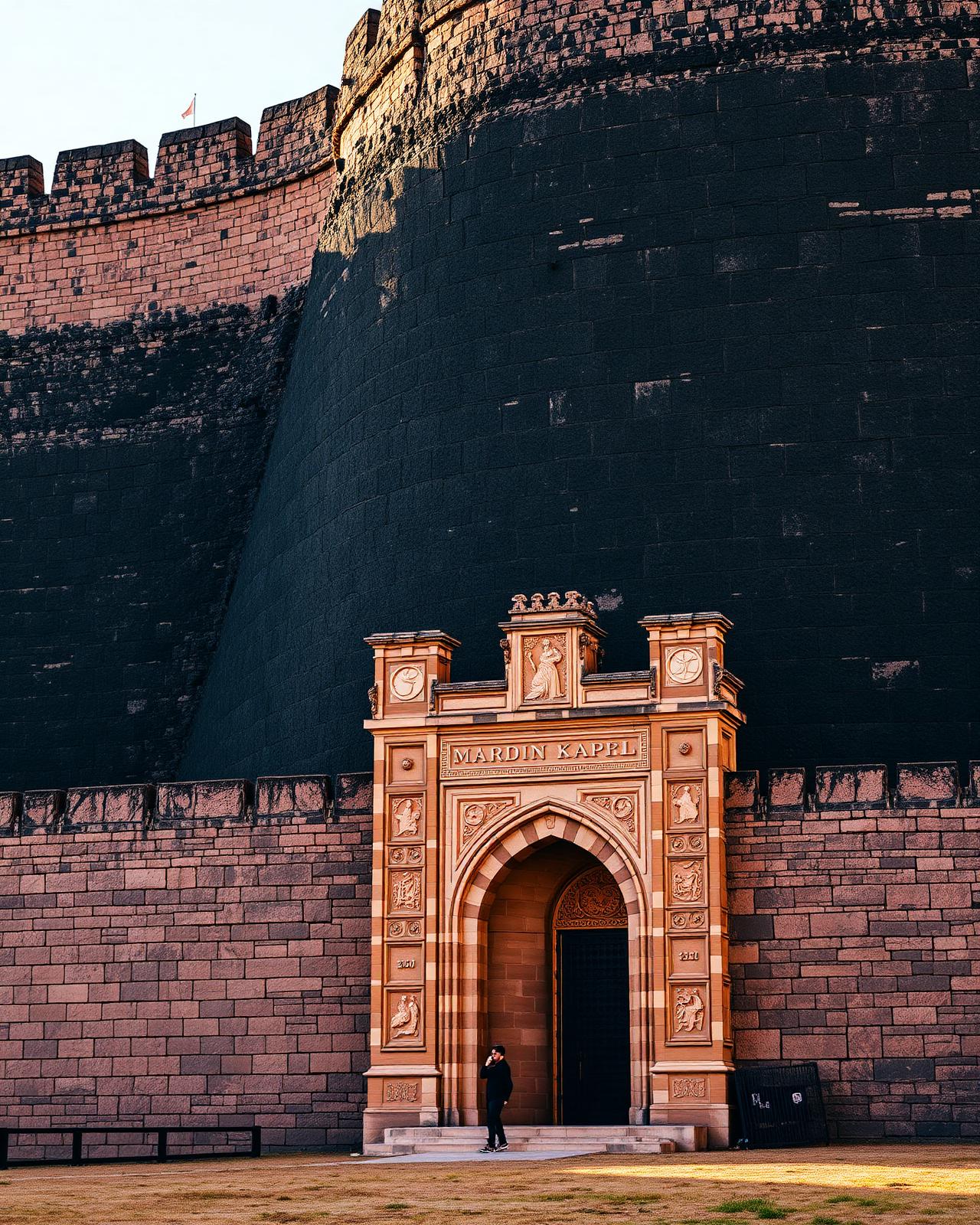
Four gates, eighty-two towers, twenty empires.
Begun by the Romans in the 4th century, rebuilt by Byzantines, fortified by the Sassanids, the Umayyads, the Marwanids, the Artuqids and the Ottomans — Diyarbakır's basalt walls carry inscriptions in Greek, Latin, Pahlavi, Kufic and Arabic, layered over one another like a manuscript that refuses to be closed.
We walk a private section of the ramparts in the quieter hours, with expert-led interpretation — past the lion reliefs of the Ulu Beden, the bull and the eagle of the Yedi Kardeş tower, and the 12th-century Seljuk inscriptions still legible in raking light.
Arrange a private rampart walk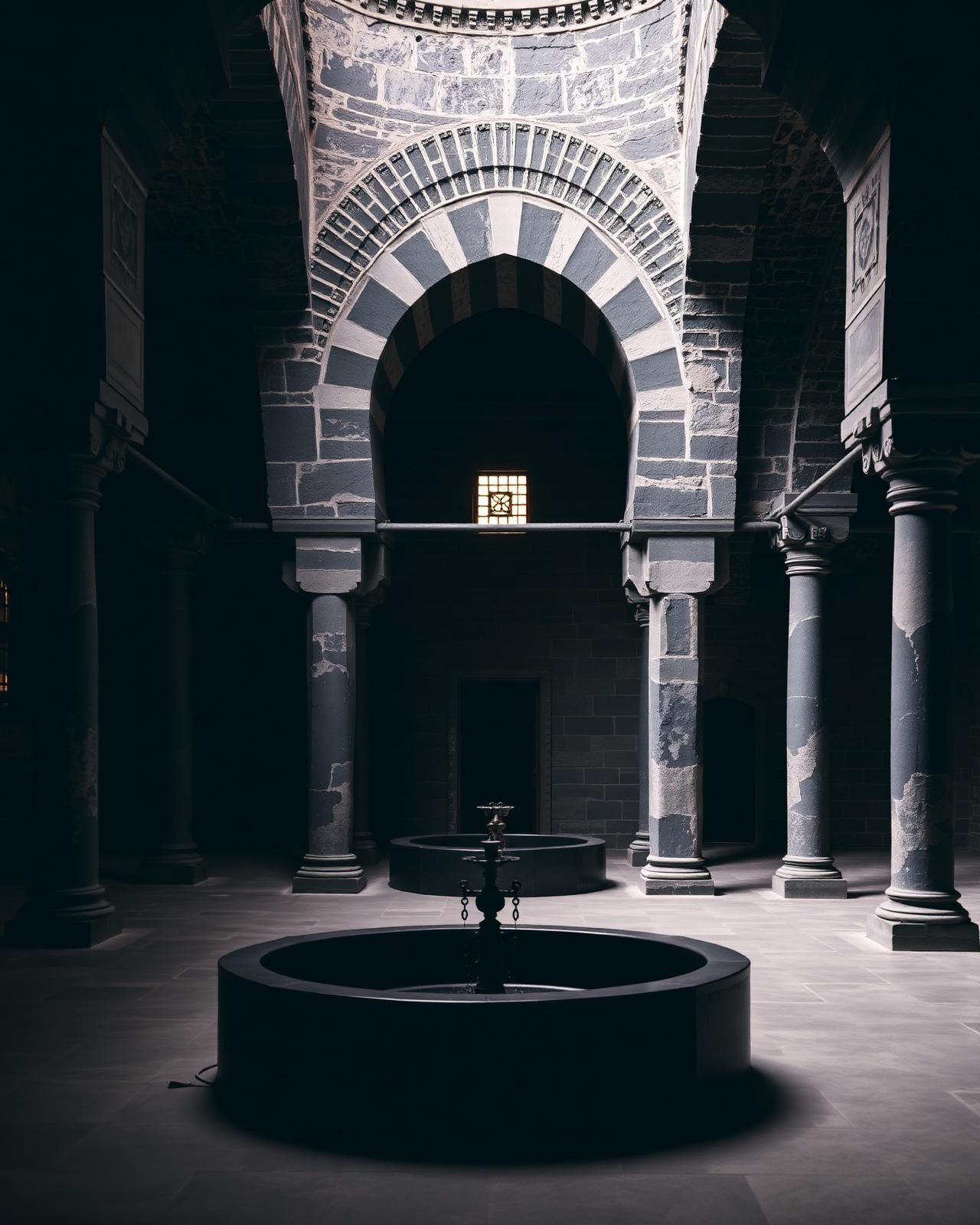
The fifth holy site of Islam — built on a Roman forum.
Founded in 639 AD on the foundations of the Byzantine Mar Thomas Cathedral — itself raised over a Roman temple to Jupiter — the Great Mosque of Diyarbakır is one of the oldest and most architecturally singular mosques in the Islamic world. Its courtyard is held up by columns and capitals quarried from antiquity and reassembled across a thousand years.
From the mosque we move through the back lanes of the old city — to the four-legged minaret of Şeyh Mutahhar, the basalt and limestone arcades of Hasan Paşa Hanı, and the quiet Syriac courtyards of the Meryem Ana Kilisesi, in use since the 3rd century.
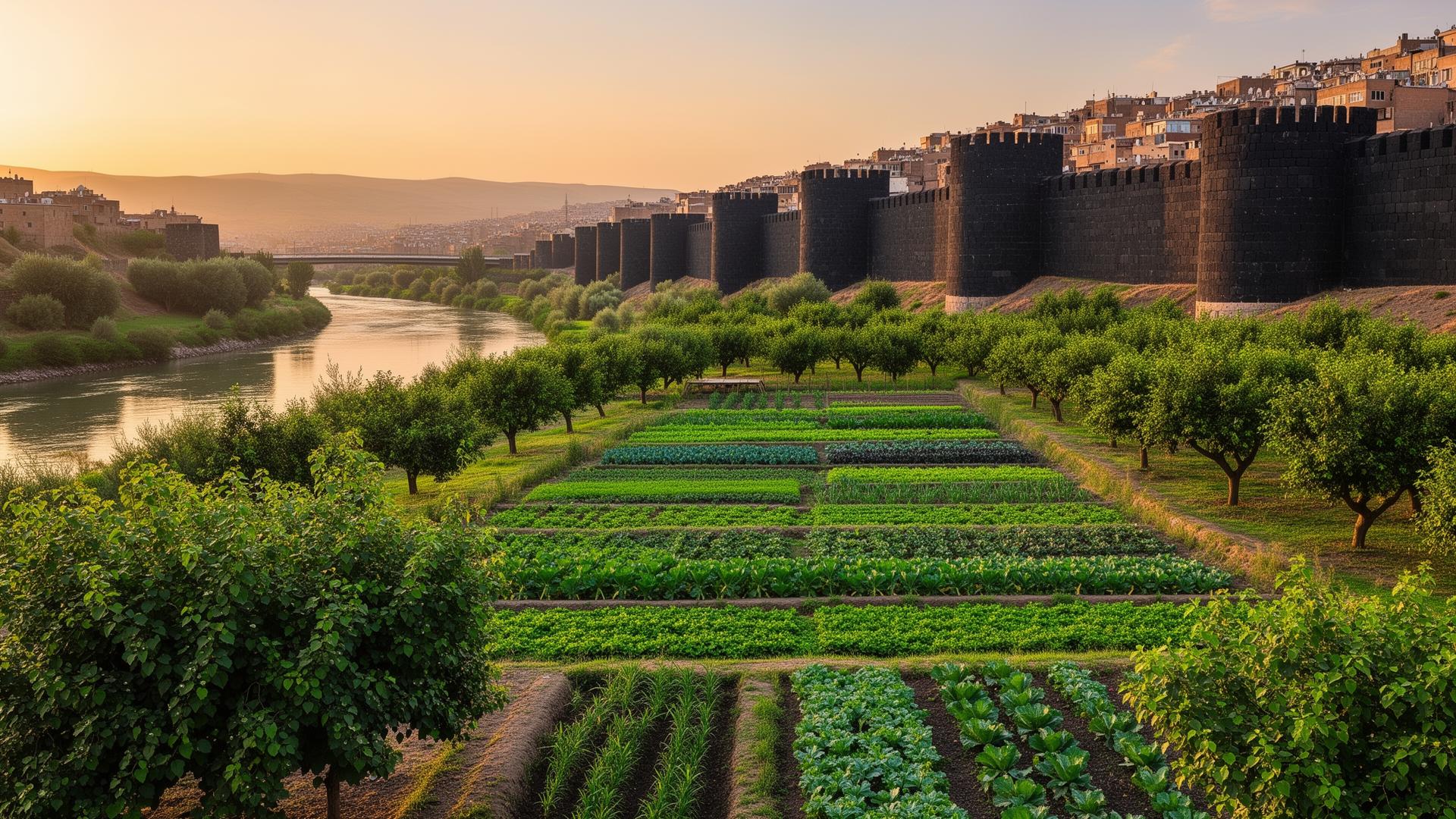
Eight thousand years of furrow and harvest
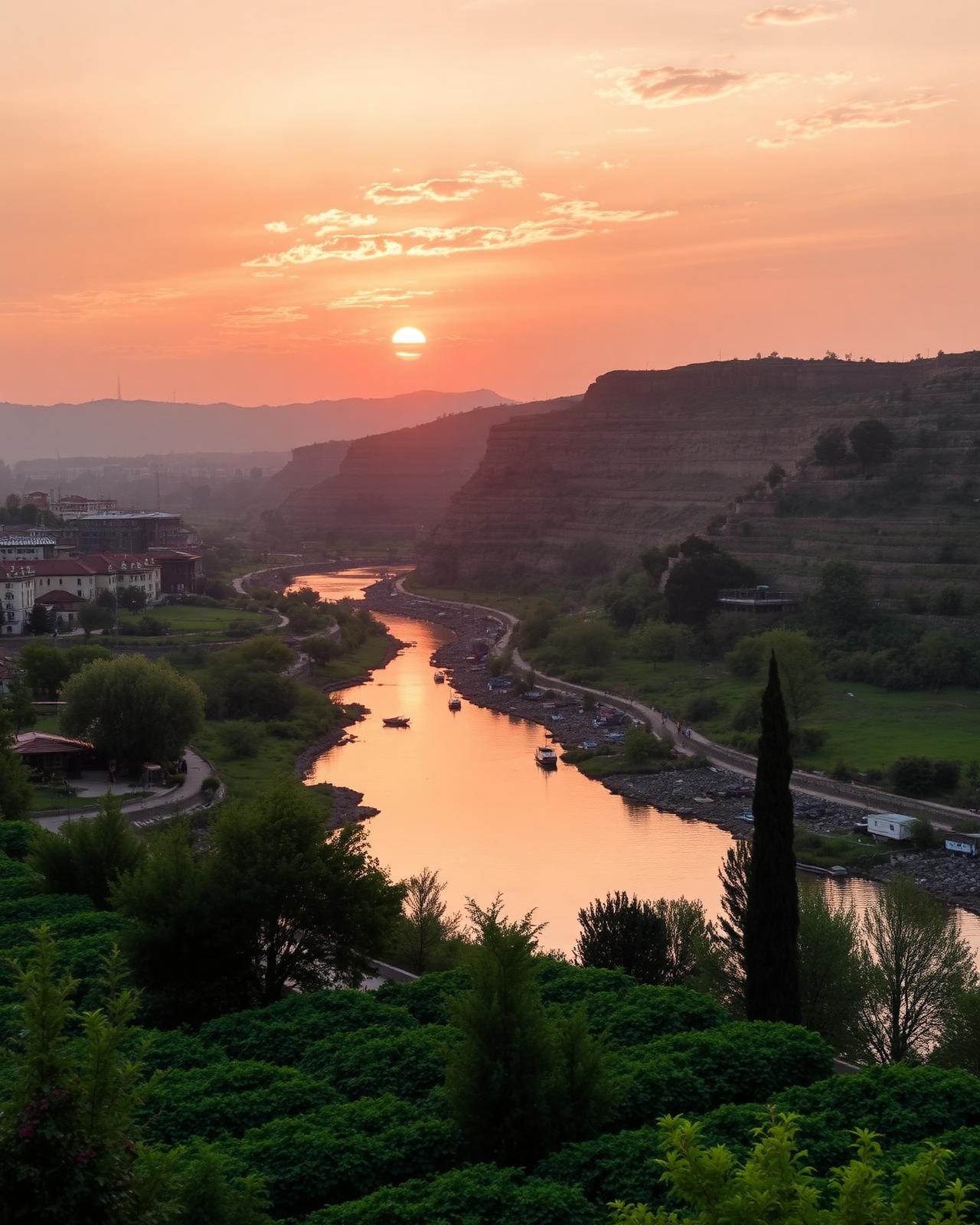
Spread along the banks of the Tigris beneath the basalt ramparts, the Hevsel Bahçeleri form a UNESCO-inscribed cultural landscape that has been cultivated for millennia. Mulberry and walnut groves, vegetable plots and watermelon rows are tended by hand under the same walls that once shielded them from siege.
We walk the gardens at the cool hour — after sun-up or before sunset — with a local agronomist or river guide, picking ripe fruit from the trees, drinking spring water from clay jars, and watching the citadel turn from black to bronze in the changing light.
A Roman frontier in the basalt
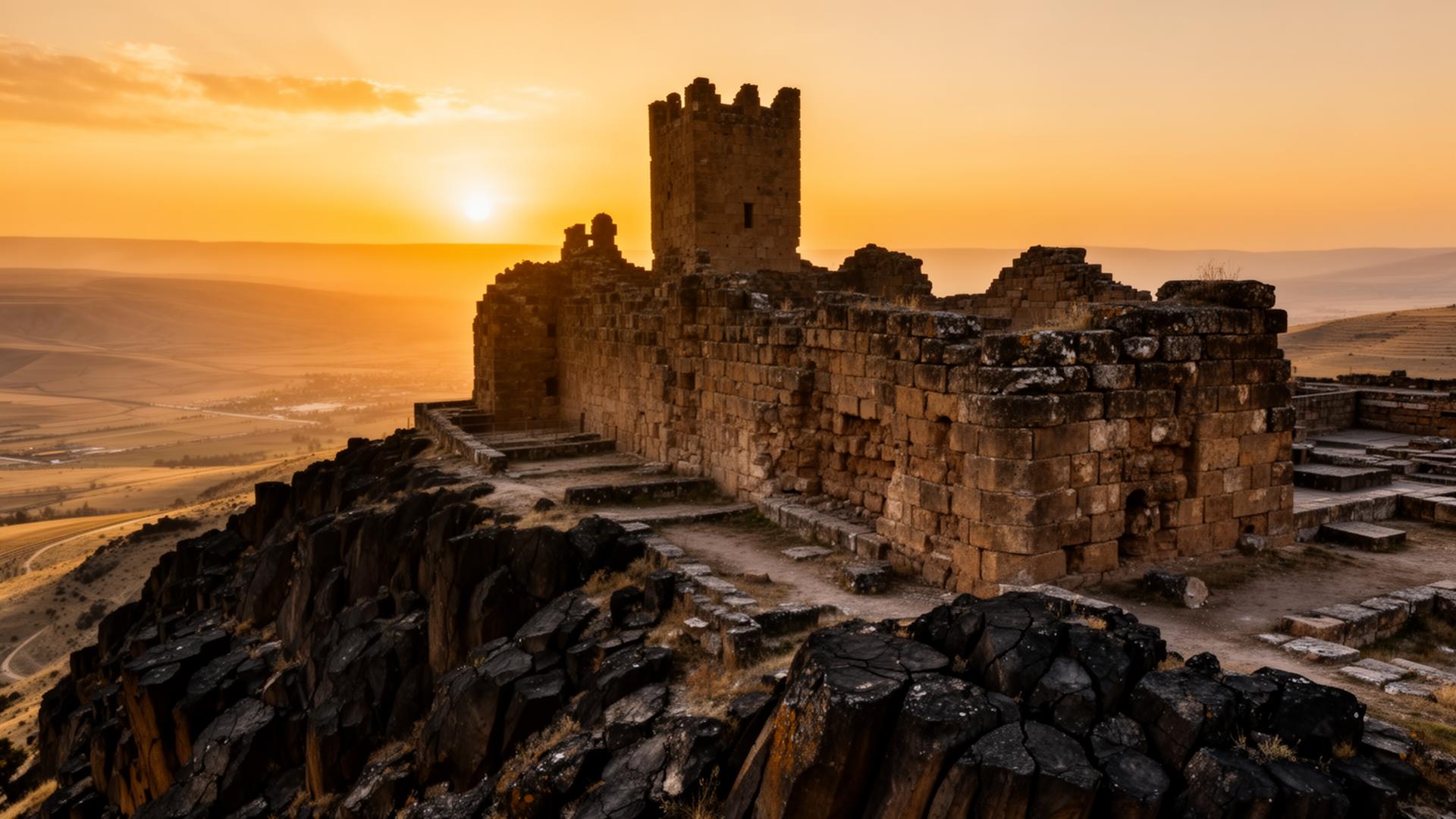
Forty-five minutes south of Diyarbakır, Zerzevan Kalesi rises from a volcanic outcrop on the old Roman road from Amida to Dara. Walls of cut basalt, a fifteen-metre watchtower, a rock-cut church and a still-intact underground Mithraeum mark one of the easternmost garrisons of the Roman world.
We visit the site privately with a licensed professional guide, away from the active excavation areas, descend by lantern into the Mithras temple where third-century soldiers swore their oaths to the unconquered sun, and end on the rampart as the Mesopotamian plain falls into shadow. Access follows current site regulations and availability.
A 16th-century courtyard, quietly restored
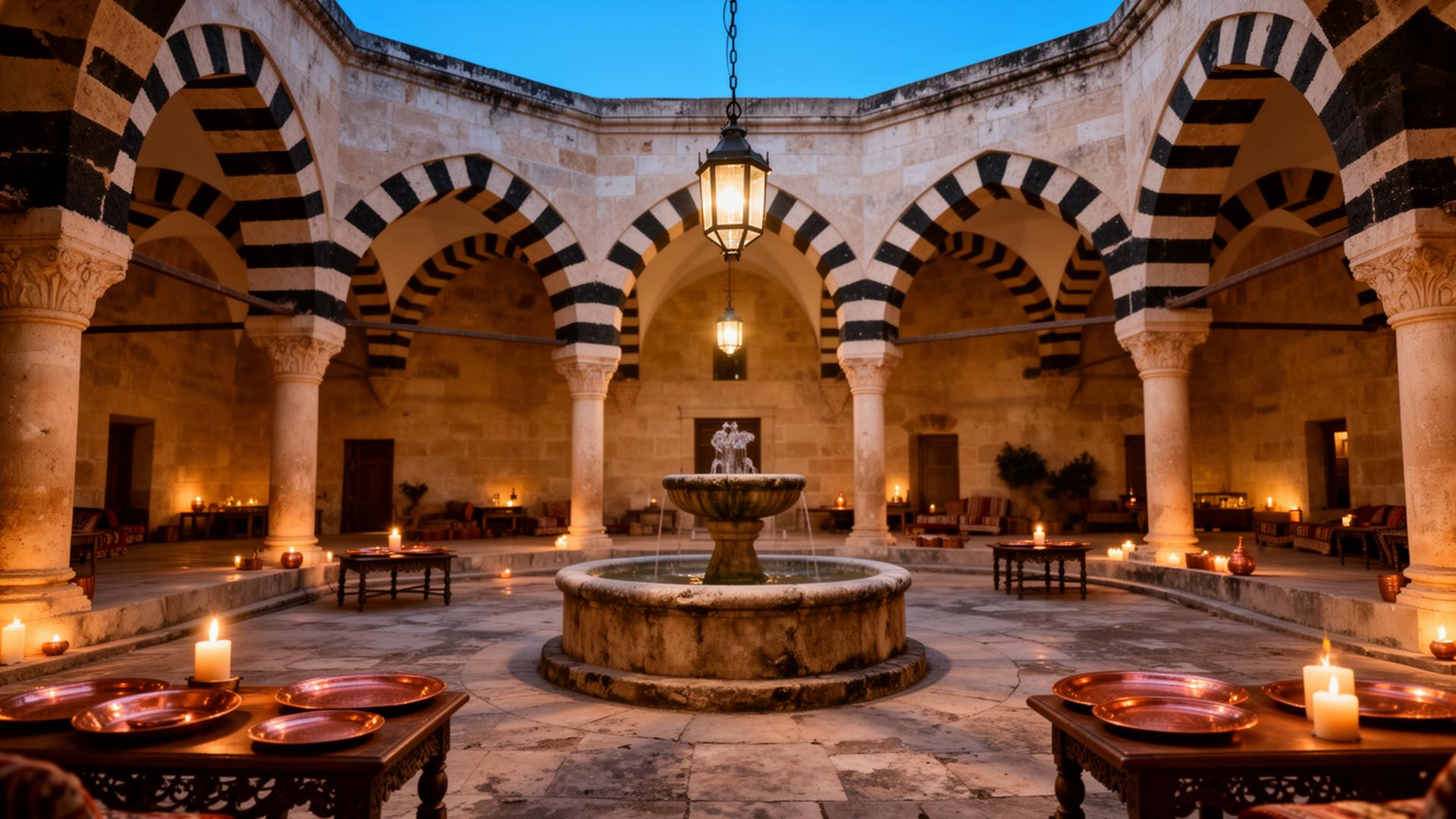
Hidden in the bazaar quarter just inside the Mardin Gate, the Sülüklü Han is a small Ottoman caravanserai built in 1683, named for the leech-keepers who once gathered around its central fountain. Two stories of striped basalt-and-limestone arcades wrap a flagstone courtyard, restored with the lightest possible touch.
We take a quiet evening table here for kaçak çayı and menengiç coffee, or a private tasting of regional wines from Mardin and Tur Abdin — copper trays, lantern light, and the soft trickle of a historic stone fountain at the heart of the restored han.
A walled city, its river and its gardens.
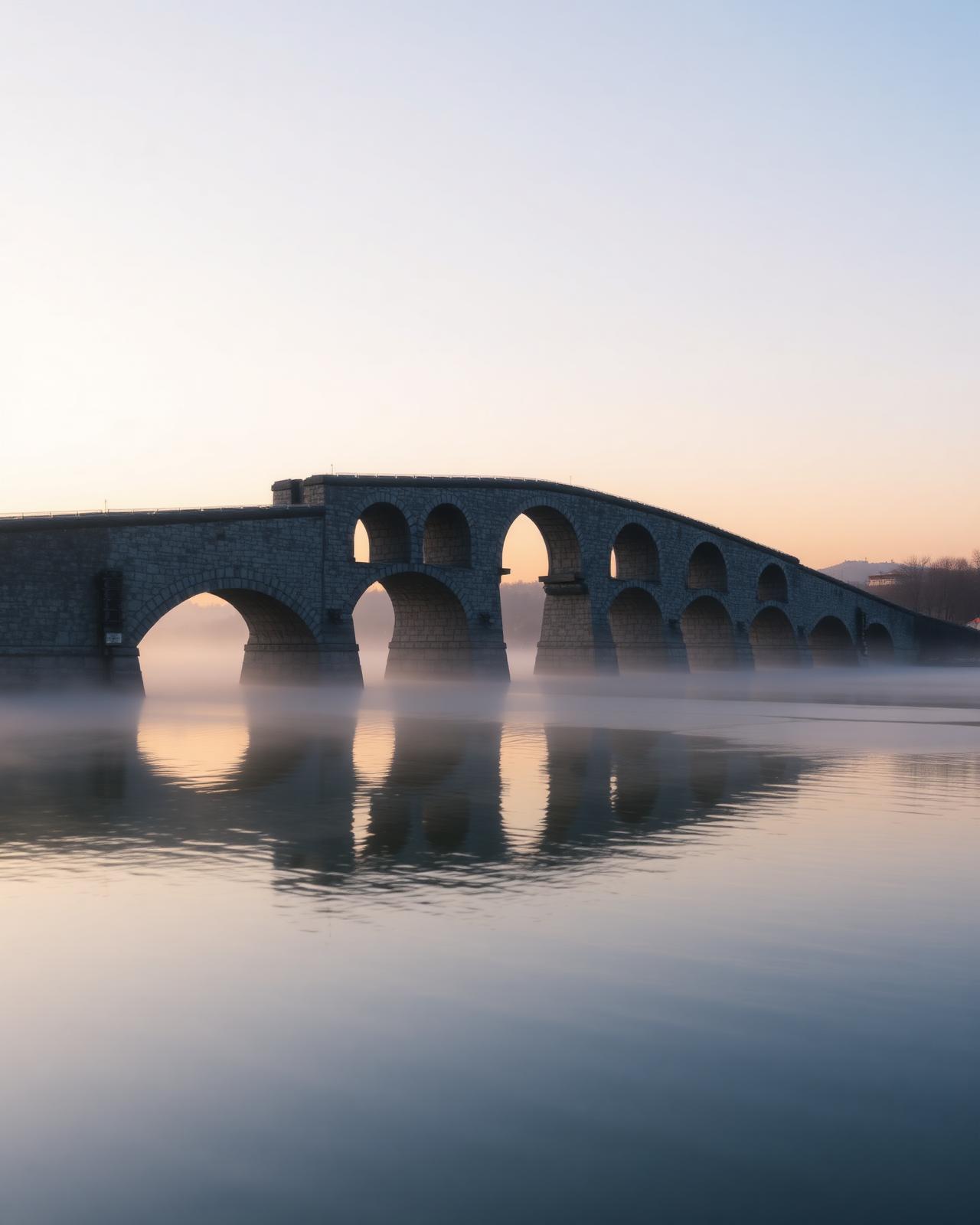
Below the basalt ramparts the Tigris bends through the Hevsel Gardens — eight millennia of orchards, melon fields and willow groves — and the ten-arched Seljuk bridge crosses the river into deeper Mesopotamia. This is the landscape UNESCO read as a single living monument.
The Hevsel Gardens at Last Light
An ancient cultivated landscape along the Tigris — the UNESCO-listed market gardens that have long fed the walled city.
Ten Eyes Across the Tigris
The Seljuk-era basalt bridge built by the Marwanid emir Nizamüddevle Nasr — ten arches still carrying foot traffic across the river of memory.
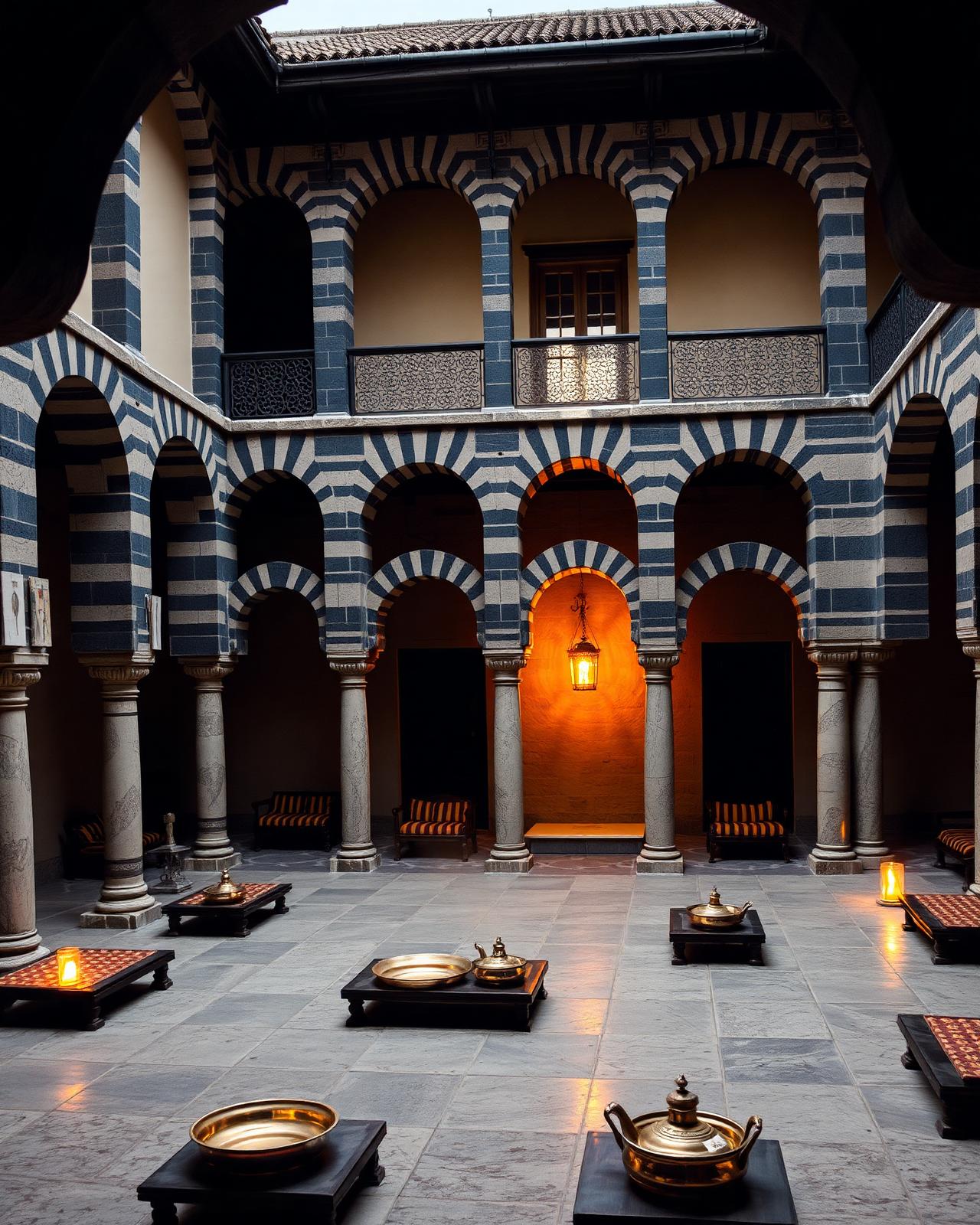
A Vaulted Pause
Lantern-light in the striped basalt-and-limestone arcades of the Ottoman caravanserai — copper trays, kaçak çayı, and the slow hush of an old trading hall.
Walk the basalt with a historian who has read every stone.
Diyarbakır rewards the unhurried traveller. We pair you with a city historian, open private doors in the old quarters, and end the evening on a Tigris terrace where the basalt still holds the heat of the day.
Design my Diyarbakır journey