
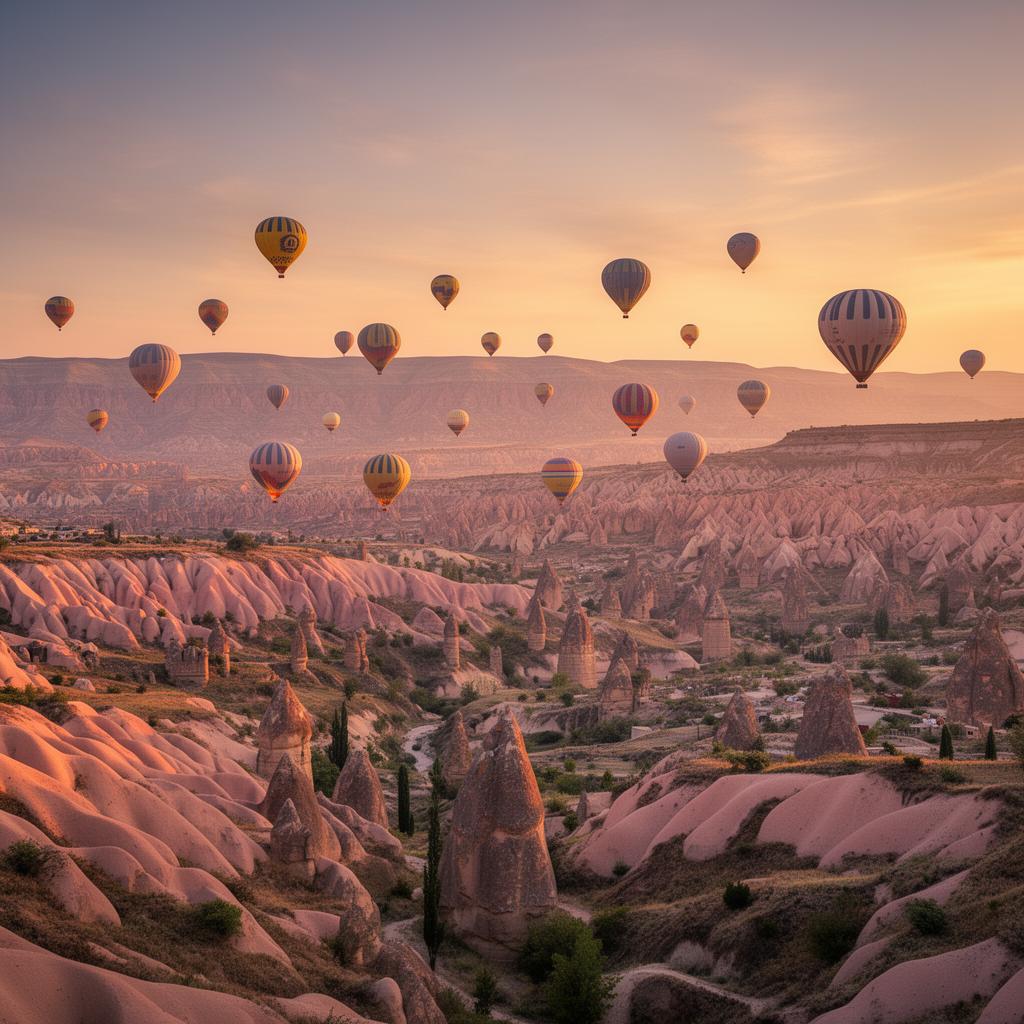
Cappadocia — a lunar country carved by ten million years of stone.
Volcanic valleys of rose and gold, cave suites hand-hewn from tuff, and underground cities where the Byzantine world quietly survived.
A country sculpted by volcanoes, weather and the slow patience of human hands. A landscape that feels less like a destination than a memory.
Born of three ancient volcanoes and carved by ten million years of wind and water, the valleys of Cappadocia became a refuge for Hittites, early Christians and Byzantine monks — who hollowed entire cities, chapels and monasteries from the soft volcanic tuff. Today it remains one of the most quietly cinematic landscapes on Earth.
One hundred balloons rising in silence over the valleys.
We reserve a private basket with one of the region's most senior pilots — lifting off before the first light brushes the fairy chimneys, drifting in the perfect stillness of dawn over Göreme, Love Valley and the rose-coloured ravines of Çavuşin.
A linen breakfast is set on the valley floor on landing — fresh menemen, honey from local beekeepers and Turkish coffee carried in copper, in absolute quiet.
Arrange a private flight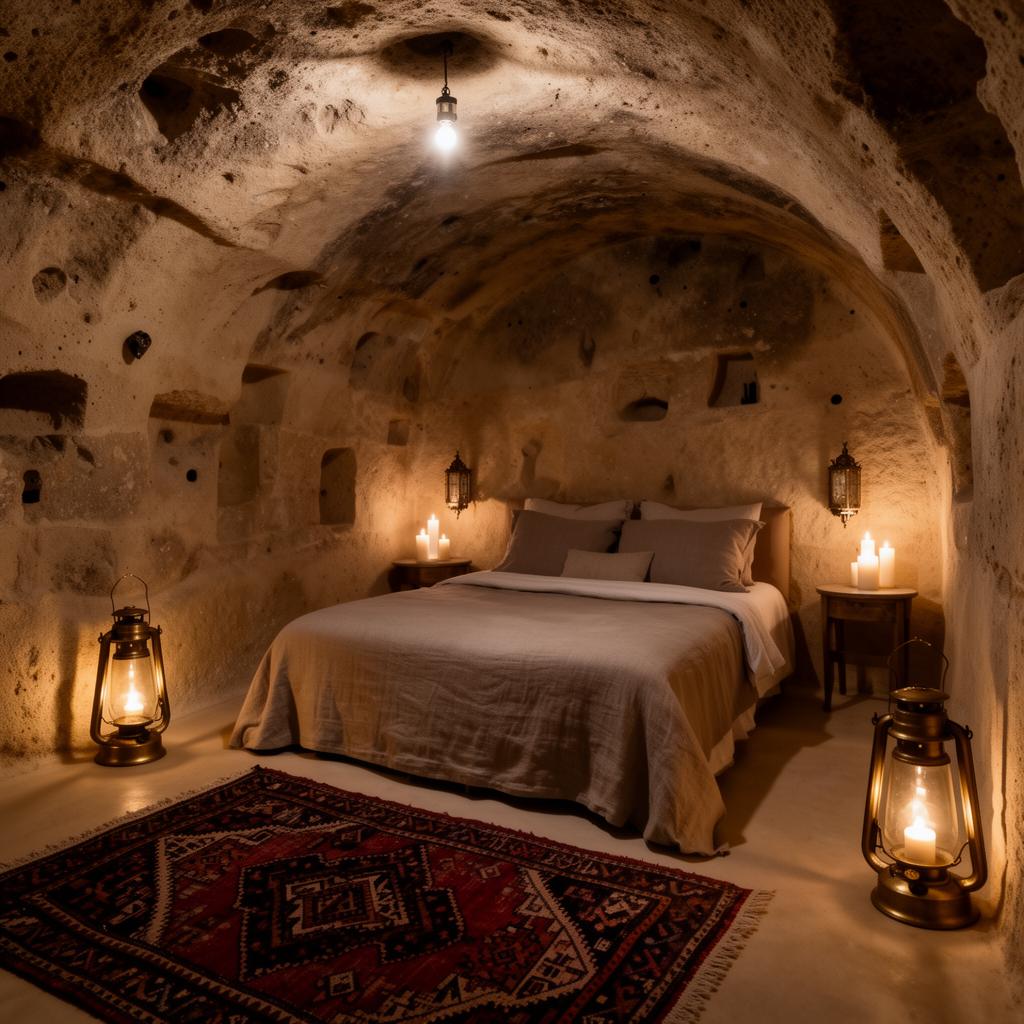
Sleep inside the stone that has sheltered travellers since Byzantium.
We curate stays in the region's most discreet cave hotels — restored mansions in Ürgüp, hand-hewn suites in Uçhisar and Ortahisar, with vaulted volcanic ceilings, antique kilims, brass lanterns and private terraces opening onto the valleys.
Tables are set in candlelit caravanserais and rock-cut wine cellars where Anatolian vintages have rested since antiquity — a tasting menu that traces twelve millennia of regional cuisine.
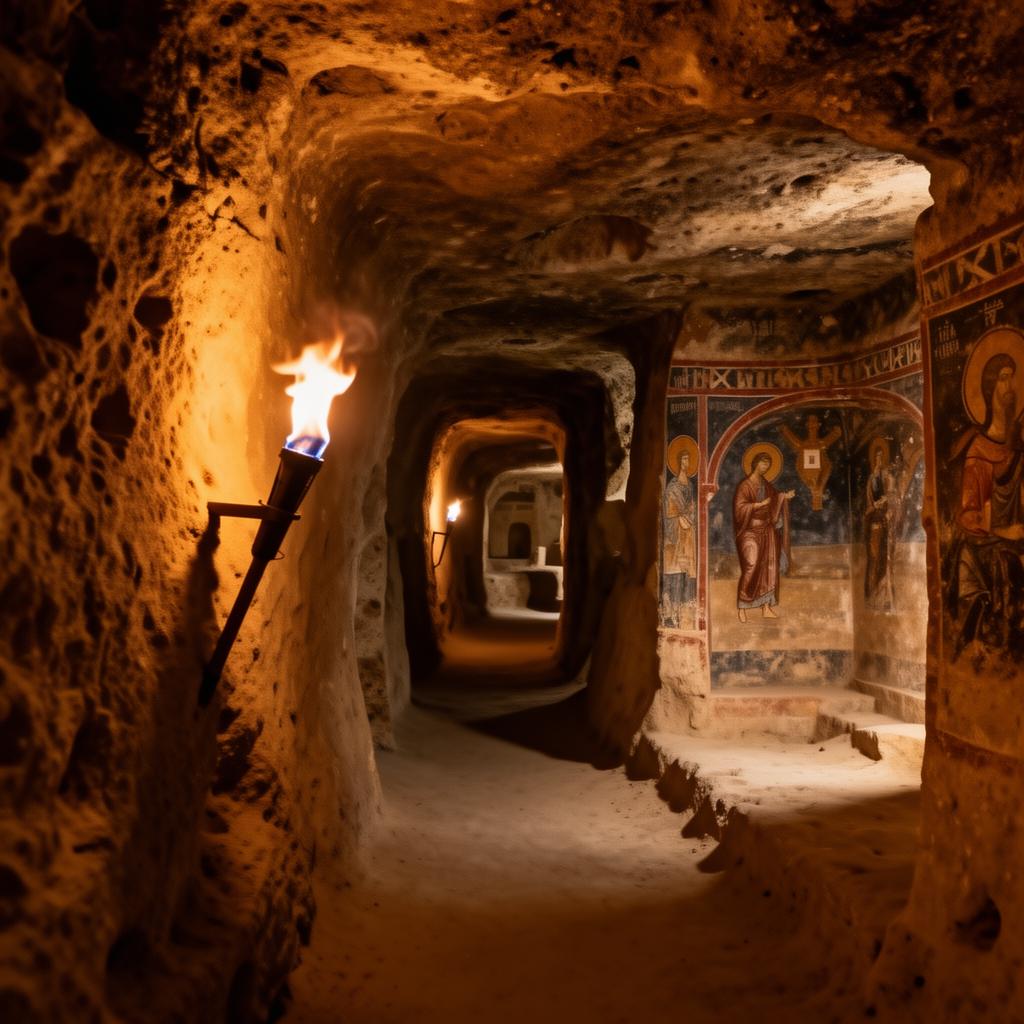
Eight storeys beneath the earth, an entire civilization waited out the centuries.
At Derinkuyu and Kaymaklı, vast underground cities — carved by the Hittites and expanded by early Christians — descend eight levels beneath the surface, with ventilation shafts, wineries and churches still intact. In the Göreme Open Air Museum, Byzantine frescoes glow on the walls of rock-cut chapels that have not been altered in a thousand years.
We arrange privately guided visits with licensed professional guides and expert-led interpretation of these frescoes — a quiet hour with the painted saints of the Karanlık Kilise. Access follows official opening conditions, site regulations and availability.