Hin und wieder zeichnet ein einzelner Mensch die Landkarte dessen, was wir zu wissen glaubten, neu. Klaus Schmidt war einer dieser Menschen. Als er im Sommer 2014 plötzlich verstarb, hinterließ er einen steinigen Hügel außerhalb von Şanlıurfa, der sich im Stillen zur bedeutendsten archäologischen Stätte des 21. Jahrhunderts entwickelt hatte – und eine Frage, die seither unaufhörlich in der Fachwelt nachhallt: Was, wenn alles, was wir über die Anfänge der Zivilisation zu wissen glaubten, genau umgekehrt war?
Ein stiller Anfang
Klaus Schmidt wurde 1953 im bayerischen Feuchtwangen geboren. Er studierte Ur- und Frühgeschichte in Erlangen und Heidelberg, promovierte über das Neolithikum Anatoliens und trat dem Deutschen Archäologischen Institut (DAI) bei. Zwei Jahrzehnte lang arbeitete er sich mit dem geduldigen, unaufgeregten Temperament eines Mannes, der Feldnotizen den Pressekonferenzen vorzog, durch den Staub von Ausgrabungen in der Türkei und im Iran. Kollegen erinnern sich an einen feinsinnigen Gelehrten, der eine Stunde lang die Typologie einer Feuersteinklinge erklären konnte, ohne auch nur einmal aufzublicken.
1994: Die Geschichte des Hirten
1963 war ein Survey-Team aus Istanbul und Chicago über einen niedrigen Hügel südöstlich von Şanlıurfa namens Göbekli Tepe – „Bauchhügel“ – gegangen und hatte ihn als wahrscheinlichen mittelalterlichen Friedhof eingestuft. Dreißig Jahre später leitete Schmidt für das DAI eine Prospektion der Urfa-Ebene. Ein einheimischer Hirte erwähnte, dass seltsame T-förmige Steine immer dann an die Oberfläche kämen, wenn er pflügte. Schmidt fuhr am nächsten Morgen hinaus, ging den Hügelkamm ab und verstand innerhalb von Stunden, dass das, was das Team von 1963 als Grabsteine abgetan hatte, in Wirklichkeit die Spitzen monumentaler neolithischer Pfeiler waren, die im Hang vergraben lagen.
Schmidt beschrieb später, dass er fast sofort erkannt habe, dass die Steine auf dem Hügelkamm einem weitaus älteren archäologischen Horizont angehörten, als frühere Prospektionen angenommen hatten.
1995–2014: Die Ausgrabung
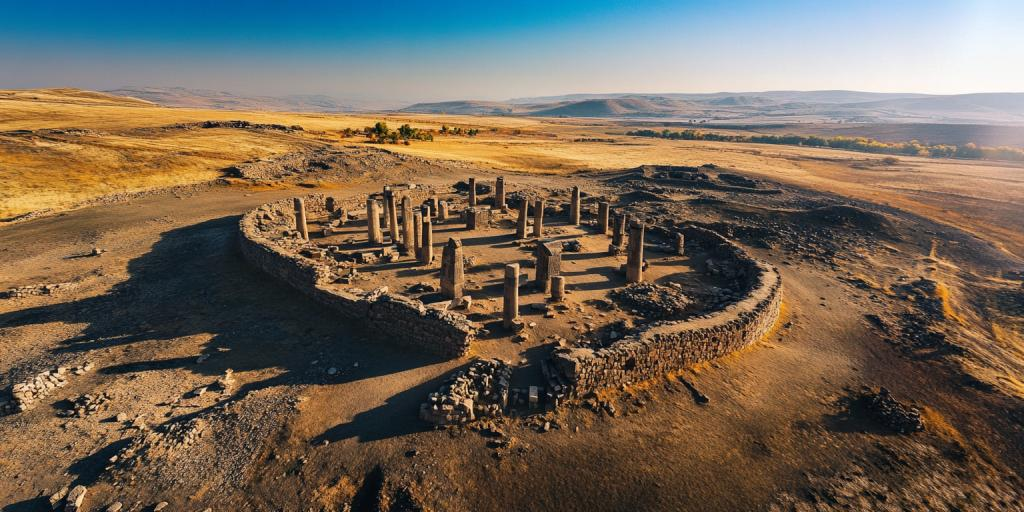
Die offiziellen Ausgrabungen begannen 1995 unter der gemeinsamen Leitung des DAI und des Şanlıurfa-Museums. Jahr für Jahr legten Schmidt und sein Team etwas frei, das es laut den Lehrbüchern nicht geben konnte: monumentale, verzierte Ritualarchitektur, die von Jägern und Sammlern siebentausend Jahre vor Stonehenge und den ersten Pyramiden Ägyptens errichtet wurde. Anlage A, dann B, dann C, dann D – kreisförmige Heiligtümer mit einem Durchmesser von bis zu zwanzig Metern, umgeben von fünf Meter hohen, verzierten T-Pfeilern, bevölkert von einem Bestiarium aus Füchsen, Geiern, Skorpionen und Schlangen.
Die Implikationen waren schwindelerregend. Bis zur Entdeckung von Göbeklitepe herrschte der Konsens, dass zuerst die Landwirtschaft kam, dann sesshafte Dörfer, dann Überschüsse und erst viel später Religion und Monumentalarchitektur. Schmidts einflussreiche Interpretation legte die umgekehrte Abfolge nahe: dass der Impuls, sich zu versammeln und etwas Heiliges zu errichten, möglicherweise zuerst da war, und dass die Landwirtschaft aus der Notwendigkeit entstand, die Menschen zu ernähren, die zur Verehrung zusammenkamen. Seine Zusammenfassung dieser Lesart – „zuerst der Tempel, dann die Stadt“ – bleibt eine von mehreren Interpretationen, die heute unter Archäologen diskutiert werden, und ist kein feststehender Konsens.
Die Ideen
Schmidt war stets darauf bedacht, seine Thesen nicht zu überdehnen. Er widersetzte sich New-Age-Interpretationen der Stätte als Sternenkarte oder außerirdisches Bauwerk. Was er jedoch in seinem 2006 erschienenen Buch „Sie bauten die ersten Tempel“ argumentierte, war diszipliniert und zugleich unauffällig revolutionär:
- Die T-Pfeiler sind stilisierte anthropomorphe Figuren – abstrahierte Ahnen oder übernatürliche Wesen, nicht nur architektonische Stützen.
- Die Stätte war ein regionaler Versammlungsort: Menschen kamen aus einem weiten Einzugsgebiet, um zu bauen, Feste zu feiern und zu bestatten – lange bevor sie in sesshaften Dörfern lebten.
- Monumentale Religion folgte nicht auf die Landwirtschaft; sie könnte dazu beigetragen haben, sie auszulösen.
- Am Ende seiner Nutzungszeit, um 8000 v. Chr., wurde der gesamte Komplex absichtlich und sorgfältig verfüllt – ein letzter, gemeinschaftlicher Akt, der ihn für uns bewahrt hat.
20. Juli 2014
Schmidt starb während eines Urlaubs in Deutschland beim Schwimmen an einem Herzinfarkt. Er war sechzig Jahre alt. Er hatte gerade die Grabungskampagne vorbereitet, in deren Folge Göbeklitepe zwei Jahre später von der UNESCO zum Weltkulturerbe erklärt und vier Jahre später unter dem Membrandach, das heute die großen Anlagen schützt, für die Öffentlichkeit zugänglich gemacht wurde. Er erlebte keinen dieser Momente mehr.
Das Vermächtnis in Karahantepe
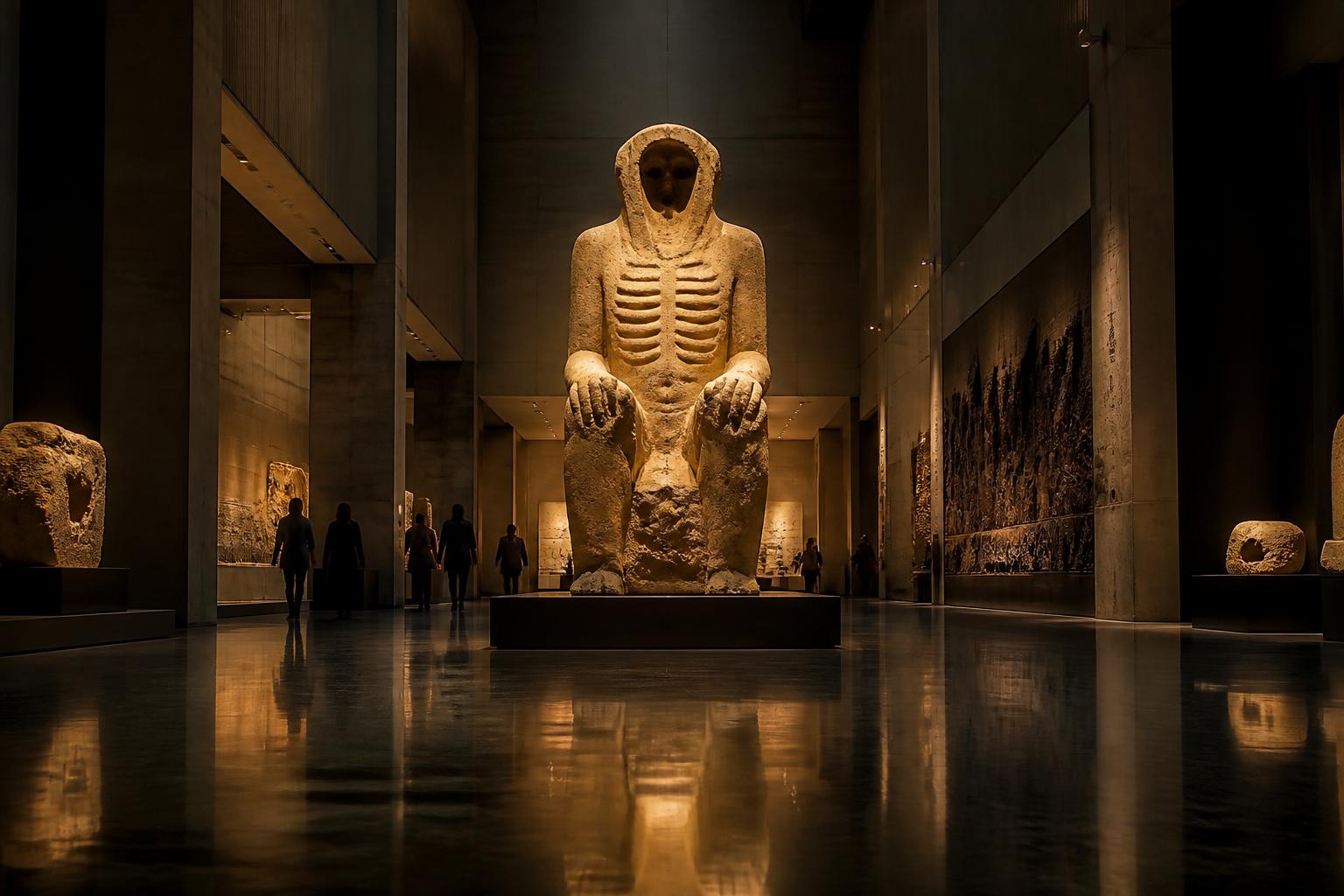
Schmidt hatte immer vermutet, dass Göbeklitepe nicht einzigartig war. In Vorträgen und Briefen sprach er von einer größeren „Familie“ von Heiligtümern, die über die Kalksteinhügel der Urfa-Ebene verstreut sind – was das türkische Team später als das Taş-Tepeler-Projekt formalisieren sollte. Karahantepe, Sayburç, Sefertepe, Kurttepesi, Harbetsuvan – jede neue, seit 2019 ausgegrabene Stätte hat seine Intuition bestätigt. Insbesondere die Statuenkammer in Karahantepe ist die direkte intellektuelle Erbin seiner Arbeit: ein weiteres monumentales Heiligtum des akeramischen Neolithikums, für das in keiner Theorie der menschlichen Vorgeschichte Platz war, bis er diesen Platz schuf.
Das Forschungsprogramm, das nach seinem Tod folgte, bewegt sich weiterhin entlang der Linien, die er zuerst skizzierte: eine Landschaft verwandter Heiligtümer statt eines einzigen außergewöhnlichen Hügels.
Auf seinen Spuren
Auf jeder Sumera-Expedition zu den Taş Tepeler halten wir einen Moment am südlichen Rand der Anlagen von Göbeklitepe inne – an der Bank, auf der Schmidt am Ende eines Grabungstages gerne saß und auf die Harran-Ebene blickte. Es gibt keine Gedenktafel. Es braucht auch keine. Was er 1994 auf diesem Hügel sah, hat das erste Kapitel jedes seither veröffentlichten Weltgeschichtsbuches neu geschrieben und schreibt mit jedem neuen Pfeiler, der in Karahantepe aufgerichtet wird, bereits am nächsten.
Wenn Sie Schmidts Vermächtnis eingehender erkunden möchten, können wir Ihren Tag in Şanlıurfa rund um eine von Experten geführte Interpretation von Göbeklitepe und der weiteren Landschaft der Taş Tepeler gestalten. Wir meinen, es ist die richtige Art, diesen Steinen zu begegnen.
Gestalten Sie Ihre eigene Expedition